What should you look for when choosing?
Start with the smallest detail your portfolio needs to show. Then decide how much control you want over the lighting, colour and contents of your kit.
| Consideration |
What should you check? |
Who is this important to? |
| Magnifying small details |
Compare the maximum magnification of the exact lens, the lens mount and the space in front of the lens at the magnification you want. |
If I want engravings or controls to fill the frame, I look at both magnification and the space available for my lamp. Around 31% of consumers give detail magnification the highest priority. |
| Showing colour and finish |
Check whether the white balance can be adjusted and whether the model supports RAW shooting. Keep the light source as consistent as possible. |
When photographing paintwork, metal and upholstery, I want to minimise colour shifts caused by changing light. Around 25% of consumers prioritise colour reproduction. |
| Creating a repeatable photo series |
Check whether you can use a tripod and fixed background, and whether the model allows manual focusing. |
For a series of camera models, I want to be able to repeat the framing and setup for each photo. Around 25% of consumers prioritise a consistent portfolio setup. |
| Keeping the kit simple |
Check whether the offer is for a body or a kit, which lens is included, and whether you’ll still need a macro lens, tripod or lighting. |
If I want to get started with as few separate items as possible, I compare the complete kit rather than just the body. Around 19% of consumers consider simple equipment the most important factor. |
Cameras at Joybuy
These cameras may suit anyone looking for a simple start or overview shots. For small engravings, check whether the lens and the crop you want are suitable.
 No image available
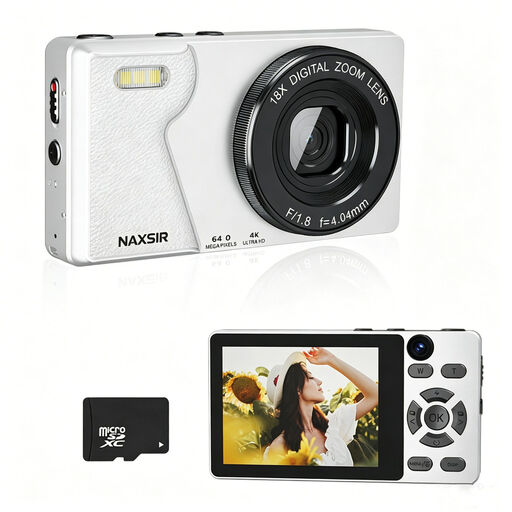
NAXSIR digital camera, 4K, 64 MP, 18× digital zoom
Could suit a simple start with overview shots. For small engravings, check that you can get the crop you want.
The product name lists autofocus and an included 32 GB memory card.
Joybuy
 No image available
Komery W6, 12× optical zoom, 4K
The zoom can help you adjust the framing from different distances. Check separately whether small details will appear large enough in the frame.
The product name lists 64 MP and 4K video.
Joybuy
 No image available
Sony ZV-E10 with 16–50 mm zoom lens
The included zoom lens is useful for overview shots. For small components, assess separately whether it offers the magnification you need.
The product information lists a 24,2 MP APS-C sensor and a Product Showcase setting that shifts focus from a face to an object. According to this information, an adapter/charger and memory card aren’t included.
Joybuy
 No image available
Sony Alpha A6100 with 16–50 mm lens
The zoom lens kit could suit anyone looking for overview shots and repeatable framing. Check that the lens offers enough magnification for the details you want to capture.
The product information lists a 24,2 MP APS-C sensor, an electronic viewfinder and a tilting screen.
Joybuy
 No image available
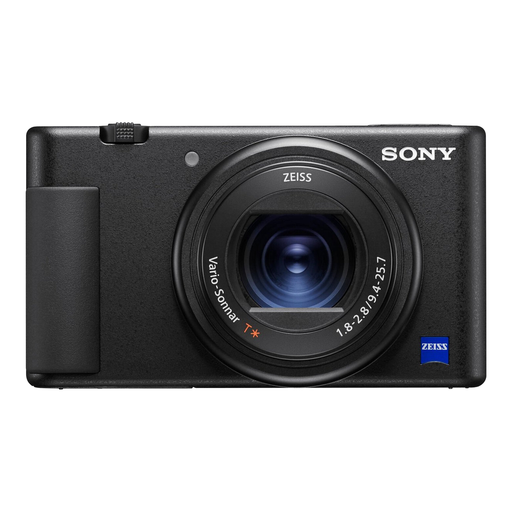
Sony ZV-1 compact camera
A compact camera with a fixed lens could suit anyone who wants to use fewer separate items. Check that its close-up capabilities are suitable for the details in your portfolio.
The product information lists 20 MP, 2,7× optical zoom and RAW and JPEG photo formats.
Joybuy
Frequently asked questions
Do I always need a 1:1 macro lens to photograph an entire vintage camera?
No, that isn’t automatically necessary for overview shots. Start with the crop you want and check which lens is actually included. If small details don’t appear large enough in the frame, a suitable macro lens may be worth considering. The Canon RF-S 18-45mm and the separate RF 35mm macro lens have different stated magnifications.
How can you take a series of photos with roughly the same framing?
Use a tripod and keep the background and setup as consistent as possible. Canon describes a tripod as a useful tool for consistent composition, while Nikon also recommends a simple background and movable lighting for small subjects. Check the focus for each camera.
What should you check about the complete kit and the warranty?
Check whether you’re buying a body or a kit, which lens is included and which accessories you still need. For consumer purchases in the Netherlands, statutory guarantees are separate from any manufacturer’s warranty. ACM ConsuWijzer explains that, under the applicable conditions, the seller must put right a product that doesn’t meet what you could reasonably expect when used normally.
Can you put photos showing identifiable people on your public website?
Not without taking privacy rules into account. The Dutch Data Protection Authority explains that identifiable people are personal data and that publishing images publicly or for business purposes requires an applicable legal basis under the GDPR. Consent is one possible example, but it isn’t the only legal basis.
Do you have a 14-day cooling-off period for every online camera purchase?
No, this doesn’t apply to every purchase. The Dutch government states that distance purchases from a business usually come with a 14-day cooling-off period, and explains that online purchases from private individuals are among the situations not covered. Check who the seller is and whether an exception applies.


