Who is this guide for?

Detail photographer

If you want to capture engravings, serial numbers or controls individually, start by checking the lens’s magnification and focusing distance. Manufacturers such as Canon, Nikon, Sony and Fujifilm publish these details for their specific macro lenses.

Collector looking for full shots

If you mainly want to show the shape and condition of the whole camera, consider the angle of view from where you’ll be taking the photo, as well as the depth-of-field settings available.

Photographer with a small window-light setup

If you’re taking photos at home in changing daylight, the direction and softness of the light, as well as reflections on metal parts, all play a part. Zoom.nl recommends softening bright sunlight with net curtains or a white sheet.

What should you look for when choosing?

Mirrorless camera with a macro lens

Choose this option: if you want to photograph inscriptions, buttons or signs of wear individually and in detail. Check the lens mount and the exact lens’s maximum magnification.

The trade-off: the camera body and lens are separate choices. The examples listed range from the Canon RF 35mm, with a maximum magnification of 1:2, to the Nikon Z MC 50mm, Sony SEL30M35 and Fujifilm XF30mm, which offer 1:1 magnification according to their manufacturers.

Mirrorless camera with a standard or kit lens

Choose this option: if you mainly want to photograph the whole camera and decide later whether you need a macro lens. Check how close the supplied lens can focus.

The trade-off: an interchangeable lens gives you the option to upgrade, but the camera body alone won’t tell you whether small details will appear large enough in the frame.

Compact camera with a fixed lens

Choose this option: if simple equipment and full shots matter more to you than being able to change lenses.

The trade-off: you can’t replace the built-in lens with a specialist macro lens. So check the close-up capabilities of the specific model; the Ricoh GR IIIx is an example of a compact camera with a fixed angle of view.

What to consider What should you check? Who is this important for?
Making small details appear large Check the lens’s maximum magnification and focusing distance. With a mirrorless camera, also check that the lens mount is compatible with the body. If I want to photograph serial numbers or engravings on their own, I want to know how large the lens can make the detail appear. Around 36% of consumers give detail magnification their highest priority.
Keeping the whole camera in focus and fitting it in the frame Check whether the angle of view suits the available distance and whether you can adjust the aperture and focus point. If I want to capture the whole collectible, including any protruding parts, clearly, I look for sharpness across the camera and framing that works from my setup. Around 29% of consumers give full shots their highest priority.
Changing window light and reflections Check whether you can adjust the exposure and white balance. If necessary, soften bright sunlight with net curtains or a white sheet. If the daylight changes and metal parts are reflecting light, I want to be able to assess the exposure and colour more accurately. Around 21% of consumers give control over light and colour their highest priority.
Simple, complete equipment Check whether you’re buying a body or a kit with a lens, and whether you’ll need a suitable macro lens for your detail shots. If I want to get started with fewer separate parts, I weigh up simplicity against the option to use a different lens later. Around 14% of consumers give a simple setup their highest priority.

Common buying mistakes

  • Choosing a body based on its megapixel count

    For small inscriptions, the lens’s magnification is different from the sensor’s resolution. So a high-resolution camera doesn’t guarantee that a detail will appear large enough in the frame.

    First decide how large you need the smallest detail to appear, then compare the lens’s magnification and focusing distance.

  • Assuming every macro lens offers 1:1 magnification

    Maximum magnification varies from lens to lens. Canon specifies a maximum of 1:2 for the RF 35mm F1.8 MACRO, while Nikon, Sony and Fujifilm list 1:1 for the macro lenses mentioned.

    Check the maximum magnification of the exact lens model rather than relying on the word ‘macro’ alone.

  • Trying to fix a lighting or reflection problem with a new camera alone

    The direction and softness of window light, as well as reflections, affect your photo even if you change the camera body.

    First try changing the camera’s position and softening bright light with net curtains or a white sheet. Then consider which camera feature you still need.

Camera brands to consider

Canon

The EOS R50 is a mirrorless camera with an RF mount; the RF 35mm F1.8 MACRO IS STM is a separate lens for close-ups.

  • Canon specifies a 24.2-megapixel APS-C sensor for the EOS R50 and support for RF and RF-S lenses.
  • Canon lists a maximum magnification of 1:2 for the RF 35mm, not 1:1.

Nikon

The Z50II is a mirrorless camera with a Z mount; the NIKKOR Z MC 50mm f/2.8 is a separate macro lens.

  • Nikon specifies 1:1 magnification for the MC 50mm and says it can be used on Z cameras with FX and DX-format sensors.
  • For very close-up photography, Nikon quotes around 5 cm of space between the front of the lens and the subject. Consider whether this works with your window-light setup.

Sony

The ILCE-6400 is an APS-C camera with an E mount; the SEL30M35 is a separate macro lens.

  • Sony lists 24.2 effective megapixels and RAW shooting for the ILCE-6400, and 1:1 magnification for the SEL30M35.
  • For close-ups, check that the lens’s working distance leaves enough room for your lighting setup.

Fujifilm

The X-S20 with an X mount can be paired with the XF30mmF2.8 R LM WR Macro.

  • Fujifilm specifies RAW shooting for the X-S20 and 1:1 magnification for the XF30mm.
  • The quoted minimum focusing distance of 10 cm isn’t necessarily the same as the clear space in front of the lens. Bear this in mind when setting up.

Ricoh

The GR IIIx is a compact camera with a fixed lens, suited to those who mainly photograph the whole camera.

  • Ricoh lists a fixed angle of view equivalent to around 40 mm in 35 mm format and manual exposure.
  • You can’t replace the lens with a specialist macro lens. Check whether its close-up capabilities suit the details you want to capture.

Cameras at Joybuy

These Joybuy products are general camera options for photography. For each model and bundle, check whether the lens suits the full shots and detail photos you want to take in window light.
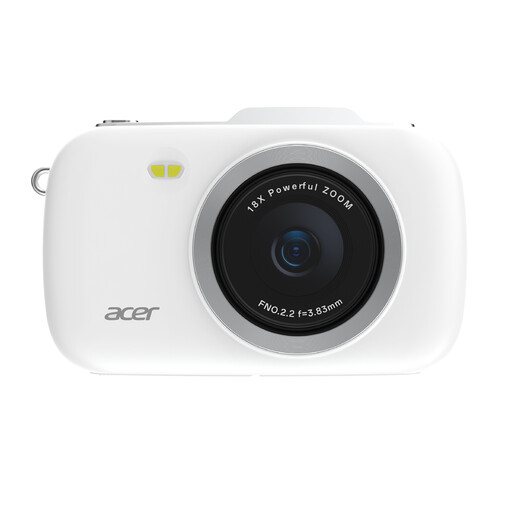
KOMERY G7-A 4K camera, 80MP, 18X zoom, white

KOMERY G7-A 4K camera, 80MP, 18X zoom, white

The product description lists a 16–50mm zoom lens for framing the whole camera in different ways. Check that the stated lens mount and bundle suit your needs.

The title lists 80MP and 18X zoom. The description mentions an APS-C sensor, Sony E mount and a 16–50mm zoom lens. An SD memory card and adapter/charger are not included, according to the description.

View at Joybuy
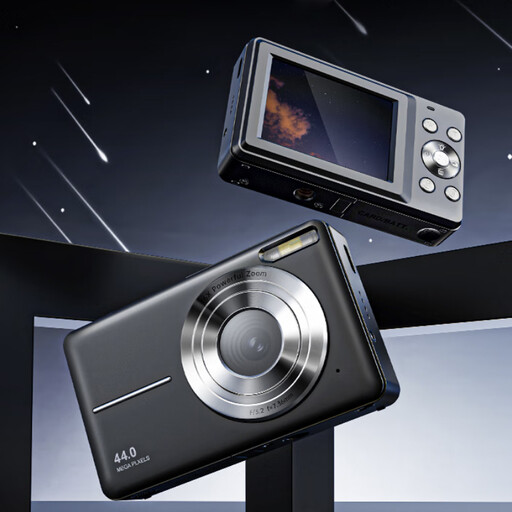
Songdian Pocket Camera 4K, 44MP, 16X zoom, black

Songdian Pocket Camera 4K, 44MP, 16X zoom, black

The product title describes this as a pocket camera. For close-ups, check that this model’s focusing capabilities suit the details you want to photograph.

The title lists 4K, 44MP and 16X zoom. According to the product description, a memory card is not included.

View at Joybuy
Sony ZV-E10 with 16–50mm zoom lens, black

Sony ZV-E10 with 16–50mm zoom lens, black

The supplied zoom lens gives you different options for framing the whole camera. Check separately whether you’ll need another lens for the close-ups you want.

The product description lists an APS-C sensor, Sony E mount and 24.2 MP. An SD memory card and adapter/charger are not included, according to the description.

View at Joybuy
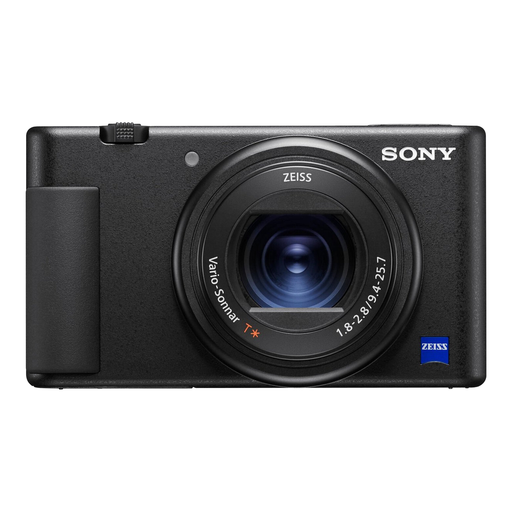
Sony ZV-1 compact camera

Sony ZV-1 compact camera

This model is described as a compact camera. If you want to fill the frame with small inscriptions or controls, check the lens’s close-up capabilities.

The product description mentions a tilting touchscreen and image stabilisation.

View at Joybuy

Frequently asked questions

Do I need a macro lens to photograph a whole vintage camera?

Not necessarily. For a full shot, start by choosing a suitable distance and angle of view. If you want to capture small inscriptions individually and in detail, check the magnification of the lens you’re using; the label ‘macro’ doesn’t automatically mean 1:1.

How can I avoid harsh reflections when photographing by a window?

First, adjust the camera’s position and soften bright sunlight with net curtains or a white sheet, as recommended by Zoom.nl. Check the white balance when the daylight changes.

How can I keep both the front and protruding parts in focus?

Choose your focus point carefully and try a smaller aperture for greater depth of field. In window light, you may need to take extra care to keep your setup stable. Assess the result from the distance you’ll be shooting at.

What should I check besides the camera or kit?

Check whether the offer includes a body or a kit with a lens, and whether you’ll need a suitable macro lens for detail shots. In the Netherlands, consumer purchases are covered by the statutory guarantee as well as any manufacturer’s warranty. ACM ConsuWijzer advises contacting the seller if a product doesn’t meet the expectations you were entitled to have.

Can I return a camera bought online in the Netherlands within 14 days?

For online consumer purchases, you generally have a statutory 14-day cooling-off period after delivery. ACM ConsuWijzer explains the conditions and exceptions; check what applies to your specific order. The cooling-off period is separate from the statutory guarantee for a faulty product.
