
Vintage camera seller
You want to photograph several cameras with similar framing and a consistently white background. A stable setup and control over the lighting are key considerations.


For full-camera shots, a suitable standard zoom lens may be all you need. For small lettering and mechanical details, the chosen lens’s magnification and focusing distance are what matter most. The Dutch Consumers’ Association explains that the lens and sensor both contribute to image quality, while a tripod, control over white balance and adjustable exposure can help you assess a white background and keep framing consistent. Switching to a different camera body won’t, by itself, solve problems with reflections or exposure.
You want to photograph several cameras with similar framing and a consistently white background. A stable setup and control over the lighting are key considerations.
You want to show lettering, wear and small controls individually. So, look at what the specific lens can do, not just the camera’s megapixel count.
You want to find out whether a standard zoom lens and a simple setup will do the job before buying a separate close-up or macro lens.
First decide whether you’ll mainly be photographing whole cameras, small details or a consistent series of shots. Then compare the lens and setup that best suit your needs.
A good fit if: you mainly want to photograph whole vintage cameras from repeatable angles, with the flexibility to adjust your framing.
Consider: a separate close-up or macro lens may not be included. Check whether the supplied zoom lens can show small lettering at a large enough size in the frame.
A good fit if: engravings, serial numbers or buttons are important, and you can check that the specific lens’s magnification will capture those details.
Consider: a separate lens adds to your kit and can leave less room around the subject. Nikon gives a working distance of around 5 cm in front of the Z MC 50mm f/2.8 at its closest focusing distance; Canon specifies a maximum magnification of 1:2 for the separate RF 35mm F1.8 Macro.
A good fit if: your current camera can already capture the details you need in focus, but the framing or white background varies from shot to shot.
Consider: a tripod and careful lighting and white balance can help with the shot, but they won’t increase a lens’s maximum magnification.
| What to consider | What should you check? | Who is this important for? |
|---|---|---|
| Small lettering and details | Check the specific lens’s maximum magnification and focusing distance; don’t rely on the word ‘macro’ alone. | If engravings or small parts need to be readable, focus on what the lens can capture at your working distance. Around 31% of consumers put detail first. |
| Colour, white backgrounds and reflections | Check whether you can adjust white balance and exposure, and review a test shot of the background and any dark or shiny areas. | If you want a white background without a colour cast, while keeping details visible on dark or shiny parts, lighting control is essential. Around 31% of consumers give colour and lighting top priority. |
| A consistent series | Check whether you can repeat the tripod position, framing and exposure across several cameras. | If you’re photographing several cameras for a series, you’ll want to keep the setup consistent with ease. Around 23% of consumers start with this need for repeatable shots. |
| The complete kit | Check which lens comes with the camera, and allow for the setup and any additional lens you may need. | If you want to start with a standard zoom lens and decide about detail shots later, what’s actually included is especially important. Around 15% of consumers put the kit contents first. |
The lens and sensor both contribute to image quality, and the lens you choose also affects how well you can capture small details.
First decide whether you want to photograph whole cameras, small lettering or both. Then check which lens comes with the kit and whether it suits the framing you want.
You may still need a suitable separate lens for close-ups.
Magnification and the space in front of the lens vary by model. Nikon specifies 1:1 magnification for the Z MC 50mm f/2.8 and gives a working distance of around 5 cm in front of the lens at its closest focusing distance; Canon specifies a maximum magnification of 1:2 for the RF 35mm F1.8 Macro. These are lens specifications, not general features of a camera body.
Compare the magnification and available space with the detail you want to photograph and the position of your lighting.
Canon explains that automatic metering can make a predominantly bright scene look too dark, and that a light source can cause a colour cast.
Take a test shot with the lighting you plan to use. Check white balance and exposure, and make sure details in both the background and the subject are retained.
Adjusting the lighting and making any necessary edits can take extra time.
The EOS R50 is a mirrorless camera with an RF mount. Check that your chosen RF or RF-S lens suits the framing you want.
The Z50II is a Z-mount mirrorless option. Your choice of separate lens will partly determine how you capture small details.
The X-S20 is an X-mount option to compare if RAW storage and adjustment options are part of your workflow.
The ZV-E10 II has an interchangeable lens and may be worth considering if you want to shoot video as well as stills.
This selection of Joybuy products includes digital cameras and interchangeable-lens models for different ways of framing vintage cameras. Check each model to make sure its lens and focusing options suit the details you want to capture.
 No image available
The stated 12× optical zoom gives you a choice of framing. Check separately whether the camera can capture small engravings in focus at your working distance.
The product name lists 64 MP, 4K and Wi-Fi.
 No image available
The product name describes this model as a vlogging camera. Check whether its shooting style suits still product photography and the level of detail you need.
The product name lists a 1-inch CMOS sensor, 4K/120fps video, 3-axis stabilisation and a 2-inch rotating touchscreen. Stabilisation alone doesn’t tell you anything about magnification.
 No image available
The product name lists autofocus and an optical viewfinder. For small lettering, check the focusing options and lens specifications too.
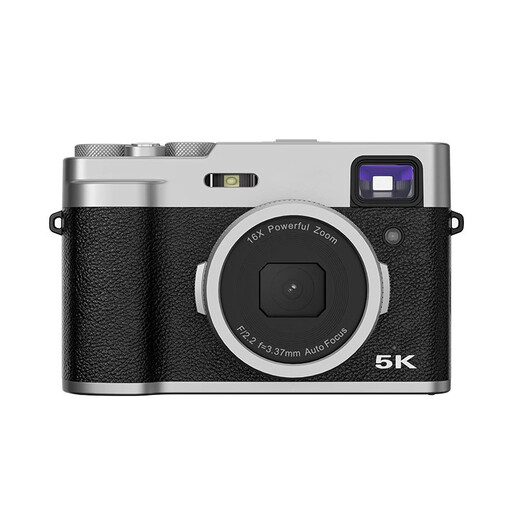
The product name lists a 2.8-inch 5K Ultra HD screen and an optical viewfinder.
 No image available
The supplied zoom lens gives you a way to compare different framings. Check whether its magnification suits the small details you want to photograph.
The product name lists a 16–50mm zoom lens. Close-up magnification depends on the lens.
 No image available
The supplied zoom lens can be compared for wider shots. Check separately whether it shows small engravings at a large enough size in the frame.
The product name lists a 16–50mm f/3.5–5.6 OSS II lens. Check the specific lens’s close-up capabilities.
No. Start with the framing you want and the lens’s working distance. A separate close-up or macro lens becomes especially useful if small lettering or parts don’t appear large enough in the frame; the camera body alone doesn’t determine this.
Review a test shot using the lighting you plan to use, and adjust the white balance and exposure if needed. Canon says automatic metering can make a predominantly bright scene look too dark, while the colour of a light source can cause a colour cast. Also check that details on the subject remain visible.
Keeping the camera and background in fixed positions and using a tripod can help you repeat the same framing. Canon describes a tripod as a way to take consistent product photos, and suggests using a remote release to avoid movement caused by pressing the shutter button.
According to ACM ConsuWijzer, consumers usually have 14 days to change their mind after buying online. The seller must also put right, free of charge, any product that, under normal use, doesn’t do what you were entitled to expect under the statutory guarantee. This guidance applies to consumer purchases, not necessarily to business purchases.