
Detail photographer
You want to capture engravings, shutter buttons and other small parts in close-up, so you’ll need to consider both magnification and the space available for lighting.


Start by checking your camera’s mount, then decide whether you mainly want to photograph the whole vintage camera or its finer details. Nikon states that the Z MC 50mm f/2.8 offers 1:1 magnification, but at its closest focusing distance the front of the lens is around 5 cm from the subject. So make sure you also have enough room for your lighting. A tripod, lighting control and, if needed, focus stacking are separate ways to get your composition and sharpness right.
You want to capture engravings, shutter buttons and other small parts in close-up, so you’ll need to consider both magnification and the space available for lighting.
You mainly photograph complete vintage cameras in a consistent, dark setup, but would also like the option to switch to a close-up.
You’re looking for a lens that fits your existing camera and want to take your setup into account when considering lighting and depth of field.
First check the mount, then work out how much magnification and space for lighting you’ll need for your chosen composition.
| What to consider | What should you check? | Who is this important for? |
|---|---|---|
| Mount and camera compatibility | Check the exact mount and version of the lens. Also make sure its angle of view suits your camera and the framing you want. | If you’re looking for a lens for your existing camera body, you’ll want to avoid choosing a version that won’t fit. Around 33% of consumers prioritise compatibility. |
| Magnifying fine details | Compare the maximum magnification of the exact model with the smallest engraving or part you want to photograph. Also check how much room there is in front of the lens. | If you want to capture small labels or controls in close-up, consider both magnification and the space you’ll need for lights. Around 27% of consumers prioritise detail magnification. |
| Framing the whole camera | Consider the angle of view on your own sensor and measure how much room you have to position your camera and the vintage camera. | If you mainly want to show the whole camera in a fixed composition, the framing from your shooting position matters more than the highest magnification figure. Around 20% of consumers start with the full picture. |
| Lighting and depth of field | Check that you have room to light your subject. Consider whether you want to capture and combine multiple focus points to keep protruding parts in focus. | With a dark background, you’ll want to light the camera properly without making your setup unnecessarily complicated. Around 20% of consumers prioritise lighting and depth of field. |
Focusing distance is measured from the camera. For lighting around your vintage camera, what matters is the amount of space left in front of the lens.
Compare the working distance of the exact model at your chosen magnification. Nikon states that, at its closest focusing distance, the Z MC 50mm has around 5 cm between the front of the lens and the subject.
A dark scene can affect automatic exposure, while using the widest aperture can leave parts of your subject out of focus.
First test the exposure and depth of field you want with a fixed composition. Then decide whether you really need a different magnification or mount.
Stabilisation and focus stacking address different problems: stabilisation helps reduce camera shake, while focus stacking combines multiple focus planes.
Use a stable setup to keep your framing consistent. Consider taking several shots at different focus points if protruding parts aren’t sharp enough in a single shot.
The RF 100mm F2.8L Macro IS USM is an option for a compatible RF camera.
The Z MC 50mm f/2.8 and Z MC 105mm f/2.8 VR S are two options for Nikon Z cameras, with different angles of view and setup requirements.
The FE 90mm F2.8 Macro G OSS is a native Sony E-mount option for full-frame cameras; Sony also lists APS-C as a possible use.
According to Sigma, the 105mm F2.8 DG DN MACRO | Art is available with a Sony E or L-Mount. Check which version you need.
The M.Zuiko Digital ED 60mm F2.8 Macro is a Micro Four Thirds option.
These Sony E-mount lenses are described in the product information as suitable for close-up or product photography. Check the stated magnification if you want to capture tiny engravings or parts in close-up.
 No image available
This lens may suit close-up and product photography with a Sony E camera, but its stated magnification is limited for capturing very small engravings.
The stated maximum magnification ratio is 0.16.
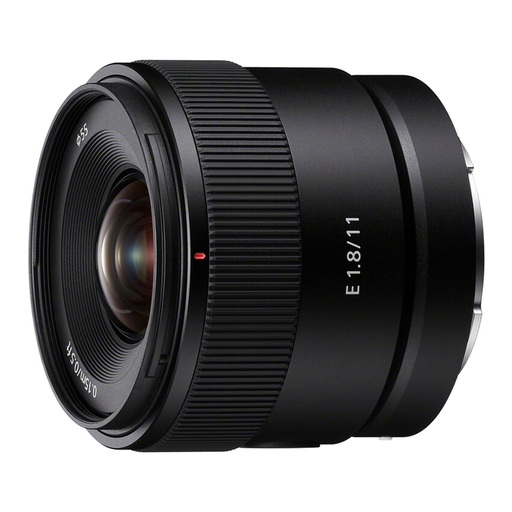 No image available
This lens may suit close-up photography with a Sony E camera featuring an APS-C sensor, but its stated magnification is limited for enlarging small camera parts.
Maximum magnification is stated as 0.13× with AF and 0.20× with MF.
No. Compare the maximum magnification ratio of the exact model. A lens may be described as suitable for close-ups without offering a 1:1 reproduction ratio.
Secure your camera to keep the framing consistent. If a single shot doesn’t provide enough depth of field, take photos at different focus points and stack them later. Check that your camera setup supports the capture and processing required.
According to Canon, an exposure meter can make a scene with lots of dark tones look too bright. So check both the camera’s exposure and the brightness of the background, and adjust the manual exposure or exposure compensation if needed.
Online purchases generally come with a statutory cooling-off period of up to 14 days after delivery, with some exceptions. ACM ConsuWijzer also states that the seller is responsible for the statutory guarantee if a product is faulty. According to the Netherlands Authority for Consumers and Markets, there is no fixed term for this guarantee in the Netherlands. Check the manufacturer’s warranty and returns policy separately: they don’t replace your statutory rights.