
Detail-focused badge photographer
You want to capture small lettering and raised details in close-up. Nikon quotes a 1:1 reproduction ratio for the separate NIKKOR Z MC 50mm f/2.8 macro lens; also compare the lens’s working distance.


If you want to photograph badges and fine details without changing lenses, consider a compact camera with a built-in close-up mode. For greater magnification of tiny details and the flexibility to expand your set-up later, a mirrorless camera with a separate macro lens is a better fit. Don’t compare magnification alone: consider the working distance too. This determines how much room you have in front of the lens to position your lighting, which matters when photographing shiny metal.
You want to capture small lettering and raised details in close-up. Nikon quotes a 1:1 reproduction ratio for the separate NIKKOR Z MC 50mm f/2.8 macro lens; also compare the lens’s working distance.
You want to capture metal, patina and colour clearly, and need room to position the lighting and camera to manage reflections. Zoom.nl and Shopify Netherlands discuss the importance of lighting and reflections in product and jewellery photography.
You take overview shots of badges and the making process as well as close-ups. The Canon EOS R50 kit with an RF-S 18–45mm lens offers an interchangeable-lens set-up; Canon describes the RF 35mm F1.8 MACRO IS STM as a separate lens.
First decide which photos matter most in your portfolio. Your camera, lens and lighting set-up should all work together to suit your needs.
| What to consider | What to look for when buying | Who is this important for? |
|---|---|---|
| Magnifying fine details | Compare the maximum magnification and working distance of the exact camera-and-lens combination; focusing distance and working distance are not the same thing. | If I want to make tiny lettering or raised details easy to read, I’ll look at magnification first. Around 36% of consumers prioritise detail above all else. |
| Controlling reflections and colour | Check how much room there is in front of the lens for lighting, and whether you can create a repeatable tabletop set-up. | If I want to capture shiny metal and patina clearly, I need to be able to position the camera and lighting together. Around 29% of consumers prioritise reflections and colour. |
| Combining close-ups and overview shots | Check the zoom range of the supplied lens, the lens mount and which components are included in the kit. | If I want to photograph a whole badge, its details and the making process, the option to choose a different lens later is important. Around 21% of consumers prioritise this versatility. |
| Assessing the complete set | Check exactly what’s included and whether the close-up capabilities are suitable for the details you want to show. | If I want to avoid having to source lots of separate components, I’ll look for a complete kit that meets my needs. Around 14% of consumers prioritise simplicity and clarity about what’s included. |
Megapixels don’t tell you how large a badge detail will appear on the sensor. The focusing distance also doesn’t tell you how much room there’ll be between the lens and the badge.
Compare the maximum magnification and working distance of the exact camera and lens you plan to use.
The Canon EOS R50 kit we looked at includes an RF-S 18–45mm lens. Canon’s RF 35mm F1.8 MACRO IS STM is a separate lens and isn’t included in that kit.
Read the full list of box contents and the specifications for the supplied lens before choosing a kit.
Shiny metal can reflect the camera and light sources. A mix of daylight and artificial light can also make it harder to keep colours consistent across a series of photos.
Plan your lighting set-up too. Take test shots with similar badges, and move the camera or lights if reflections are distracting. Zoom.nl and Shopify Netherlands offer practical tips for creating a repeatable product photography set-up.
The TG-7 is a compact alternative with a built-in close-up mode. OM SYSTEM says its microscope mode can focus from as close as 1 cm.
The EOS R50 with RF-S 18–45mm lens is a mirrorless camera kit for overview shots, with the option to choose another lens later.
The Z50II is an expandable Z-system mirrorless camera; the separate NIKKOR Z MC 50mm f/2.8 is designed for macro photography.
For an APS-C camera with an E-mount, Sony’s separate E 30mm F3.5 Macro (SEL30M35) offers 1:1 magnification, according to Sony.
The WG-8 is a compact camera with a fixed lens and built-in ring light, as described by Ricoh Imaging Europe.
This selection features cameras whose product names mention photography. If you’re photographing small badge details, check separately that their close-up capabilities are suitable for your subject.
 No image available
The product name mentions photography as an application; check whether its close-up capabilities are suitable for the finest details you want to photograph.
The product name lists a 1-inch CMOS sensor, 2× lossless zoom, 4K/240fps, 3-axis stabilisation, 107 GB of built-in storage and a 2-inch rotatable screen.
 No image available
The product name mentions photography and video; check whether its close-up capabilities suit the details on your badges.
The product name lists 12× optical zoom, 64 MP, Wi-Fi and 4K video.
 No image available
The product name mentions photography as an application; check separately whether its close-up capabilities are sufficient for the finest badge details.
The product name lists a 1-inch CMOS sensor, 4K/120fps video, fast focusing, subject tracking and a 2-inch rotatable touchscreen.
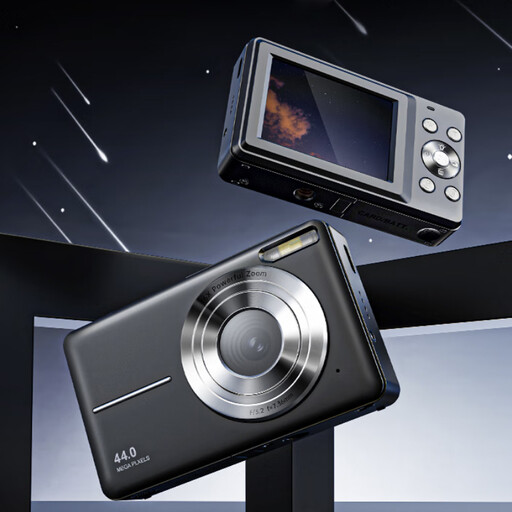 No image available
The product name mentions photography as an application; check whether its close-up capabilities suit what you want to show in your portfolio.
The product name lists 4K, 44 MP and 16× zoom.
No. Sony distinguishes between the distance from the subject to the image sensor and the working distance between the subject and the front of the lens. Pay attention to the working distance if you want to position lighting around a shiny badge.
Use a fixed background and mark where the badge and camera should go. If you want to keep colours consistent, avoid mixing daylight and artificial light where possible. Move the camera or lighting if reflections from the metal are distracting.
Not necessarily. The Canon EOS R50 kit we looked at includes an RF-S 18–45mm lens; Canon’s RF 35mm F1.8 MACRO IS STM is sold separately. Nikon offers the Z50II as a body or in separate kits; the NIKKOR Z MC 50mm f/2.8 discussed here is a separate lens.
According to the Dutch government, you’re entitled to a product that works properly, and you should contact the seller if there’s a problem. The Netherlands has no fixed statutory guarantee period for all products; a manufacturer’s guarantee doesn’t replace your legal rights.
For distance purchases from a business, you’ll usually have 14 days to change your mind. The Dutch government lists some exceptions and distinguishes these purchases from buying from a private individual, so check the terms that apply to your purchase.