
Teacher demonstrating paint shades
You film colour mixing and layers of paint, and want to match the light’s colour to your camera’s white balance.


If you’re mainly filming a miniature and your hands, choose a dimmable light that you can angle towards your work surface and soften when needed. A compact panel or clamp-on lamp takes up less floor space. A COB light gives you room to use a separate light modifier, but needs more space for the setup. Match your camera’s white balance to the light, and check the product information for the exact version before you buy.
You film colour mixing and layers of paint, and want to match the light’s colour to your camera’s white balance.
You film hands and small shapes up close, and want to adjust the direction of the light when your fingers or brush cast a shadow over your work.
You have little space around your miniature and are weighing up a clamp-on or compact lamp against the room needed for a stand.
A good fit if: you film your hands and the miniature and want to adjust the direction of the light.
Bear in mind: a larger panel or stand can take up space; check which parts are included with the version you’re buying.
A good fit if: a stand won’t fit well, or you want to put your setup away after filming.
Bear in mind: position the light so it reaches the whole work surface without getting in the way of your camera angle.
A good fit if: you have room for a separate lighting setup and want to shape the light with a suitable modifier.
Bear in mind: a lux rating measured with a reflector doesn’t tell you how a setup with a different modifier will light your miniature.
A good fit if: you mainly film yourself and want front-facing light; NEEWER describes ring lights as suitable for faces and video, among other uses.
Bear in mind: test separately whether the miniature and the texture of the paint remain clear from your chosen angle.
| What to consider | What should you check? | Who is this important for? |
|---|---|---|
| Accurate paint colours | Compare the colour settings and stated colour rendering for the exact version. Make a test recording with a white reference and a fixed white balance. | If I’m explaining colours and layers of paint step by step, I want the recording to keep the shades recognisable. Around 33% of consumers put colour accuracy first. |
| Brushwork detail and hand shadows | Check whether you can adjust the direction of the light and soften it. Film a short action from the camera angle you plan to use. | For close-ups of brushstrokes, I don’t want to put my hand in front of the light unnecessarily or lose the texture. Around 27% of consumers give visible brushwork the highest priority. |
| Space on the worktable | Measure the table edge and available space; check whether the light attaches with a clamp or stand and can stay out of shot. | If paint, hands and camera all share the same small table, I want to position the light without blocking the work surface. Around 20% of consumers put saving space first. |
| Picture and recorded sound | Test the light with your own camera settings and brightness; also listen for any audible cooling noise while you’re explaining something. | When I record a lesson, I want a steady picture and clear speech without distracting lamp noise. Around 13% of consumers put undisturbed picture and sound above the other considerations. |
| Power and recording time | Compare mains power with battery power and check what’s included. Assess battery life at the brightness you need. | During a longer painting session, I want to know whether the light will last for the whole recording or need recharging partway through. Power and recording time are the top priority for around 7% of consumers. |
A lux rating depends on factors including distance and the reflector used. A figure measured with a standard reflector doesn’t automatically describe the light on your miniature with a different modifier.
Only compare ratings measured at the same distance and with the same modifier, then assess the work surface in a test recording.
To soften the light as you want, you may need a separate modifier and a suitable mount.
The NEEWER NL660 is available with or without a stand; NEEWER also says that the NP-F battery is not included. So what comes in the box varies by version.
Check the packing list for the exact kit and work out how to mount the light safely without blocking the work surface.
Depending on the version, you may need a stand, mounting part, battery or light modifier.
Ulanzi lists a colour temperature range for the VL49 RGB that differs from a product listing with the same model name. This means the exact version can’t be confirmed from the name alone.
Compare the full model number and specifications for the version you intend to buy.
Front-facing light may suit a face, but it won’t necessarily give you the right angle to show the texture of the paint and brushwork on a small miniature.
Decide whether your face or the miniature is the main subject, then test a painting action from your final camera angle.
These brands are relevant to different setups. The features mentioned apply to the product lines described and are not a judgement on every product from each brand.
The NL660 is an adjustable bi-colour panel for anyone who wants to light their work surface from a chosen angle.
The Key Light MK.2 is a panel with a desk clamp for anyone with little free floor space.
The SL60IIBi is a COB light for a fixed setup with a suitable light modifier.
The 100x S is a bi-colour point light source for makers who want to choose a separate light modifier themselves.
The VL49 RGB is a compact battery-powered light for a small or portable filming area.
This selection focuses on compact or portable video lights for a home worktable, including a portable COB light.
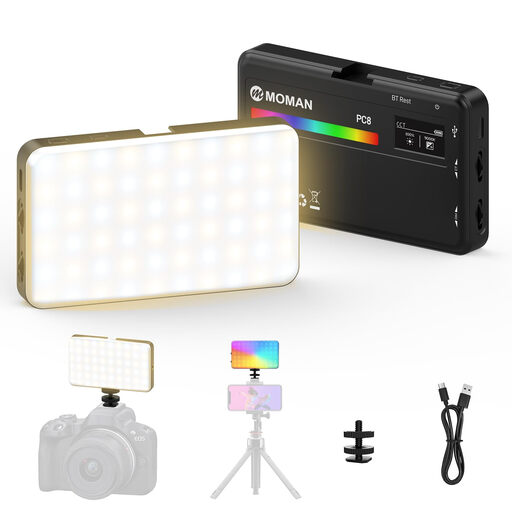 No image available
A portable option for a small filming setup where adjustable light and the ability to mount it on a stand are important.
The description lists adjustable brightness and colour temperature, CRI 95+ and TLCI 96+, a built-in battery and a 1/4-inch screw mount.
The stated run time is up to 80 minutes at full power.
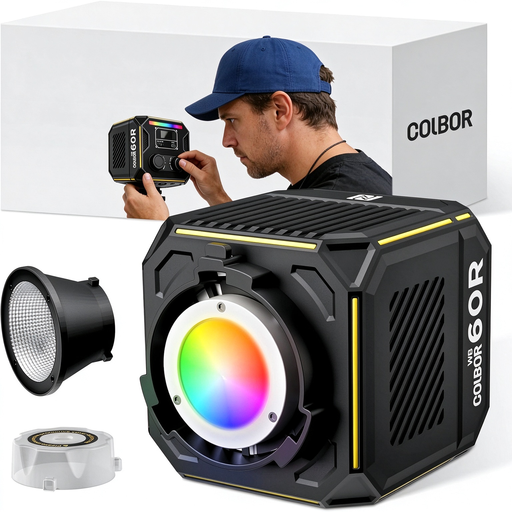 No image available
A portable COB option for anyone who wants adjustable white light alongside a separate setup to light their work surface.
The product information lists RGBCW, a built-in 59 Wh battery, 2700–6500 K and CRI 96+.
The stated wireless run time is one hour at 60 W.
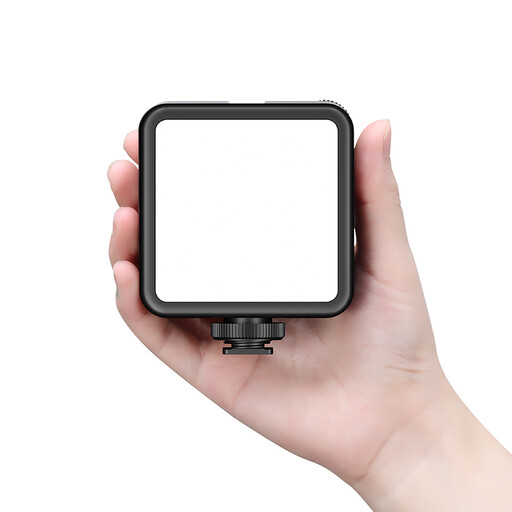 No image available
A compact light for a setup where you want to attach it to a camera or stand.
The description lists a built-in battery, USB-C charging, a cold shoe mount, and continuously adjustable colour temperature and brightness. The stated range is 3200–5600 K.
The product information advises against prolonged direct exposure to the light and recommends keeping the connections dry.
 No image available
A compact, portable option for a small filming setup where magnetic attachment can be useful.
The product title describes a dimmable light with a built-in battery and a magnet on the back.
Check the specifications for the exact version; stated colour temperature ranges vary between product listings.
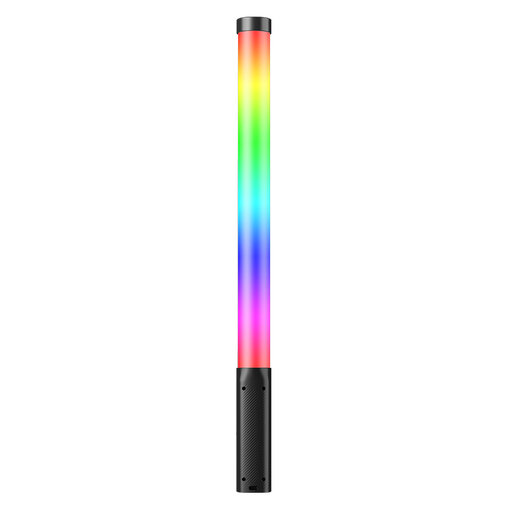 No image available
A light wand for anyone who wants to position the light flexibly around a tabletop setup.
The product information lists 2500–9000 K, CRI 95, a 1/4-inch screw mount and a built-in battery.
The stated run time is at least 60 minutes at maximum brightness. Don’t look directly at the LEDs or expose the battery to fire or high temperatures.
Keep your lighting setup as consistent as possible and match your camera’s white balance to the light you’re using. Canon Europe explains that the colour temperature of the light and the white balance affect how colours are captured; a high stated CRI alone doesn’t guarantee identical colours on camera.
Record a short clip using the camera settings and brightness you plan to use for your lesson. Canon Europe describes banding with certain LED sources and electronic sensor readout; Nikon USA explains that a mismatch between shutter settings, frame rate and light source can cause flicker. The settings available vary by camera model.
It depends on the version. NEEWER sells the NL660 with or without a stand and says that the NP-F battery is not included. So check the packing list for the specific kit.
The Dutch government’s Ondernemersplein website says that electrical appliances must meet the applicable European requirements. After assessing the product, the manufacturer must apply a CE mark and draw up an EU declaration of conformity. The rules that apply depend partly on the appliance; Wi-Fi or Bluetooth may bring additional radio requirements. Check the documentation for the exact version.
For a distance purchase from a business, you’ll generally have a 14-day cooling-off period, with exceptions depending on the purchase. This is separate from faults: for a product covered by Dutch consumer law, the seller is your point of contact for the legal guarantee. The Dutch government says there is no single fixed legal guarantee period that applies to all products in the Netherlands.