Position the light steadily over your knitting and soften it if needed, so the stitches remain visible without your hands casting unnecessary shadows. A desktop panel may suit a fixed, compact workspace; an adjustable studio light gives you more freedom to change the angle, but needs a suitable setup. Test the complete lighting setup with your camera: colour settings or a stated light output do not guarantee flicker-free footage or true-to-life yarn colours.
Who is this choice relevant to?
Knitter filming close-ups of their technique
If you want stitches and hand movements to remain clear on camera, choose a light angle that reaches the work surface and keeps shadows from your hands manageable. Canon Netherlands describes key, fill and backlighting as the foundations of video lighting.
Maker explaining yarn colours
If you want to compare colours between shots, match the lamp’s colour setting to other artificial lights and the camera’s white balance. Canon Europe explains that the colour temperature of the light falling on a subject affects how the camera records its colours.
Maker with a small or changing workspace
If you have limited space or film in different locations, consider the mounting and power options: a desk clamp, tripod or rechargeable lamp may suit different setups.
What should you look for when choosing?
Desktop panel with clamp
A good fit if: you always film at the same desk and want to avoid a floor stand.
Check: make sure the clamp, mounting height and power supply suit your desk.
Adjustable COB studio light
A good fit if: you want to adjust the light angle around your hands and knitting.
Check: the light modifier, mount and power supply may vary between versions.
Ring light with tripod
A good fit if: you want a simple phone setup and can position the light over your work surface.
Check: try it with your hands and knitting in shot to see whether the position and reflections work for you.
Portable rechargeable light
A good fit if: you film in different places where there may not be a mains socket nearby.
Check: bear the stated run time in mind and check which charger comes with that version.
| What to consider |
What should you check? |
Who should pay extra attention? |
| Visibility and shadows |
Adjustability, room for light diffusion and the light angle with moving hands in shot. |
If I film stitches close-up, I want to check that my hands don’t obscure the work. Around 36% of consumers prioritise being able to see the knitting clearly. |
| Yarn colour under artificial light |
The adjustment range of the white light; check the colour and white balance with a test shot. |
When I explain yarn colours, I want to assess them under the lighting I actually use. Around 29% of consumers prioritise recognisable yarn colours. |
| Flicker in footage |
Test the light alongside other lights at the intended frame rate and shutter speed. |
If I want to avoid bands or flicker, I test the complete combination of lights and camera settings. Around 21% of consumers make flicker-free footage their top priority. |
| Space and power |
Check desk thickness, mounting height, included parts and the required run time. |
In a small or changing workspace, I want to know whether the light will fit and how it is powered. Around 14% of consumers prioritise how well the setup fits their space. |
Common mistakes
-
Relying on the brightness figure alone
Measurement results depend on factors such as distance and reflector. The position of the light also determines whether your hands cast shadows on the knitting.
Check the measurement setup and make a test recording of moving hands in your chosen arrangement.
-
Assuming colour temperature guarantees accurate yarn colours
Other artificial lights and your camera’s white balance also affect the colour that appears in the recording.
Check the yarn under the complete lighting setup and adjust the white balance accordingly.
-
Treating different lights as complete, interchangeable kits
Mounting, power and included accessories may differ between a desktop panel, COB light and ring light.
Compare the contents of the exact version before choosing your complete setup.
Brands to compare
Elgato
The Key Light Air MK.2 is designed for a fixed desktop setup; check that the clamp and height let the light reach your knitting properly.
- Elgato lists an adjustment range of 2900–7000 K, a CRI above 94 and an included desk clamp.
- The maximum stated brightness depends on the power supply; according to Elgato, a suitable adapter for full brightness is not included.
Godox
The SL60IIBi is an adjustable bi-colour studio light for use with a suitable light modifier.
- Godox specifies 2800–6500 K, CRI ≥96, TLCI ≥97, dimming control and a Bowens mount.
- The manual lists a softbox and light stand as optional accessories; check what is included with the version you choose.
amaran
The 100x S is an adjustable bi-colour COB light for a workspace setup you put together yourself.
- Aputure specifies 2700–6500 K, CRI 95 and TLCI 99 for this model.
- The light uses active cooling. Aputure notes that light measurements are averages and may vary slightly between units. Check the fan noise and light diffusion in your own setup.
NEEWER
The RL-18 ring light kit is an option for a simple phone setup with a tripod.
- NEEWER lists a tripod and phone holder for the EU version, with 3200 K and 5600 K colour settings via filters.
- Its two colour settings offer less continuous adjustment than the bi-colour COB models mentioned above; check that the ring lights your knitting properly.
SmallRig
The RC 60B version 4376B is worth considering if you want to move the light around or film without a mains socket.
- SmallRig lists a built-in battery, 2700–6500 K and up to 45 minutes of use at full power.
- The specified PD charger must be bought separately; check the package contents and that the run time suits your recordings.
Joybuy products
This selection of Joybuy products includes adjustable video lights, a ring light, and compact or portable lights for different knitting setups.
 No image available
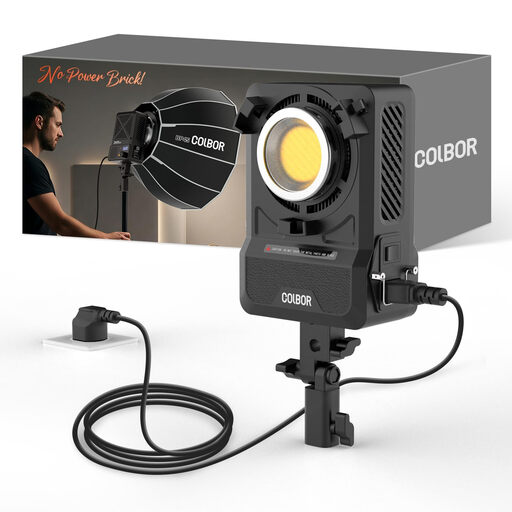
COLBOR 200W bi-colour COB video light
An option if you want to shape the light around your knitting using a suitable light modifier.
200 W; 2700–7000 K; Bowens mount.
View at Joybuy
 No image available
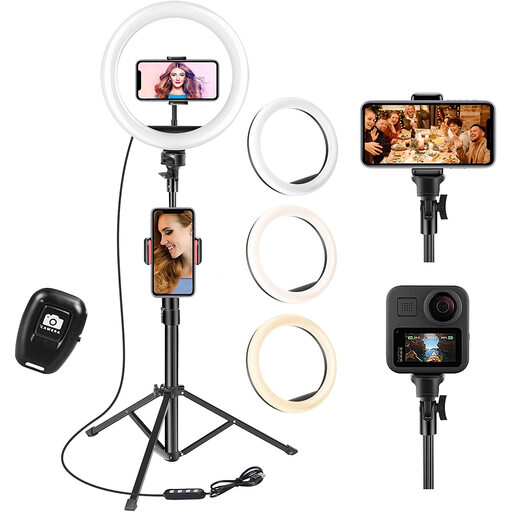
Ring light with tripod, 10 inch
An option for a freestanding phone setup; check that the ring is well positioned with your hands and knitting in shot.
10 inch; remote control; three colour settings and ten brightness levels.
View at Joybuy
 No image available
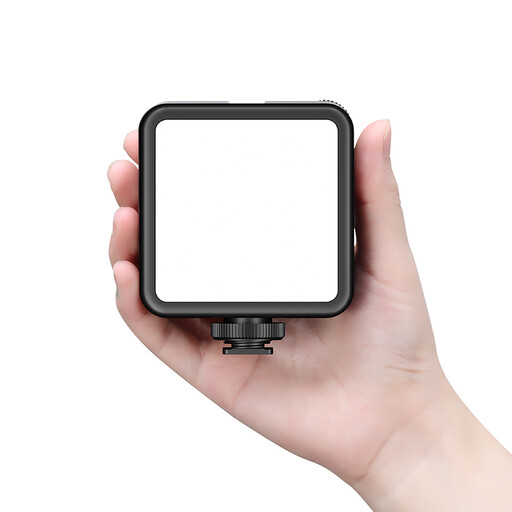
Ulanzi VL81 rechargeable LED video light, black
A rechargeable video light to take with you to another filming location.
View at Joybuy
 No image available
Ulanzi VL49 RGB video light with battery
A compact light for a flexible position when filming a demonstration.
2000 mAh; 2500–9500 K; dimmable; magnet on the back. According to the product warning, use a standard adapter with a 5 V output and avoid higher charging voltages.
View at Joybuy
 No image available
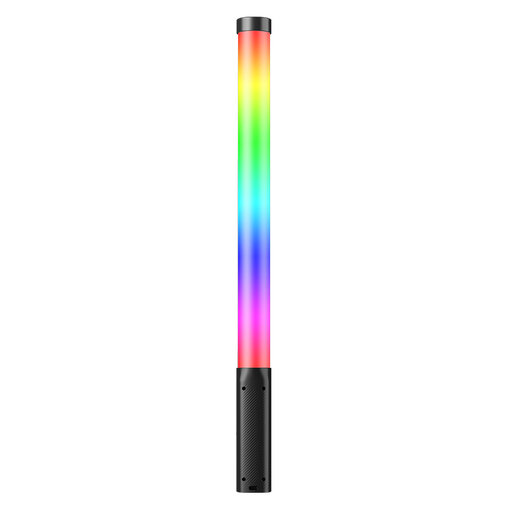
Ulanzi VL119 RGB light wand, 10 W
A light wand you can position flexibly when filming.
10 W; RGB; 2500–9000 K; 1/4-inch connection.
View at Joybuy
Frequently asked questions
How can you reduce banding in footage under artificial light?
Test all the lights together with the video settings you plan to use. For a 50 Hz environment, Sony lists 1/50 or 1/100 second among the possible shutter speeds; the right setting and available anti-flicker features vary by camera.
How can you keep yarn colours consistent between recordings?
Keep the lighting setup as consistent as possible and set the white balance to match the light falling on the yarn. Make a test recording to check the result; Canon explains that artificial light can create a colour cast if the white balance is not set appropriately.
What should you check when installing and maintaining your light?
Check that the clamp or tripod fits securely and that the power supply is suitable for the version you have chosen. For the Godox SL60IIBi, the manufacturer’s instructions include keeping the unit dry, not looking directly into the light source and unplugging it before cleaning.
Does a video light need a CE mark in the Netherlands?
This depends on the light, its power supply and the product rules that apply. For electrical equipment with a rated AC voltage of 50–1000 V or a rated DC voltage of 75–1500 V, the NVWA describes the applicability of the Low Voltage Directive. A CE mark is not, by itself, an independent inspection and does not prove that a specific unit has been checked.
What are your rights after buying online in the Netherlands?
For online consumer purchases, you generally have 14 days from delivery to change your mind, subject to legal exceptions. You are also entitled to a product that, under normal use, does what you could reasonably expect; according to the ACM, there is no fixed period for the statutory guarantee in the Netherlands.


