
Card maker working with glossy details
If you film foil, glossy ink or sleeves, a movable light source and diffusion can help reduce distracting reflections on your work. Adobe and Nikon explain how diffused light can soften harsh highlights.


Start with a dimmable light that you can position beside or at an angle above your work surface, and soften if needed. A dark background doesn’t automatically call for the brightest light. Then choose between a desk panel, a panel on a stand or a COB light with a suitable light modifier, depending on your workspace, reflective materials and preferred mounting option. Adobe explains that direct, hard light can create sharp shadows and highlights, so test the positioning with your own cards and camera.
If you film foil, glossy ink or sleeves, a movable light source and diffusion can help reduce distracting reflections on your work. Adobe and Nikon explain how diffused light can soften harsh highlights.
If you want to show paper and ink colours clearly, consider adjustable white light and setting an appropriate white balance. Adobe describes white balance as a camera setting that affects how colours appear in an image.
If you need to fit your camera, hands and light around one work surface, check the available clamping space, height and room for a stand in advance. Elgato and NEEWER describe different mounting options for their models.
| What to consider | What should you check? | Who is this important for? |
|---|---|---|
| Details and reflections | Check whether the light can be moved and whether a diffuser or suitable light modifier is available. Test it with reflective materials. | If I’m filming foil or glossy ink, I want to keep the details visible without distracting highlights or harsh shadows from my hands. Around 36% of consumers prioritise controlling details and reflections. |
| Colours on camera | Check whether the colour temperature is adjustable and set your camera’s white balance accordingly. Make a test recording with your own paper and ink. | When filming colour-sensitive cards, I want white paper and coloured ink to remain recognisable on video. Around 29% of consumers give colour consistency top priority. |
| Positioning around the table | Measure the available space and check the clamp, height and stand for each version. Allow for the position of your camera and hands. | At a small table, I want to position the light outside the camera frame and out of the way of my hands. Around 21% of consumers prioritise limited set-up space. |
| Power and components | Check exactly what’s included in the box and what power supply is required. If it has a battery, check the stated run time. | Before a lesson, I want to know which power supply and mounting option I need, so the set-up works for the planned recording time. Around 14% of consumers prioritise having a complete set-up that meets their needs. |
Godox and amaran list light output under specific conditions, such as when using a particular reflector. That figure alone doesn’t tell you how evenly your whole card or work surface will be lit.
Compare the measurement conditions and assess the positioning, diffusion and coverage on your own work table.
Check whether you’ll need a separate light modifier or a suitable mount to get the lighting effect you want.
The NEEWER NL660 with a stand differs from the version without one; according to Elgato, the maximum light output of the Key Light Air MK.2 depends on the power supply. A portable light’s battery life can also limit how long you can record for.
Check the exact version, included components and power requirements against your lesson set-up and planned recording time.
The chosen version may not include a stand, battery, adapter or larger light modifier.
Your camera’s white balance also affects how white paper and coloured ink look. A stated colour-rendering value therefore doesn’t guarantee that the recording will match your materials exactly.
Make a colour test with your own cards and camera settings before recording a lesson.
According to Elgato, the Key Light Air MK.2 is a compact desk panel for a fixed filming spot, with a desk mount and adjustable white light.
The NL660 is an adjustable bi-colour LED panel; the manufacturer describes versions with and without a stand.
According to Godox, the SL60IIBi is a COB light with a Bowens mount, designed for use with a suitable light modifier.
According to amaran, the COB 60x S is a compact bi-colour COB light with a Bowens mount and a small reflector.
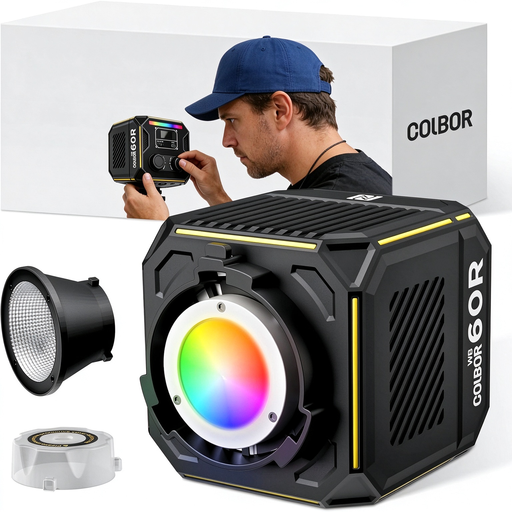
According to SmallRig, the RC 60B version 4376B is a portable COB light with a built-in battery, designed for filming in different locations.
For each video light, check whether the mounting option, adjustability and power supply suit your card-making table. According to the European Union, CE marking is required only for products covered by applicable harmonised EU rules that require it. Check the identity and conformity information for the specific product on offer, as a mention on a product page doesn’t in itself prove conformity.
 No image available
This portable light may suit you if adjustable lighting and use in different filming locations are important.
The product information lists a built-in 59 Wh battery, bi-colour and full-colour lighting, and a colour temperature range of 2700–6500 K. A 60 W PD charger with a 20 V/3 A output is listed for battery use.
 No image available
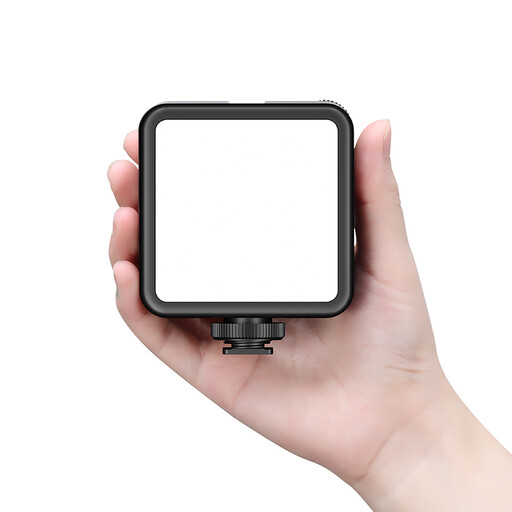
Its adjustable colour temperature and mounting option may suit a compact camera set-up.
The product information lists 81 LEDs, USB-C charging, a cold shoe mount and an adjustable range of 3200–5600 K. When using the light at full power, do so in a well-ventilated space and avoid prolonged direct exposure to the light.
 No image available
The magnetic back can be useful if you have a suitable surface to attach the light to.
The product information lists dimmable output, a built-in 2000 mAh battery and a colour temperature range of 2500–9500 K. Use a standard 5 V adapter and don’t look directly into the LED panel at close range.
 No image available
Adjusting the beam can help when you want to focus the light on a small area of your shot.
The product information lists a zoom from spot to flood, four brightness levels and magnetic mounting. Don’t look directly into the light at close range and don’t use it near flammable materials.
 No image available
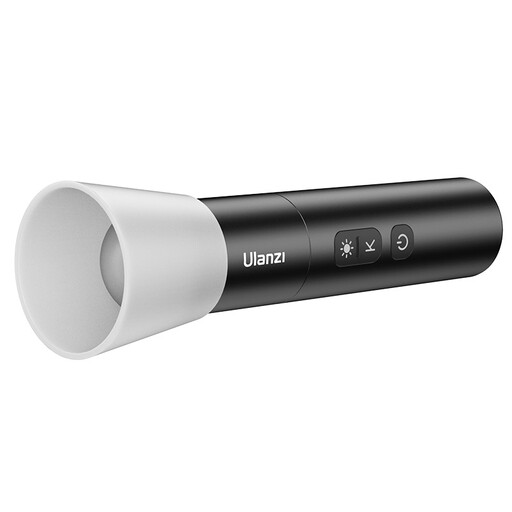
The magnetic base and threaded mount offer options if they suit your set-up.
The product information lists a colour temperature range of 2000–5500 K, four brightness levels, a 2000 mAh battery and a weight of 187 g. It also lists a 1/4-inch thread.
No. Start with a movable light positioned at an angle beside or above your work surface, then make a test recording while moving your hands. Adobe explains that direct, hard light can create sharp shadows and highlights; the right position depends on your materials and camera angle.
Set your camera’s white balance to suit the lighting and avoid unintended changes between light colours. Compare a test recording with your own materials: adjustable colour temperature or a CRI rating alone doesn’t show how the final colours will look on video.
Make a test recording with your chosen light and camera settings before the lesson. Sony explains that lighting and shutter speed can cause visible banding and recommends adjusting the shutter speed where your camera supports it. The suitable setting depends on your camera and light source.
It varies by model and version. Only the version of the NEEWER NL660 with a stand includes one, and the NP-F battery isn’t included. Elgato states that the Key Light Air MK.2’s light output depends on the power supply, so check the packaging and power requirements for the version you choose.
Only if the applicable EU rules for that product category require CE marking. The European Union explains that the mark applies to products covered by such harmonised rules. Check the identity and conformity information for the product you want to buy; a mention on a product page doesn’t in itself prove conformity.