Choose a light that you can aim at the playing area and adjust the brightness on; then check in a test recording that the corners of the board, cards and moving hands are all clearly visible. A panel with suitable diffusion is a sensible starting point for lighting a whole board, while a compact desk light can save space and a small rechargeable light is better suited as an extra for details. Diffusion softens the light, but its direction and any light modifiers also affect how much light reaches the background.
Who is this buying guide for?
For filming a full-board overview
You film the whole board while explaining the rules and want to keep the cards at the edges and moving hands in shot too. The size of the playing area and the camera position will determine which lighting set-up is right for you.
For filming glossy game components
You show cards in sleeves, laminated rulebooks or shiny tokens. You want to be able to soften or reposition the light when reflections make the text harder to read.
For filming at a small table
You pack away your filming set-up afterwards, so you might compare a desk clamp, tripod or small extra light. Check that the mounting option will fit without appearing in shot.
What should you look for when choosing?
Start by considering how much of the playing area the light needs to cover. Then decide whether you want to soften reflections or limit spill onto the background, before choosing a mounting option and power supply to suit your table set-up.
| What to consider |
What should you check? |
Who should give this more weight? |
| Lighting the whole board |
Compare the size of the playing area with the possible light position. Film a test with your hands above the board and check the corners too. |
I want to show the whole game and my hands at the same time, not just the centre of the board; around 36% of consumers prioritise full-board coverage. |
| Reducing reflections on cards |
Check whether the colour temperature is adjustable and whether a suitable softbox can be fitted to the light. Test it with your glossiest cards and adjust the angle of the light if needed. |
I want to keep the text and colours on glossy cards easy to make out; around 29% of consumers give controlling reflections top priority. |
| Keeping the background dark |
Assess the board and background together in one recording. Check whether any grid is suitable for your chosen light and whether the edges of the board remain visible. |
I want to light the playing area without spilling too much light onto the background behind the table; around 21% of consumers prioritise limiting light spill. |
| Table space and power |
Measure the available table edge and the height you need. Check the mount, cable, adapter and any battery for the exact model. |
I want to be able to put the light away easily after filming, and need a suitable place for it and a power source; around 14% of consumers give set-up space and power top priority. |
Common mistakes
-
Comparing light output figures directly
Lux at different distances and lumens, which describe total light output, do not measure how much light falls on your playing area in the same way. Without a like-for-like measurement basis, these figures do not tell you which light will illuminate the whole board better.
Only compare figures when the unit and measurement set-up are the same. To help you choose, make a test recording at your own table.
-
Assuming soft light will automatically keep the background dark
Diffusion softens the light; a grid or other modifier limits its spread. These are different features. A grid can also affect the amount of light reaching the outer parts of the board.
Check that the softbox and grid are compatible with the exact model, and assess the board and background together in shot.
-
Checking the power and mounting options only after buying
The maximum light output of the Elgato Key Light Air MK.2 depends on the available USB-C power supply. A desk clamp will not fit every table either.
Before ordering, check what is included in the box, the power requirements, the thickness of your table and the height you need for the light.
Brands to use as a reference
amaran
The P60x is a bi-colour panel for a fixed set-up; Aputure describes how to attach a softbox and grid.
- Aputure lists an adjustable range of 3200–6500 K and a maximum of 5070 lux at 1 m at 5600 K. This is a manufacturer figure measured under specific conditions, not the illuminance on a board.
- Check the mounting option and box contents for the version on offer.
Godox
The P260C Pro is a panel worth considering if you want to compare adjustable colour temperature and different power options.
- Godox lists a colour temperature range of 2800–6500 K, battery and DC power, and USB-C.
- The description of a diffuser as softening the light is not an independent test of reflections on board game cards. Make sure you are looking at the P260C Pro, not a differently named P260 model.
Elgato
The Key Light Air MK.2 is designed for a compact desk set-up and, according to Elgato, comes with a desk clamp.
- Elgato lists a colour temperature range of 2900–7000 K and a maximum of around 2100 lumens with sufficient power.
- According to the specifications, maximum brightness requires a suitable USB-C power supply of at least 27 W. Also check that the clamp and height will work with your camera set-up.
Ulanzi
The VL49 RGB is a small rechargeable light for details or an extra accent; do not assume that one unit will light the whole board without making a test recording.
- Ulanzi lists a 2000 mAh battery, magnetic mounting and a maximum of 800 lux at 0.5 m.
- The figure at 0.5 m is not directly comparable with panel figures measured at 1 m. Also check that the version is the VL49 RGB, not the separate VL49 daylight lamp.
Video lights at Joybuy
This Joybuy selection includes adjustable camera and video lights for compact or supplementary lighting. Make a test recording to see whether your chosen set-up covers the whole board without unintentionally lighting the background.
 No image available
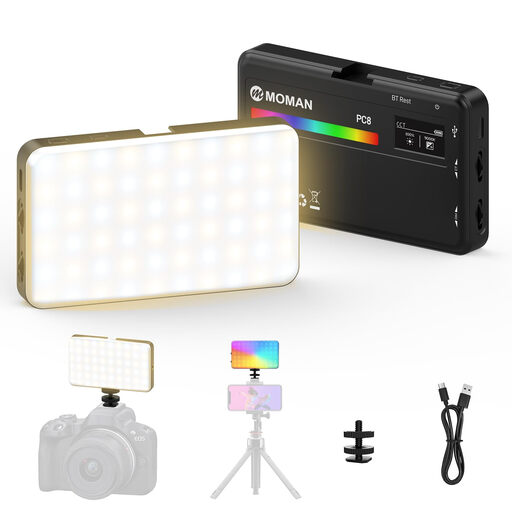
MOMAN PC8 RGB camera light
This portable light may suit a compact camera set-up; check with a recording that it provides enough coverage for your board.
The product description lists 360° colour control, 2500–9000 K, 0–100% brightness adjustment, a rechargeable battery and a 1/4-inch mount.
View at Joybuy
 No image available
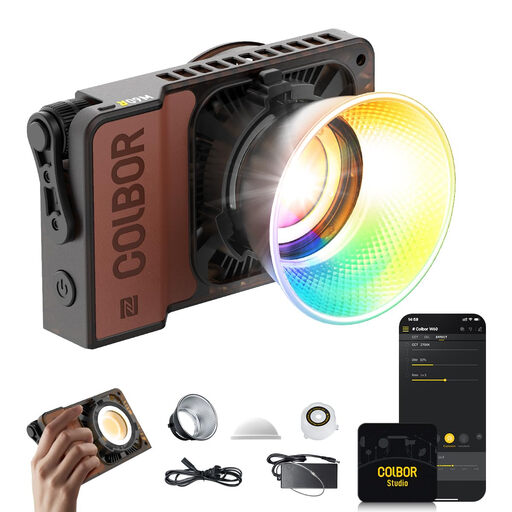
COLBOR W60R RGB video light, 60 W
Adjustable colour and brightness may be useful if you want to tailor the light to your playing area; assess the result and the background in the same test recording.
The product description lists 60 W, RGB/HSI control, 2700–6500 K and operation via an app or buttons.
View at Joybuy
 No image available
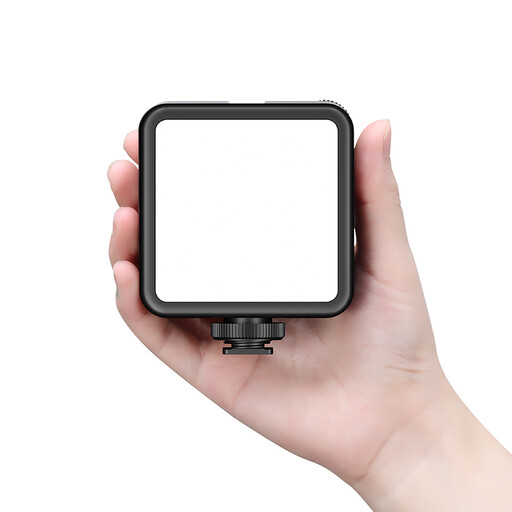
Ulanzi VL81 rechargeable LED video light, black
The cold shoe mount may suit a camera or tripod set-up; check that its position lights the whole playing area well.
The product description lists 81 LEDs, USB-C charging and the option to stack multiple lights.
View at Joybuy
 No image available
Ulanzi VL49 RGB video light, 2000 mAh
This compact light is better suited as an extra for a detail or accent than as an obvious solution for lighting a whole board. Check the result with a test recording.
The product title lists RGB and colour temperature adjustment from 2500–9500 K, dimming and a magnet on the back. Use a standard 5 V adapter, keep it away from moisture and do not look directly into the LED panel from close up.
View at Joybuy
 No image available
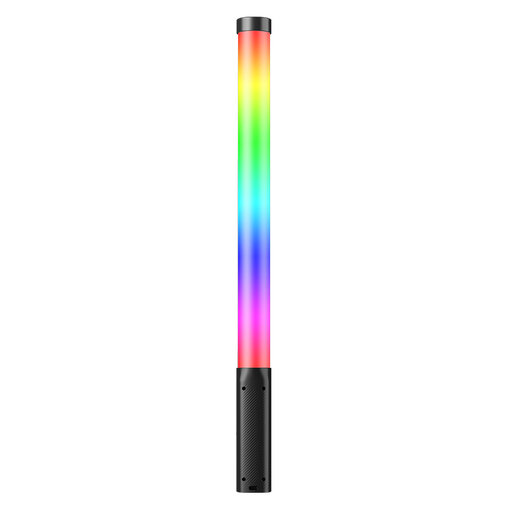
Ulanzi VL119 10 W RGB light wand
The built-in battery and tripod mount may suit a portable set-up; check that you can aim the light wand effectively at the board.
The product description lists 10 W, RGB, 2500–9000 K, a 1/4-inch socket and a weight of around 202 g.
View at Joybuy
Frequently asked questions
How do you adjust the light without losing sight of the board or background?
Make a recording that shows the whole board, your hands and your glossiest card. Adjust the angle and brightness until the text is readable, and check how much light reaches the background too. A suitable grid can limit the spread of light; check that the edges of the board remain visible.
What should you check about the mounting and power supply?
Check the mounting option and box contents for the exact model. For the Key Light Air MK.2, Elgato lists a desk clamp and a maximum light output that depends on the available USB-C power supply. Aputure describes how to mount the P60x and its softbox; follow the instructions for the model you choose.
Should you report a faulty light directly to the manufacturer?
For a consumer purchase in the Netherlands, the retailer is your point of contact for your statutory guarantee. According to the Dutch government, there is no fixed statutory guarantee period in the Netherlands: what matters is what you can reasonably expect from the product. A manufacturer's guarantee is an additional benefit.
What product safety rules apply to an electric video light in the Netherlands?
Electrical equipment sold in the Netherlands must meet the applicable European product safety requirements. Business.gov.nl explains that the manufacturer must affix the CE marking and draw up an EU declaration of conformity once the relevant technical and administrative requirements have been met. Check the documentation for the exact model; a brand name or product listing alone does not prove that a specific offer meets these requirements.


