
Artists who see hand shadows in their footage
If you film from above, you’ll want the paper and your moving hands to remain clearly visible. So pay attention to the direction of the light and whether you can soften it.


For drawing demonstrations, choose continuous lighting that you can position at an angle and soften, so your hands are less likely to cast shadows over your drawing. Two adjustable panels give you scope to light your work from both sides. Alternatively, you could use a COB light with a suitable light modifier, but you’ll need to consider the accessories required and the space needed for your setup. Record a test clip with your own camera at the dimming level you plan to use, and check that colours remain recognisable and no bands appear.
If you film from above, you’ll want the paper and your moving hands to remain clearly visible. So pay attention to the direction of the light and whether you can soften it.
If you discuss pencil, ink or paint colours, check the stated colour-rendering performance and adjustable colour temperature. Also check the colours using your own camera and a fixed white balance.
If you pack away your lights after filming, weigh up their size, power supply and mounting options against the size of the paper you want to illuminate.
Start with how well the light covers your paper and the space around your hands and camera. Then compare colour settings, power options and the accessories you’ll need to position or soften the light.
| What to consider | What to look for | Who will value this? |
|---|---|---|
| Shadows and glare | Check whether you can angle and soften the light; assess the image while moving your hand across the paper. | When I film from above, I want to keep both my hand and the lines visible. That’s why around 31% of consumers put shadows and glare at the top of their list. |
| Colours and white balance | Check the colour-rendering specification for the exact model and test colours with your camera and a fixed white balance. | When I’m using coloured pencils, ink or paint, I want to show the differences between shades clearly. This is the main buying concern for around 31% of consumers. |
| Banding in video | Record test clips with your own camera, shutter speed and the dimming level you intend to use. | When I record my demonstration, I don’t want visible bands or changes in brightness. This is a top priority for around 23% of consumers. |
| Space and setup | Check where the light, stand, mount and cables will fit, and what’s included in the exact package. | If I need to clear away my workspace after filming, I want to know how many parts I’ll need to move and store. Around 15% of consumers prioritise this concern. |
Manufacturers state light output under different conditions. For example, the maximum lux rating for the amaran 100x S is measured with a reflector; figures like this don’t automatically tell you how well your paper will be lit.
Only compare figures when the distance, setting and light modifier are the same. Then assess coverage across your own drawing area.
The listed contents of the amaran 100x S don’t include a softbox or stand. Without a suitable light modifier, you won’t automatically get the soft-light setup you want.
Check the beam and make sure your chosen light modifier fits the mount before selecting your accessories.
You may need to buy and store a suitable light modifier and a stand separately.
LED flicker can cause visible bands or changes in brightness in video. Sony Support describes these image problems, but the result also depends on the recording conditions.
Record a test clip with your camera, shutter speed and the dimming level you intend to use while filming.
The NL660 panel kit is an option if you want to position two lights and have room for stands.
The amaran 100x S is a bi-colour COB light for anyone who wants to choose a light modifier separately.
The SL60IIBi is a bi-colour COB light for a permanent home studio.
The Lumi Bicolor 12W Medium is designed for a compact, portable setup.
The VL49 RGB is a pocket-sized option for fill light or a very small filming space.
These Joybuy products range from COB video lights to rechargeable and compact models. When choosing, consider the light modifier you need, the space available and how well the light covers your paper; check the coverage with a test recording.
 No image available
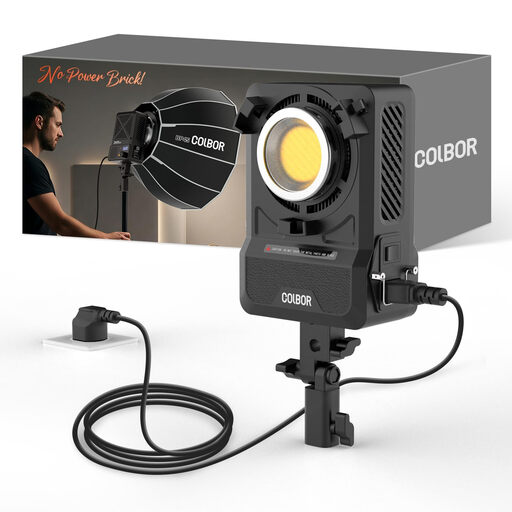
Suitable for a permanent home studio where you want to use a COB light with a suitable light modifier of your choice.
200 W; bi-colour 2700 K–7000 K; Bowens mount; built-in power adapter.
 No image available
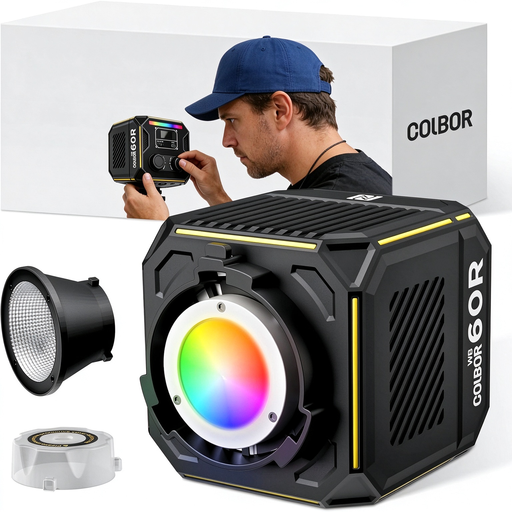
A portable option if you want to use the light in different locations; check how it illuminates your paper in a test recording.
60 W; built-in 59 Wh battery; bi-colour 2700 K–6500 K and full colour.
 No image available
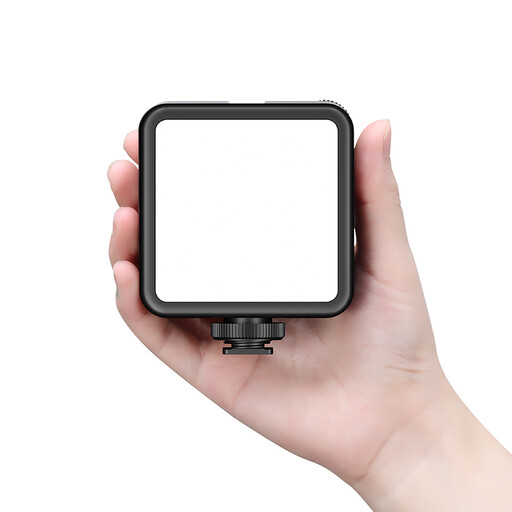
An option if you’re looking for a rechargeable light for a portable video setup. Test whether it reaches the whole sheet of paper.
 No image available
A compact option for fill light or a small filming space; don’t assume one light will illuminate the whole sheet evenly without testing it first.
RGB; dimmable; 2000 mAh battery; adjustable range of 2500 K–9500 K.
 No image available
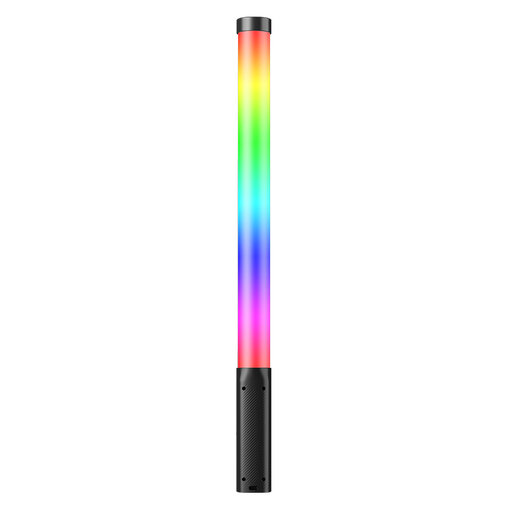
An RGB light wand to consider as an additional light source; check in a test recording whether the colour rendering suits your drawing.
10 W; RGB light wand.
Not necessarily. First, check your camera’s view to see where reflections and hand shadows fall. The position and softness of the light are important considerations for your drawing desk setup; you can angle a light beside the camera towards your work surface.
Record a short test clip while moving your hand across the whole sheet of paper. Check the corners, glare, colours and any banding at the dimming level you plan to use. Sony Support explains that LED flicker can cause image problems.
Check that stands and mounts are secure and that cables don’t cross your work surface. Follow the instructions for the exact model when it comes to power and maintenance. The NEEWER NL660 kit reviewed includes mains adapters; the NP-F batteries mentioned are needed separately for battery-powered use.
For a standard online consumer purchase, you generally have a legal cooling-off period of up to 14 days after delivery, subject to legal exceptions. ACM ConsuWijzer also explains that a product that doesn’t perform as you could reasonably expect under normal use may be covered by the legal guarantee; you should contact the seller about this.
Check which EU requirements apply to the exact light and power supply. The European Commission explains that the Low Voltage Directive applies to equipment rated at 50–1000 V AC or 75–1500 V DC. Where CE marking is required, the manufacturer is responsible for assessing conformity; a CE mark is not an independent performance test.