
Collector with reflective coins
Wants to show shine and relief without distracting reflections from the light or camera, and to adjust the angle of the light for each coin.


Start with an adjustable, dimmable continuous light and check both reflections and visible relief in a test recording. A compact panel suits a small, portable setup; for a permanent table, consider a larger panel or a COB light with a separate light modifier. More diffusion is not automatically better: according to a coin photographer on the NGC forum, fully diffused light can make some coins look flat.
Wants to show shine and relief without distracting reflections from the light or camera, and to adjust the angle of the light for each coin.
Wants to film successive coins under similar, adjustable lighting so that details and colours remain recognisable.
Moves the setup during a tour and is mainly looking for a compact light with suitable power and mounting options.
Start by making a test recording with the coin you want to film. This lets you see whether you can adjust the light’s position and brightness without reflections or flat lighting hiding important details.
| What to consider | What to look for | Who this matters most to |
|---|---|---|
| Managing reflections | Check whether you can adjust the direction and distance; test the light with a reflective coin. | When I film a shiny coin, I want to move distracting reflections without losing its shine and relief. Around 36% of consumers who prioritise controlling reflections say this is their main consideration. |
| Relief and detail | Look for dimming and a choice of light angles; check inscriptions in a moving test recording. | When I film small details, I want the relief and inscriptions to remain visible without the lighting making the coin look flat. Showing relief is the top priority for around 29% of consumers. |
| Consistent light colour | Check whether the colour temperature is adjustable and whether you can reuse a chosen setting. | When I document several coins, I want to film them under similarly adjusted lighting. Around 21% of consumers prioritise consistent light colour. |
| Space and power | Check the mounting, power supply and included support; find out whether a tripod or light modifier is needed separately. | For a small or portable filming space, I want the light to fit where I need it and be easy to mount. Around 14% of consumers prioritise a compact setup. |
For some coins, the difference between relief, shine and polished areas can become less clear if the direction of the light is not visible enough.
Compare different light angles and levels of diffusion in a test video.
The Godox LEDP260C and P260C Pro are different models with different specifications. The Ulanzi VL49 RGB and VL49 Pro are also separate versions.
Check the full model name, power supply, included accessories and specifications of the version you want to buy.
Without a suitable mounting position or power supply, you may not be able to use the light at the angle you want.
Check what’s in the box and what your setup needs. If a version is offered, don’t assume it comes with a Dutch plug without checking.
You may need to buy a tripod, light modifier or suitable power supply separately. Check in advance what’s included.
The P260C Pro is an option for a panel mounted separately in a fixed filming position.
The NL-116AI is designed for a compact tabletop setup; the CB60B is intended for a more extensive setup with light modifiers.
The VL49 RGB is a small battery-powered light for a portable setup or as an additional light.
The RM120 is a portable, dimmable RGBWW light for anyone considering a diffuser and USB-C power.
The Halo 60x is a compact COB light for a setup with a separately selected light modifier.
These products suit a tabletop setup with adjustable continuous lighting, or a compact, portable filming space.
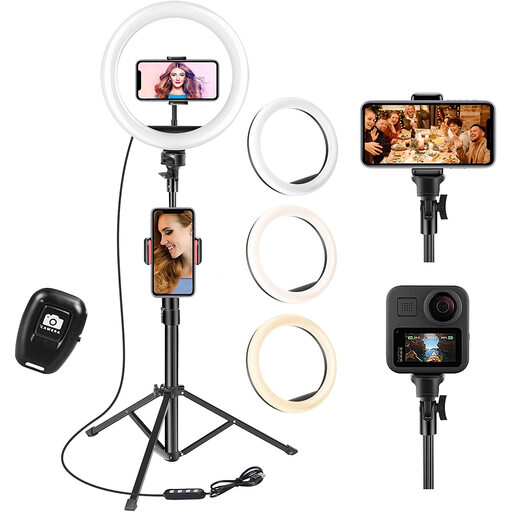 Image unavailable
An option for a fixed tabletop setup where you want to position the light using the tripod.
The product information lists a 63-inch tripod, 10 brightness levels and three colour temperatures. One description states that the colour temperature can be adjusted from 3000–6000 K.
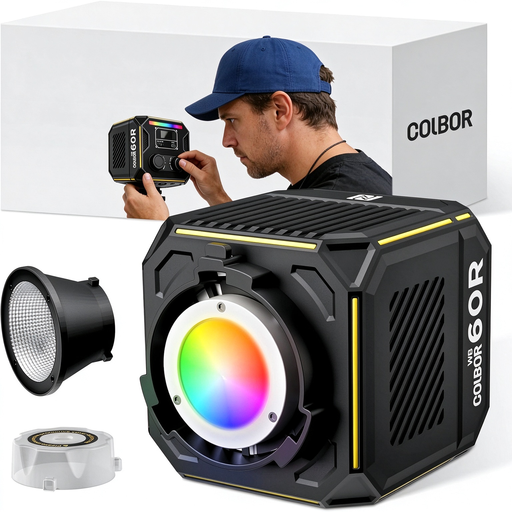 Image unavailable
The built-in battery may suit a portable filming setup; check in advance that the power supply meets your needs.
The product information lists a 59 Wh battery, a stated cordless runtime of one hour at 60 W, 2700–6500 K and CRI 96+. For battery use, the description specifies a 60 W PD charger with 20 V/3 A; it also lists a USB-C-to-USB-C cable.
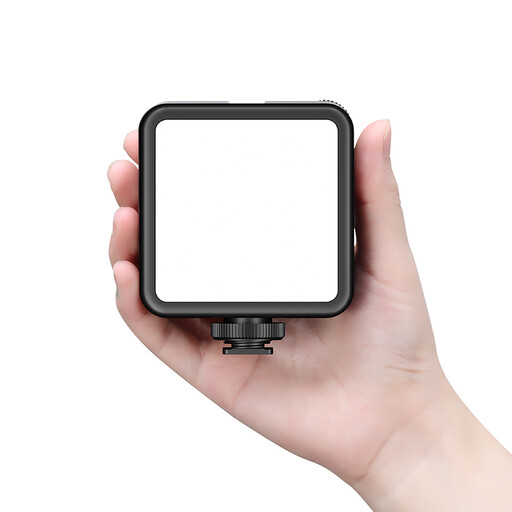 Image unavailable
A compact option for a portable filming setup where you want to adjust the light while recording.
The product information lists a built-in battery, USB-C charging and a cold shoe mount. Brightness is continuously adjustable; the stated colour temperature range is 3200–5600 K.
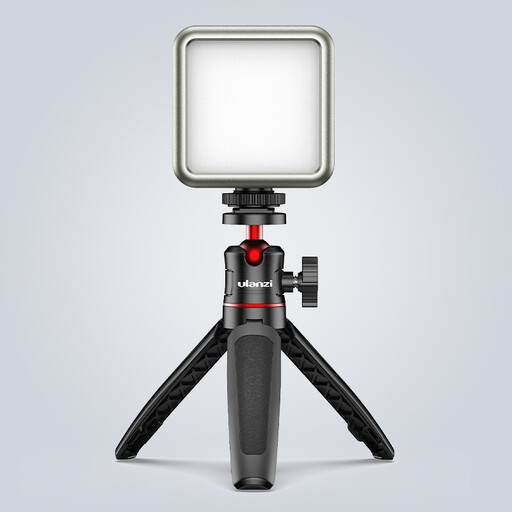 Image unavailable
A small light for a compact, portable setup; check in a test recording whether it provides enough light as your main source.
The product information lists a built-in 2000 mAh battery, dimming and a magnet on the back. A standard 5 V adapter is recommended for charging; the description advises against using a high-voltage fast charger.
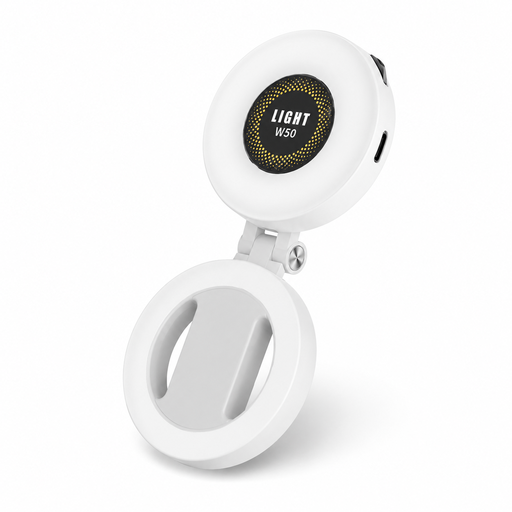 Image unavailable
A portable option for filming with a smartphone; check that the stated mount is suitable for your device and filming location.
The product information lists magnetic mounting, USB-C and an 800 mAh battery. The title states compatibility with iPhone and Android devices.
No. Compare a focused light source with a softer one for each coin. PCGS describes an approach where the direction of the light is adjusted; according to a coin photographer on the NGC forum, fully diffused light can make some coins look flat. So assess the result in a test recording.
Check whether the included mount allows you to position the light at the angle you want, whether the power supply is suitable and whether a tripod or light modifier is included. For example, the NL-116AI is available with or without a mini tripod.
For consumer purchases in the Netherlands, statutory consumer rights apply in addition to any manufacturer’s guarantee. According to ACM ConsuWijzer, the seller is responsible for providing an appropriate remedy free of charge if the product does not perform as you could reasonably expect during normal use; there is not simply one fixed statutory guarantee period that applies to every light.
Check the information for the specific light and for the adapter included or required. For the relevant regulations covering electrical equipment, the NVWA states nominal ranges of 50–1.000 V AC and 75–1.500 V DC; the requirements that apply depend on the model and supply voltage. A CE mark is the manufacturer’s declaration, not an independent certification.