Start with a test recording by the window. Additional adjustable lighting is most useful when shadows on your hands or clay, or changing daylight, make your demonstration harder to see. A diffused panel may suit a small work area, while a focused studio light with suitable diffusion can be more practical for illuminating a larger surface. With any setup, check how colours appear on your camera, as well as the positioning and power supply. This advice applies lighting principles and product specifications; it is not based on comparative hands-on testing. Canon Europe describes using fill light to reduce shadows.
Who is this for?
Teachers who want clay colours to look true to life
You film coloured clay in window light and want to show colour differences clearly at each stage of the lesson. Look for adjustable colour temperature and consistent camera white balance. Canon Europe explains how natural light can change colour.
Makers dealing with shadows on the work surface
You film your hands from above or at an angle and want to reduce shadows on the clay without losing sight of its shape and detail. Canon Europe describes lowering the fill light as a way to reduce shadows cast by the main light.
Teachers working with changing daylight
You record longer lessons or film at different times and want to be able to adjust additional lighting for a repeatable setup. Check how the light is powered, and make test recordings in the window light you expect to have during the lesson.
What should you look for when buying?
Window light without additional electric lighting
Best when: a test recording at your planned lesson time shows that your hands and clay remain clearly visible and the shadows are useful.
Keep in mind: daylight changes in direction, intensity and colour. A reflector on the shadow side can provide extra light without electricity. Canon Europe describes using fill light to reduce shadows.
Diffused, adjustable video panel
Best when: the window remains your main light source and you mainly want to brighten the shadow side of your hands or the clay.
Keep in mind: mounting, power and light spread vary by model. Check whether the panel can shine from beside or above your work surface. Manufacturer specifications do not guarantee the same results with your camera and daylight.
Focused studio light with diffusion
Best when: you want to light a larger part of your work surface independently in weak or changeable window light, and have room for a sturdy setup.
Keep in mind: choosing a suitable diffuser or softbox and positioning it safely takes extra care. You may not need this kind of setup if fill light already solves the shadow problem.
| What to consider |
What should you look for? |
Who is this important for? |
| Clay colours |
Check the adjustable colour temperature and make a test recording with the clay and camera white balance you plan to use. Godox specifies 3300–5600 K for the LEDP260C; Elgato lists 2900–7000 K for the Key Light Air MK.2. These are manufacturer specifications, not a direct comparison of colour performance. |
If I want to show colour differences clearly at each stage of a lesson, I check how the clay looks on my camera. Around 31% of consumers put colour first when choosing what to buy. |
| Hands and shape details |
Make a test recording first and see where your hands cast shadows on the clay. If you add a light, check whether you can position it on the shadow side and whether the shadows remain useful. |
If I want to film the clay being worked without distracting shadows, I look at how my hands shade the work surface. Around 31% of consumers put a clear view of details first. |
| Changing daylight |
Test the light at the time you plan to film, and check the dimming controls, power supply and recording with your own camera. Sony explains that LED lighting can cause flicker or banding in certain recording conditions. |
If I teach at different times, I want to check whether the exposure remains consistent on my camera. Around 23% of consumers put consistent lighting first. |
| Positioning and power |
Measure the available space and check the mounting and power requirements of the exact model. Elgato lists a desk clamp for the Key Light Air MK.2; the Godox LEDP260C manual specifies an adapter or NP-F970 batteries, which are sold separately. |
If I film at a small worktable, I want to know whether I can position the light properly and keep it powered during recording. Around 15% of consumers put positioning and power first. |
Things to watch out for when buying
-
Choosing based on wattage or CRI alone
A manufacturer’s specification on its own does not tell you how the light, shadows and colours will look with your window and camera.
First, assess a test setup using the clay you plan to film. Compare product specifications only with the conditions and lighting setup they relate to.
-
Planning a mobile setup without checking the power supply
A light that uses an adapter is not automatically ready to use without a mains socket.
Check the exact power requirements and what is included with the model you choose.
The NP-F970 batteries specified for the Godox LEDP260C must be bought separately.
-
Buying a panel without measuring where it will go
A panel that you cannot angle towards the clay from beside or above it may not help with shadows on your work surface.
Measure the desk thickness and available space, and check the mount’s range before choosing a panel or stand.
Brands to consider
Godox
Godox describes the LEDP260C as an adjustable continuous-light panel for uses including video and product photography.
- The manual lists 3300–5600 K, up to 30 W and power via an adapter or NP-F970 batteries.
- The batteries mentioned must be bought separately. These specifications apply to the LEDP260C, not other Godox models.
amaran
amaran describes the Verge Max as a large, diffused desk panel that can also be directed at products.
- The manufacturer lists 2700–6500 K, USB-C PD power and a weight of 3,66 kg for the light.
- Check the exact kit, that the mounting is sturdy and that you have enough space. The stated light quality has not been independently compared in this lesson setup.
Elgato
Elgato positions the Key Light Air MK.2 as a desk panel with a clamp for a permanent filming setup.
- Elgato specifies 2900–7000 K and says that light output depends on the USB-C power supply.
- For the full stated brightness, Elgato specifies a suitable power source of at least 27 W. Check which power supply is included in the box.
Joybuy products
This selection includes compact video and fill lights for additional illumination. The Dutch government states that electrical appliances placed on the market in the EU must carry a CE marking. Check the marking on the specific product being offered.
 No image available
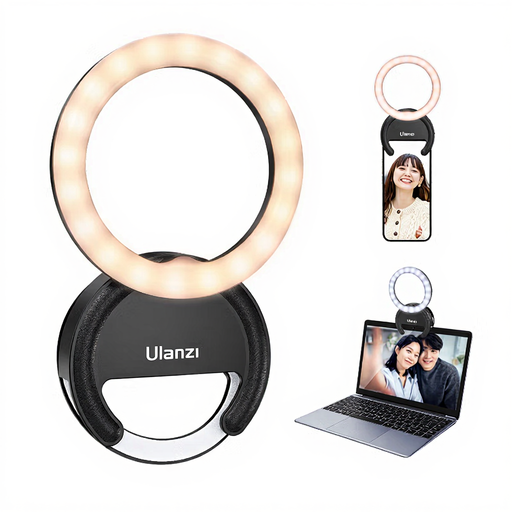
ULANZI 4" Phone Ring Light
A ring light for smartphone filming, with adjustable colour temperature and brightness.
4 inches; 3000–7000 K; 3 colour temperatures and 5 brightness levels.
View at Joybuy
 No image available
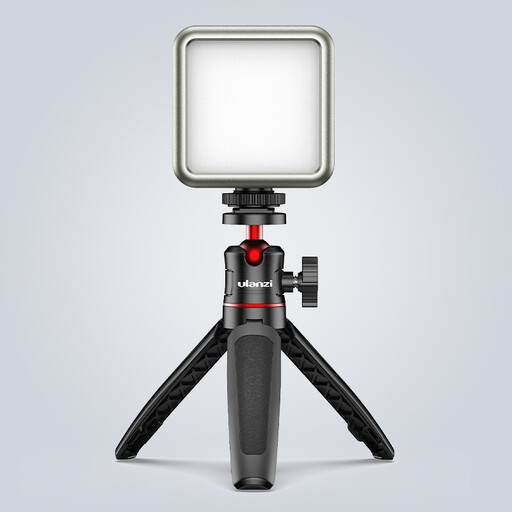
ULANZI VL49 RGB Video Light
A compact, dimmable camera light for anyone who wants to adjust the colour temperature and brightness.
2500–9500 K; built-in 2000 mAh battery; magnet on the back.
View at Joybuy
 No image available
Ulanzi LM001 Mini Fill Light
A portable mini fill light for situations where you want the flexibility to position a small light.
Magnetic LED light; 500 mAh battery. The product description states up to 1.5 hours of continuous light per charge.
View at Joybuy
 No image available
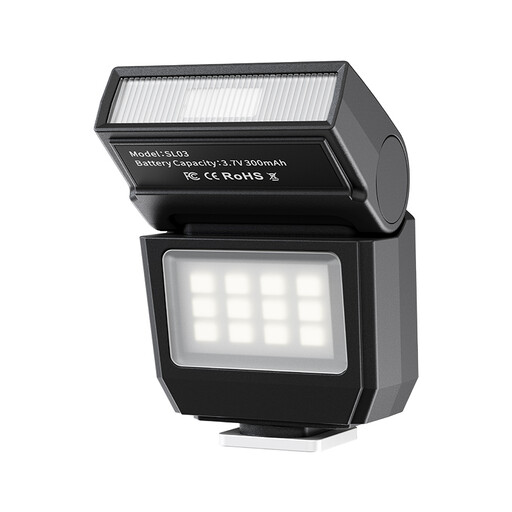
Ulanzi SL03 Mini Speedlight Flash with Video Light
This mini speedlight also has a video light. Check that the connection is compatible with your camera and that the video light function suits your recording.
6500 K; 4 power levels; 90° adjustable head and USB-C charging. Listed for Sony, Canon and Fuji DSLRs.
View at Joybuy
 No image available
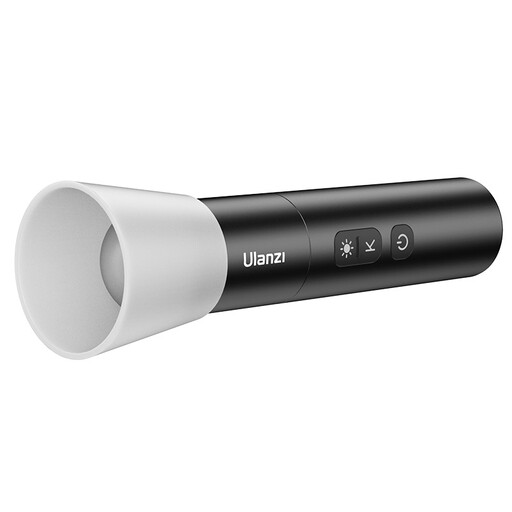
Ulanzi LM07 LED Video Light
A portable bi-colour light for anyone who wants to adjust the colour temperature of their additional lighting.
2000–5500 K; 4 brightness levels; 2000 mAh battery; 187 g; zoom function.
View at Joybuy
Frequently asked questions
How can you add light without removing all the shadows that show shape?
Use the window as your main light source first, then check the shadow side in a test recording. A less powerful fill light on the other side can reduce shadows. Adjust it to show the details you want on the clay and your hands.
Why does the same clay colour look different during a lesson?
Natural light can change colour, and your camera’s white balance also affects how colours are captured. Compare test footage with the actual clay, and check the white balance and light settings when the window light changes.
What can you check if your recording has stripes or flickers?
Record a short video using the brightness and camera settings you intend to use, then play it back. Sony explains that LED lighting can cause flicker or banding in certain recording conditions; a product specification cannot rule this out with your camera.
What can you do if a light bought in the Netherlands does not work properly?
For a consumer purchase, the seller must offer a solution under the legal guarantee; the Netherlands has no fixed statutory guarantee period. Normal wear and tear or damage caused by the user is not automatically covered by free repairs. The Dutch government explains these guarantee rules.
Does a CE marking matter for an electric video light?
Yes. The Dutch government states that electrical appliances placed on the market in the EU must carry a CE marking. Check the marking on the specific product being offered.


