
Maker filming their work from above
You want to keep folding, sewing and the work beneath your hands clearly in shot. Canon Europe describes fill light from the opposite side of the subject as a way to reduce shadows.


Start with continuous lighting that you can direct from beside the camera, then check in a test recording that your hands don’t cast shadows across the work surface. Canon Europe describes lighting from the opposite side as a way to reduce shadows. Two panels let you light from both sides, a studio light with a suitable modifier works well for a fixed set-up, and a desk panel doesn’t need a floor stand. However, each option has different space, accessory and power requirements. Set the white balance to match the lighting, and before buying, check what’s included, how it’s powered and whether the light and any adapter carry the applicable CE marking.
You want to keep folding, sewing and the work beneath your hands clearly in shot. Canon Europe describes fill light from the opposite side of the subject as a way to reduce shadows.
You compare paper, thread or cover materials on camera and want to match the camera’s white balance to the lighting. Adobe explains that white balance affects every colour in a shot.
You need to fit your camera, book and lighting into a limited space. The mounting and power supply are important considerations; Elgato lists a desk clamp for the Key Light Air MK.2.
Choose this if: you’re filming the whole work surface and have room to position lights on both sides. NEEWER lists two panels, diffusers and stands in the NL660 kit.
Trade-off: two stands and power cables take up space. Also check which power supply and accessories come with the version you’re buying.
Choose this if: you have a fixed filming spot and want to adjust the direction of the main light. Godox and amaran specify adjustable white light for the models mentioned.
Trade-off: check whether a softbox or other light modifier and a stand are included. Light readings taken with a reflector don’t automatically describe the illumination you’ll get with a softbox.
Choose this if: you work at a smaller desk and would rather not use a floor stand. Elgato lists a desk clamp and adjustable white light for the Key Light Air MK.2.
Trade-off: check that the clamp fits your desk and that the power supply you use provides enough power for the brightness you need.
First decide whether shadows, material colours, desk space or power are most important for your filming. Then test the set-up with the actual book and your hands in shot.
| What to consider | What should you check? | Who should pay particular attention? |
|---|---|---|
| Shadows from your hands | Make a test recording with both hands above the whole book, and check the shadows while folding and sewing. See whether a second light or diffuser would work with your set-up. | If I want actions and details to remain clearly visible, I focus on positioning and fill light. Around 36% of consumers prioritise visible actions without distracting shadows. |
| Colour rendering | Match the white balance to the lighting you’re using, then review a test recording with the paper, thread or cover material you want to show. | If I’m comparing material colours, I want the lighting and camera white balance to work together. Around 29% of consumers put colour rendering first. |
| Space and mounting | Measure the free space around your camera and work surface. Check the clamp opening and height, and whether the light can sit out of shot. | When my filming desk is small, I want to fit the light beside the book without blocking the work surface. Around 21% of consumers prioritise space and positioning. |
| Power | Check the included adapter and the required USB-C power supply or battery. Test the light at the brightness you plan to use while filming. | If I want to record a full lesson, the power supply needs to suit the length of the recording and my workspace. Around 14% of consumers prioritise uninterrupted filming and power. |
Godox and amaran specify light measurements under particular conditions, such as when using a reflector. These figures don’t automatically predict how evenly a softbox will light your work surface.
Only compare figures taken under the same test conditions, and check the light distribution in a test recording at your own workspace.
NEEWER lists diffusers and stands for the NL660 twin-light kit, but not batteries. What’s included varies between versions.
Check the contents of the exact version you’re buying and compare them with what you need for your filming set-up.
According to Adobe, white balance affects every colour in shot, not just how white appears.
Set the white balance to match your chosen lighting, then review a test recording with the paper and thread you want to show.
Elgato states that the Key Light Air MK.2’s maximum light output depends on the available USB-C power supply.
Check the required power output and test the light with the power supply you plan to use while filming.
The NL660 twin-light kit is designed for a set-up where you want to light the work surface from both sides.
The SL60IIBi is a studio light for a fixed spot where you want to use a light modifier with a Bowens mount.
The amaran 100x S is an adjustable studio light for a set-up where you choose the light modifier and positioning yourself.
The Key Light Air MK.2 is a desk panel for a compact, fixed filming spot.
The FS-150B is a studio light with a Bowens mount, for a fixed set-up with a suitable light modifier.
This selection from Joybuy includes clip-on lights and twin-light kits. For each version, check that the light colour, positioning and power supply are suitable for filming a bookbinding lesson.
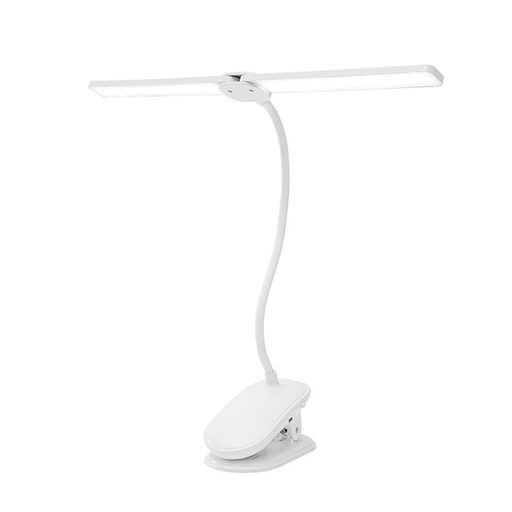 No image available
A clip-on light with two adjustable lamp heads may suit you if you want to attach lighting to a work surface.
Two lamp heads; three colour modes; dimmable brightness; 360° rotation; flexible gooseneck.
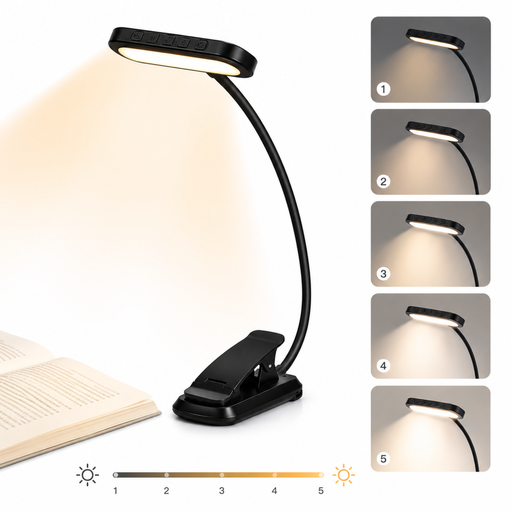 No image available
This compact clip-on light may be a good option if you want to attach lighting to the edge of a desk.
24 LEDs; three light colours; five dimming levels; 1000 mAh battery; USB-C; clip with 315° rotation.
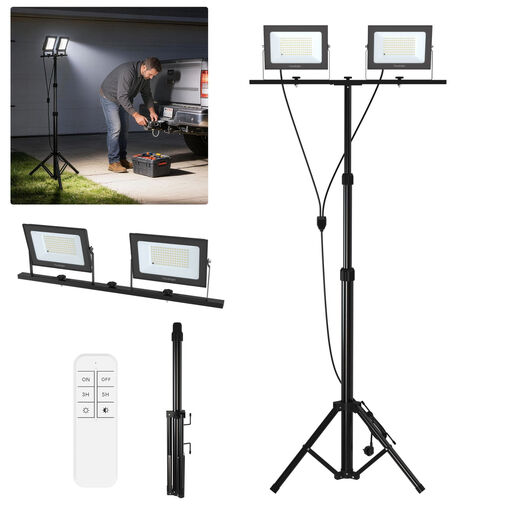 No image available
A set with two lights and a stand may suit you if you want to position separate light sources on either side of the work surface.
2 × 100 W according to the product title; dimmable; individually adjustable lights; 120° beam angle; 3 cm housing; cool white light.
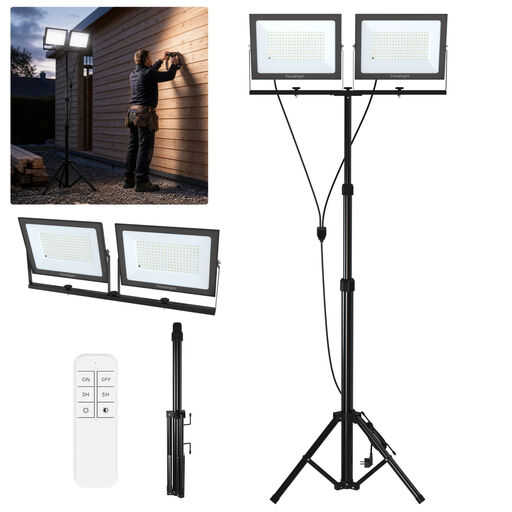 No image available
A set with two lights and a stand may suit you if you want to position separate light sources on either side of the work surface.
2 × 200 W according to the product title; dimmable; individually adjustable lights; 120° beam angle; 3 cm housing; cool white light.
 No image available
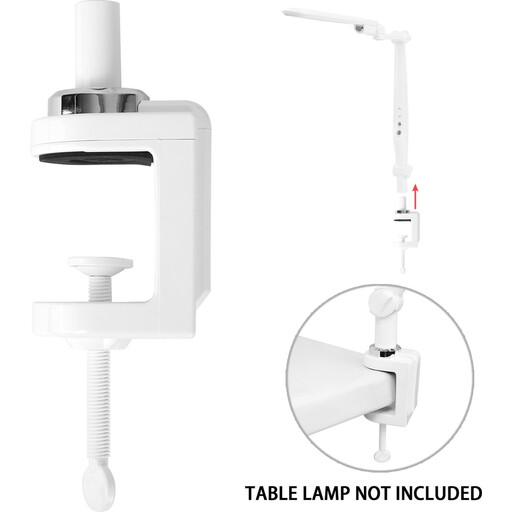
The clip-on mount may suit you if you want to attach a desk lamp to a table and need directed light.
LED lighting; clip-on mount; directed light according to the product description.
With continuous lighting, you can see what the lighting looks like as you film. Make a test recording with your hands in shot to check that the binding details remain visible.
Match your camera’s white balance to the lighting and review a test recording using the actual paper and thread. A Kelvin setting is a starting point, not a guarantee that materials will appear on camera in exactly their true colours.
Test the light at the dimming level and with the camera settings you’ll use for the lesson. Nikon explains that a mismatch between shutter speed, frame rate and the refresh rate of certain light sources can cause flickering. If available, use your camera’s flicker reduction feature.
According to the NVWA, CE marking is compulsory for electrical consumer products covered by the applicable rules. Check which requirements apply to the light and any external power supply. A CE marking is not proof of independent testing.
No. ACM ConsuWijzer explains that, in addition to any retailer’s or manufacturer’s warranty, you have a statutory guarantee: with normal use, a product must meet the standards you could reasonably expect. If it doesn’t, contact the retailer for an appropriate solution.