
Small-parts repairer
You film screws, contacts and close-up work, and want to be able to direct or soften the light without your hands casting shadows over the work area.


For repair videos in a shared bedroom, a compact battery-powered light is handy if space is limited and you want to put everything away afterwards. A larger, adjustable panel gives you more options for lighting your work area softly, but it takes up space and needs mounting. Position it so your hands don’t cast shadows over your work and reflections don’t fall across small components. If you’re recording sound too, listen back to a test recording and check for visible bands using your own camera.
You film screws, contacts and close-up work, and want to be able to direct or soften the light without your hands casting shadows over the work area.
You share a bedroom and want to be able to put away the light, power supply and mounting gear after each session.
You also record speech or repair sounds and want to check your own recording for light noise and visible flicker.
Best for: a small work area, limited space for a tripod and a light you can put away after filming.
Trade-off: a fixed colour temperature gives you less flexibility to match the room lighting; a small light source may need extra diffusion or a different angle when working with shiny parts.
Best for: when you can make space and want to light the whole repair area from the side or at an angle from above.
Trade-off: check that the panel and mount will fit; you may need to buy suitable batteries separately.
Best for: when you have space to shape the light and want to use the supplied softbox.
Trade-off: the amaran P60x has active cooling; if you’re recording sound at the same time, assess the fan noise with a test recording.
| Consideration | What to look for when buying | Who it matters more to |
|---|---|---|
| Detail and reflections | Check that the panel, diffuser and mount fit outside the shot; make a test recording with shiny parts. | If I want to show small details without distracting reflections, this is my priority. Around 33% of consumers consider this their main reason for buying. |
| Space and storage | Measure your table and storage space, and check whether the version includes a tripod, clamp or camera mount. | If I share a bedroom and want to put my setup away after filming, I focus on size and mounting. Around 27% of consumers prioritise space and storage. |
| Noise while recording | Check the cooling method and listen back to a test recording with the light and microphone in their planned positions. | If I’m recording explanations or repair sounds, I don’t want distracting light noise in the recording. Around 20% of consumers consider quiet recordings their main reason for buying. |
| Colour and image consistency | Check the colour temperature range and test your preferred light setting with the camera settings you plan to use. | If I want consistent colour and exposure, I also check the video for bands and colour differences. Around 20% of consumers consider this their main reason for buying. |
Versions may differ: the Neewer NL660 is available in versions with and without a tripod. NP-F batteries for the Godox LEDP260C are sold separately.
Check the contents of the exact version on offer and decide first where the light can be placed safely.
A suitable tripod or NP-F batteries may need to be bought separately.
The Ulanzi VL49 described here has a fixed 5500 K light; the VL49 RGB is a different version with adjustable colour.
Compare the full model name and specifications, and don’t assume the RGB version is identical to the fixed 5500 K model.
Manufacturer brightness figures don’t automatically tell you how reflections and shadows will look in your workspace.
Assess the positioning and diffusion on your own work surface, and make a test recording.
Godox’s manual lists the LEDP260C for macro and video recording, among other uses.
Neewer describes the NL660 as a larger bi-colour panel with a diffuser and a choice of mains power or NP-F batteries, which are sold separately.
The VL49 with fixed 5500 K light described by Ulanzi is a small, rechargeable camera light that can be mounted using hot-shoe accessories.
According to its product information, the amaran P60x comes with a bi-colour panel, softbox and light grid.
SmallRig describes the RM120 as a compact RGB video light with a built-in battery and diffuser.
These models are compact, portable video lights for close-ups and a setup you can put away after filming.
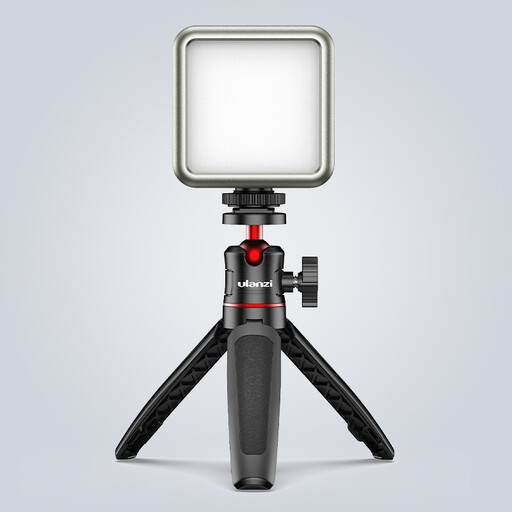 Image unavailable
A compact light for macro recording when you want a setup you can put away after use.
RGB; adjustable colour temperature from 2500 K to 9500 K; built-in 2000 mAh battery; rear magnet.
Use a standard adapter with a 5V output for charging. Do not use in wet or damp conditions, and do not look directly into the LED at close range.
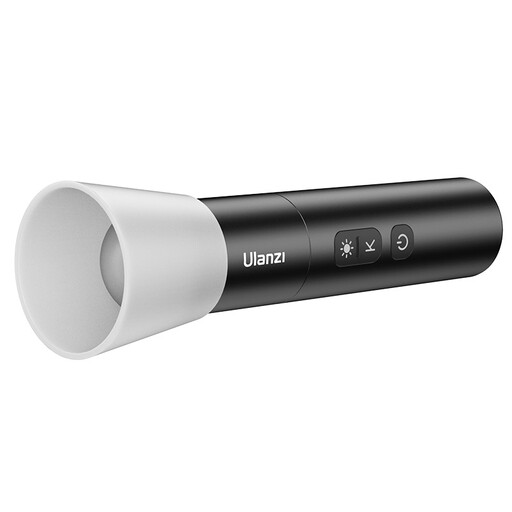 Image unavailable
A portable light with an adjustable beam for close-ups where you want to direct the light onto small details.
Colour temperature from 2000 K to 5500 K; four brightness levels; zoom function; built-in 2000 mAh battery; weight 187 g.
Do not look directly into the light at close range, and use a certified USB-C cable for charging.
Start with the light at an angle beside or above the work area, then check the reflections on camera. Nikon explains that a diffuser increases the effective size of the light source; move the light or camera if a reflection obscures details. The right angle depends on the surface and setup.
Yes. Godox’s manual lists a mains adapter in the standard kit. For battery use, the manual specifies two NP-F970 batteries, which must be bought separately; check which version is on offer.
Make a test video using the light setting and camera settings you plan to use. Canon explains that LED lighting can cause banding in certain camera situations; mixed light colours can also make it harder to set the white balance. Adjust the setup or settings based on the recording.
According to the Dutch government, electrical appliances placed on the EU market must meet the applicable safety requirements and carry a CE mark. For online purchases from a business, the Dutch government says you are generally entitled to a 14-day cooling-off period; check the seller, product information and any exceptions.