
Folding instructor who clearly demonstrates each step
You film your hands and the paper from above, and want to keep the fold lines visible when your hands cast shadows on the work surface.


For a paper-folding lesson at home, an adjustable light that you can set up with diffusion is a good place to start. Choose a desk panel if you have a fixed table and limited floor space, a panel on a stand if you want more flexibility in where you position it, or a COB light if you want to choose the light modifier and mount separately. Test how clearly folds and paper colours show up, and check for possible banding with your own camera. Check the power supply, box contents and CE information for the light and power supply being offered; the NVWA states that CE marking is mandatory for electrical products placed on the market in the Netherlands.
You film your hands and the paper from above, and want to keep the fold lines visible when your hands cast shadows on the work surface.
You use paper in different colours and want to match the light setting to your camera’s white balance.
You need to fit the light, camera and room for your hands around the same table, so you’re comparing a desk clamp with a separate stand.
Suitable if: you film at a fixed table and can attach the clamp out of shot and away from the paper.
Trade-off: measure the table edge and mounting height. The stated maximum light output of the Elgato Key Light Air MK.2 depends on the power supply.
Suitable if: you want to adjust the direction of the light independently of the table and have room for a stable stand.
Trade-off: a stand takes up floor space, and the NEEWER NL660 is available with or without a stand.
Suitable if: you want to choose your own light modifier and can mount the light securely.
Trade-off: a softbox and a compatible mount may need to be bought separately. Lux figures measured with a reflector do not automatically indicate the light output with diffusion.
| What to consider | What to look for when buying | Who is this important for? |
|---|---|---|
| Keeping folds and hand movements visible | Check that you can position the light with diffusion, then record a test while actually folding the paper. Adobe explains that hard, direct light can create strong shadows. | If I want to show fold lines clearly while my hands move over the paper, I test the whole setup; around 31% of consumers say visible folds are their top priority. |
| Rendering paper colours consistently | Set your camera’s white balance to suit the light you’re using, then review a test clip with the paper you’ll use for the lesson. Canon Europe explains that white balance should match the look you want in your footage. | For lessons using coloured paper, I want the colours to remain recognisable; around 25% of consumers give colour reproduction the most attention. |
| Space and mounting around the worktable | Measure the table edge and check the mounting height, the space available for your hands and camera, and the cable route. Compare the contents of the exact kit: a panel may be offered with or without a stand. | With a camera, light and hands all around a small table, I want to keep the work area clear; around 19% of consumers put space and mounting first. |
| Avoiding flicker or banding in video | Film with your own camera at the brightness settings you plan to use, then watch the recording back. Canon Europe warns that some LED sources can cause banding when used with an electronic shutter. | If I want to avoid distracting bands in my lesson, I check the light with my camera settings; around 13% of consumers prioritise flicker-free video. |
| Complete kit, power supply and information | Check that the version you choose includes the necessary power supply, diffusion and mount. Also check the CE information for the light and power supply being offered; the NVWA states that CE marking is mandatory for electrical products placed on the market in the Netherlands. | I want to know before filming whether I can set up the light with the parts I need; around 12% of consumers say a ready-to-use kit is their top priority. |
A COB light’s output is stated for specific conditions with a reflector. Adding a light modifier changes the setup, so that figure won’t necessarily tell you how much light will reach the paper.
Compare the measurement conditions and box contents, then assess the whole sheet of paper in a test setup using your chosen diffusion.
You may need a separate softbox and compatible mount for diffusion and secure positioning.
A panel may be sold in different kit configurations. The maximum light output of the Elgato Key Light Air MK.2 may also depend on the power supply.
Before buying, check the exact version and box contents, including the stand, battery, adapter or charger.
If a stand, suitable battery or compatible adapter is missing, you may not be able to use the setup straight away.
White balance affects how paper colours appear on camera. Some combinations of LED lighting and electronic shutter can also cause banding.
Record a short test with the paper you plan to use, at your preferred brightness setting and with the camera settings you intend to use for the lesson.
Desk-focused LED panels, including the Key Light Air MK.2, designed for setups using a desk clamp.
LED panels such as the NL660, for comparing a panel and the positioning you want around your table.
COB lights such as the 100x S, for setups where you choose the light modifier separately.
COB video lights such as the bi-colour SL60IIBi, for use with a compatible light modifier.
Compact COB lights such as the RC 60B, for anyone considering a portable lighting setup.
These Joybuy products are LED video and fill lights, including a phone ring light. Check the mount and power supply for each version, and use a test recording to see whether the light reaches the paper effectively from your camera angle.
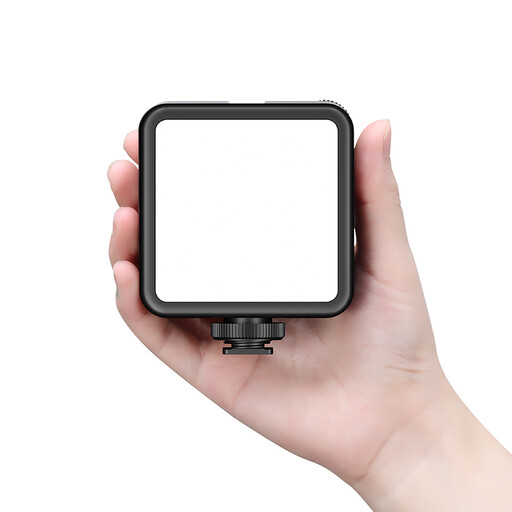 No image available
This model is listed as a rechargeable LED video light. Test it in your setup to see whether the light distribution works for an overhead shot.
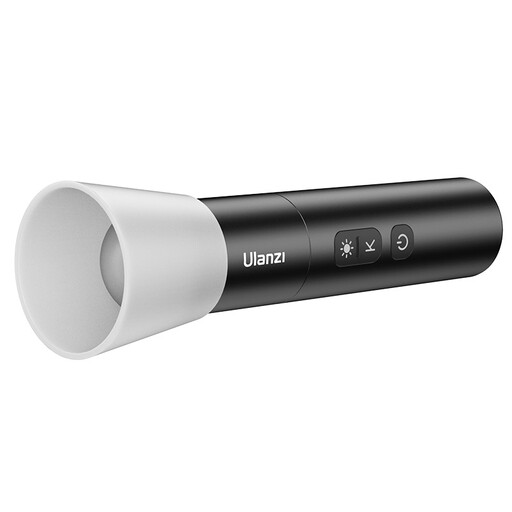 No image available
The product name describes this as a portable LED video light. Use a test clip to check whether the zoom function and light settings provide the coverage you want for the paper.
The title lists a colour temperature range of 2000–5500 K, four brightness levels and a 2000 mAh battery.
 No image available
The product name describes this model as a portable mini fill light. Check whether its positioning and light coverage are suitable for the whole work surface.
The title lists a 500 mAh battery and a magnetic LED light.
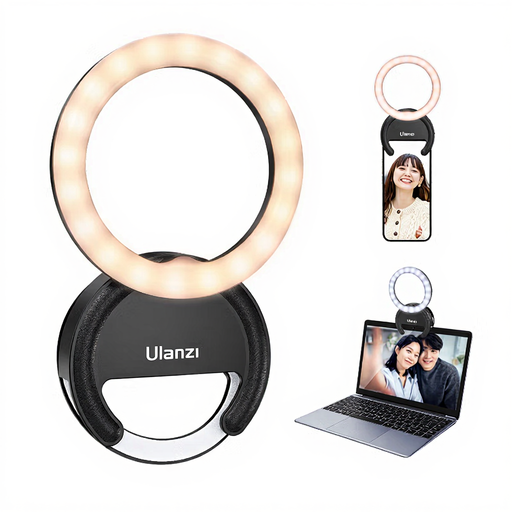 No image available
The product name describes this model as a phone ring light for video. Check whether a phone setup works for the overhead shot you need for your lesson.
The title lists three colour temperatures from 3000–7000 K and five brightness levels. The light is designed to clip directly onto a smartphone.
Position a diffused light source so that your hands don’t cover important fold lines during a test recording. Adjust the angle or distance and review the recording again. Diffusion softens harsh shadows, but a test clip will show whether the folds remain visible.
The colour of the light affects how paper appears in your recording. Set your camera’s white balance to match the lighting you’re actually using, then check a test clip with the paper you’ll use for the lesson.
Measure the table edge and check the mounting height, the space available for your hands and camera, and the cable route. For the Key Light Air MK.2, Elgato specifies a desk clamp for most tabletops up to 6 cm thick; that measurement won’t necessarily apply to other clamps.
No. Canon Europe explains that some LED sources can cause banding when used with an electronic shutter. Test the brightness settings you want to use with your own camera before recording a full lesson.
The NVWA states that CE marking is mandatory for electrical products placed on the market in the Netherlands. Check the information for the actual light and power supply being offered; a statement covering a product range does not automatically confirm the specific version.