
Teacher filming the cutting line
You want viewers to be able to follow the paper, the knife and your moving hands at the same time. That makes the position and shape of the light more important than a standalone claim about maximum brightness.


For a paper-cutting lesson, start with a soft, adjustable continuous light. Choose a clamp-on panel if you don’t want a floor stand, a standalone panel if you need to move the light around, or a COB light with a modifier if you have space to set it up. Record a test clip of moving hands and spoken instructions with your own camera. A lux rating measured with a reflector won’t necessarily tell you how much light reaches the paper after diffusion.
You want viewers to be able to follow the paper, the knife and your moving hands at the same time. That makes the position and shape of the light more important than a standalone claim about maximum brightness.
You want to set up lighting without taking up unnecessary floor space or blocking a walkway. A desk clamp and a movable stand need different amounts of room.
You want to be able to take your setup with you and weigh up how long you can film without mains power, and what you’ll need to do so.
Choose this when: you’re filming at a suitable table and don’t want to put a floor stand in a shared space.
The trade-off: the clamp needs to fit the edge of your table. Elgato says the Key Light Air MK.2 fits tables up to 6 cm thick. Also check which power supply is included.
Choose this when: you want to move the light in relation to the camera and work surface, and have room for a stand.
The trade-off: a stand takes up floor space. NEEWER sells the NL660 with and without a stand; the NP-F battery mentioned is not included.
Choose this when: you have a fixed or larger space where you can use a diffuser or softbox to shape the light on your work surface.
The trade-off: check the modifier, mount, power supply and space required separately. Figures measured with a standard reflector don’t directly tell you how much light will reach the paper after diffusion.
Choose this when: you move between workspaces and don’t want to rely on mains power all the time.
The trade-off: SmallRig states that the RC 60B runs for up to 45 minutes at full power and notes that the fan makes noise. Check that the recording time and noise level suit your lesson.
| What to consider | What should you check before buying? | Who is this most relevant to? |
|---|---|---|
| View of the cutting line and hands | Film your moving hands across the whole frame and check the light angle and any diffuser. | When I film the cutting line, I want both hands to stay in view without blocking the work area. Around 33% of consumers give top priority to being able to see the action. |
| Positioning in a shared space | Measure the edge of the table and decide where the clamp, stand legs and cables will go. | I want to position a light so the table stays usable and a walkway isn’t obstructed. Around 27% of consumers prioritise having limited space for a setup. |
| Colour of the paper and materials | Record a test clip with the existing workshop lighting and set your camera’s white balance. | When I film white paper and coloured cut-outs, I want the colours to look recognisable on camera. Around 20% of consumers prioritise the colour of the materials. |
| Picture quality and clear spoken instructions | Record a short clip using your intended camera settings, the available lighting and spoken instructions. Check both the picture and sound. | I want to record a lesson without visible bands of light or distracting fan noise in my commentary. Around 20% of consumers prioritise an uninterrupted recording. |
Aputure gives different figures for the bare amaran 100x S and with the Hyper Reflector. Godox gives a figure for the SL60IIBi measured at 1 m with a standard reflector. Figures like these don’t necessarily tell you how much light will reach the paper with a different modifier.
Only compare figures measured at the same distance and with the same modifier, then test how the light falls across your own work surface.
What’s in the box varies by product and version. The NEEWER NL660 is supplied in different configurations, including one with a stand; Elgato says that a power adapter isn’t included with the Key Light Air MK.2.
Before ordering, check the package version, power supply and mount for the exact model you’ve chosen.
Depending on your camera settings, LED lighting can cause visible bands. If a light has a fan, its noise may also be audible while you’re giving spoken instructions.
Record a short clip in the intended location, with moving hands and spoken instructions, then check both the picture and sound.
The NL660 range is an adjustable bi-colour panel, available with or without a stand.
The Key Light Air MK.2 is a clamp-on panel for a tabletop setup where floor space is limited.
The SL60IIBi is a COB option for anyone with space for the light and a suitable modifier.
The 100x S is an adjustable COB light for illuminating a work surface with your chosen modifier.
The RC 60B is designed for a setup that moves between workspaces or is sometimes used without a power socket.
This selection includes portable video lights and small fill lights for filming at a workbench. Check that each model’s mount, beam and power supply suit your filming location.
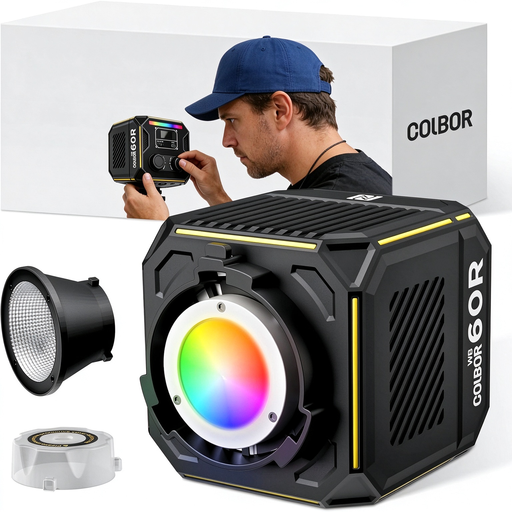 No image available
Suitable for filming in places where you want to use a portable light with a built-in battery.
The product name lists 60 W, bi-colour and full-colour, and 2700–6500 K. The product description mentions a 59 Wh battery and USB-C PD or DC power. According to the description, activating the battery requires a 60 W USB-C PD charger rated at 20 V/3 A.
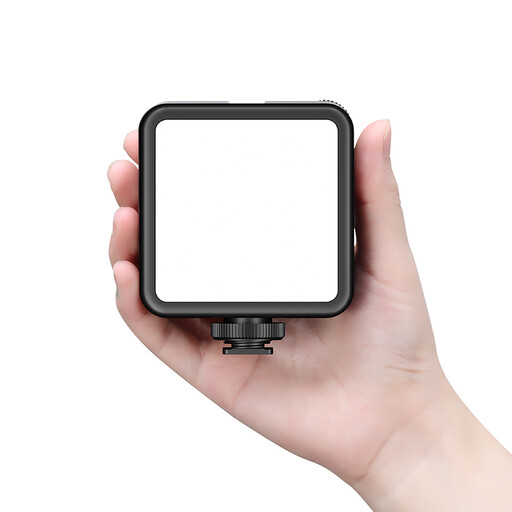 No image available
Suitable for a compact camera setup if you’re looking for a light with a cold shoe mount.
The product description lists 81 LEDs, USB-C charging, and stepless brightness and colour temperature adjustment. When using it at maximum power, keep the ventilation clear and the connections dry.
 No image available
Suitable for a compact camera or macro setup where you want to position a light with a magnetic back.
The product name lists a 2000 mAh battery and a colour temperature range of 2500–9500 K. The product description mentions dimming. Don’t point the light directly at your eyes from close range.
 No image available
Suitable for a portable setup where you want to be able to mount the light in different ways.
The product description lists a magnetic base, 1/4-inch thread, USB-C charging and a built-in 500 mAh battery. Don’t point the light at your eyes from close range or dismantle the battery.
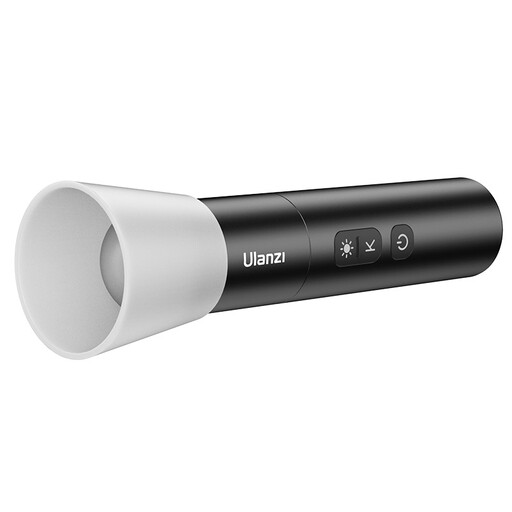 No image available
Suitable for filming when you want to use a portable light with an adjustable beam.
The product name lists a 2000 mAh battery, four brightness levels and a weight of 187 g. The product description mentions a zoom function from spot to flood and CRI >90. Keep the light away from flammable materials and don’t point it at your eyes from close range.
Record a test clip using your chosen combination of workshop and video lighting, then set your camera’s white balance. Canon explains that a camera doesn’t automatically see white paper under unusual lighting in the same way as the human eye.
Start by testing the lights and camera settings you plan to use during the lesson. Sony explains that changing the shutter speed can reduce flicker, and suggests starting with 1/50 or 1/100 of a second in 50 Hz regions. The effect varies by camera and light source.
Check the exact package version, power supply and clamp or stand mount. If you’re choosing a COB light, also check which modifier you’ll need. The NEEWER NL660 version with a stand differs from the one without, and Elgato says that a power adapter isn’t included with the Key Light Air MK.2.
The Dutch government states that electrical appliances placed on the EU market must carry the applicable CE marking. Check this for the exact device being offered. If the workshop is a workplace for employees, the Arboportaal says that the employer must ensure workplace and route lighting doesn’t pose a risk to employees’ health and safety.