Who is this video light for?

A teacher demonstrating colour differences

Films mixing techniques where recognisable paint colours and consistent white balance are important. Canon Europe explains how the colour temperature of light affects the colours recorded by a camera, so a CRI score alone isn’t the final check.

A maker with a permanent workbench

Wants the mixing area to be clearly visible on camera, so considers light spread, shadows and whether a suitable light modifier can be fitted.

A teacher filming in different locations

Wants a light that’s easy to carry and can be used without a mains connection, but needs to check that it illuminates their filming area sufficiently.

What should you consider when choosing?

Adjustable point-source light with a modifier

Choose this option: for a permanent tabletop setup where you want to match the light to other ambient artificial lighting and illuminate the mixing area.

Bear in mind: you’ll need a suitable light modifier, stand, power supply and enough room to set everything up. Without the right modifier, shadows can be harsh.

Compact white battery-powered light

Choose this option: for demonstrations on the move or a small area of detail, when space is limited and battery power is important.

Bear in mind: a compact light won’t necessarily cover a wide mixing area sufficiently. Test the lighting where you’ll be filming.

RGB light for colour accents

Choose this option: when you want to add a coloured background or lighting effect alongside your lesson.

Bear in mind: coloured light on the mixing area affects how the camera records paint. Use controlled white light to demonstrate mixing techniques.

Consideration What to check before buying Who is this most important for?
Recognisable paint colours Check the available colour-rendering information and whether you can set a fixed white balance on your camera under the light you’ve chosen. If I want to show small differences between mixing stages, I want to assess the paint on my camera under the final lighting. Around 36% of consumers give recognisable paint colours top priority.
Even light across the table Only compare light readings taken at the same distance and with the same light modifier. Also check that the modifier fits the mount. When hands and pots might cast shadows across the mixing area, I want to see whether the whole table stays bright without distracting shadows. Around 29% of consumers prioritise full coverage of the work surface.
Stable footage under artificial light Record a test clip using your intended camera, shutter speed and brightness setting, then check for stripes or colour shifts. If stripes or changing colours could disrupt the explanation, I want to test first with the settings I’ll actually use for filming. Around 21% of consumers give footage without visible flicker or banding top priority.
Portability and power Check the power source, battery life at your chosen brightness and light coverage at a suitable distance. For lessons in different locations, I want a light that’s easy to carry and doesn’t rely on a permanent power connection. Around 14% of consumers choose portability and power as their main consideration.

Which buying mistakes can you avoid?

  • Choosing based on CRI or colour temperature alone

    Colour temperature, colour rendering and your camera’s white balance answer different questions. A stated colour-rendering score on its own can’t predict how every paint colour will look in your footage.

    Compare the available colour information and record a test shot of your own paint under the final lighting, with the white balance set.

    Allow extra filming time to check the colours and, if necessary, adjust your setup or camera settings.

  • Comparing lux readings without checking distance or reflector

    A light reading taken with a reflector at a particular distance isn’t directly comparable to one taken without a reflector. A high reading at a single point also doesn’t tell you whether the whole mixing area is evenly lit.

    When comparing readings, note the measuring distance and the light modifier used, then test the lighting across the whole table.

    A wider setup may need extra space, a stand or a suitable light modifier.

  • Treating the Ulanzi VL49 and VL49 RGB as the same version

    The VL49 with fixed white light and the VL49 RGB are different versions designed for different purposes. The model name alone doesn’t make it clear which version you’re looking at.

    Before buying, check the full model variant and the specifications for that version.

Which brands are worth comparing?

amaran

The amaran 100x S is an adjustable bi-colour point-source light for a permanent setup where adjustable white light and colour information are important.

  • Aputure lists a range of 2700–6500 K, CRI 95 and TLCI 99 for this model.
  • Light readings vary depending on whether you use the hyper reflector. These are the manufacturer’s figures, not an independent assessment of paint colours in your setup.

Godox

The SL60IIBi is an adjustable point-source light that could suit a permanent lesson setup with a suitable light modifier.

  • Godox lists a range of 2800–6500 K, dimming control and a Bowens mount.
  • The stated maximum light output is measured at 1 metre with a standard reflector. That reading doesn’t tell you how evenly your table will be lit.

SmallRig

The European version of the RC 120B is a bi-colour point-source light for a setup that can accommodate Bowens light modifiers.

  • SmallRig lists CRI 95+, TLCI 96+ and 52.800 lux at 1 metre with the supplied hyper reflector.
  • The reading with the hyper reflector isn’t directly comparable with readings taken without a reflector. Also check that you choose the correct European version.

Ulanzi

Ulanzi offers both a VL49 with fixed white light for a small area of detail and a separate VL49 RGB, which can be used for ambient lighting.

  • For the VL49 with fixed white light, Ulanzi lists 5500 K and 200 lux at 1 metre.
  • Don’t treat the fixed-white-light version and the RGB version as the same product. Check the full variant and its specifications.

Video lights on Joybuy for a paint lesson

The selection includes adjustable lights for a permanent tabletop setup and compact lights for filming on the move, as well as an RGB light and a phone ring light for specific setups.
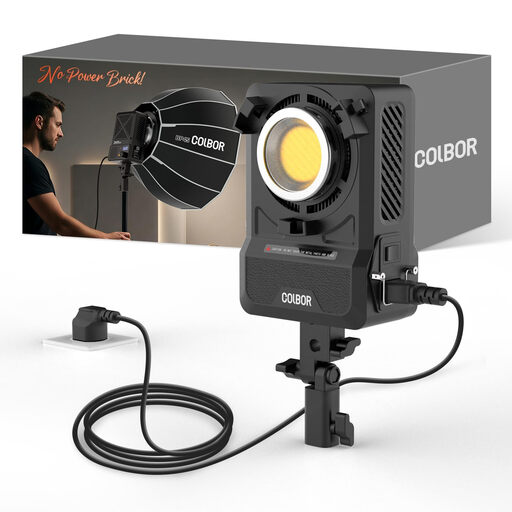
COLBOR 200W LED COB video light with Bowens mount

COLBOR 200W LED video light

An adjustable point-source light for a permanent setup where you want to match the white light to other artificial lighting.

COB light with built-in power adapter and Bowens mount; bi-colour range of 2700–7000 K. The product description lists CRI and TLCI of 96+.

View on Joybuy
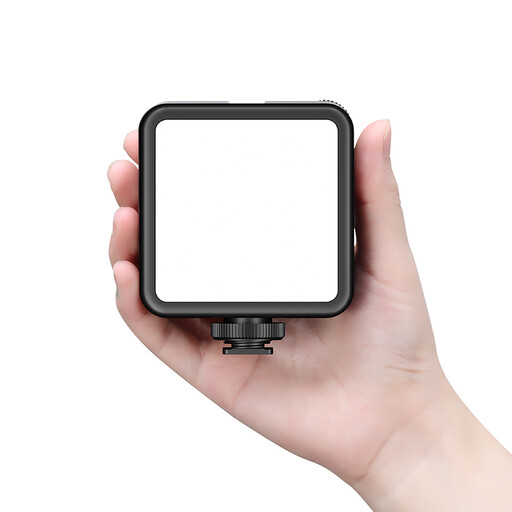
Ulanzi VL81 rechargeable LED video light

Ulanzi VL81 rechargeable LED video light

A compact option to take with you. Test your setup to check whether the light covers the whole mixing area sufficiently.

The product description mentions an array of 81 LEDs, adjustable brightness and an adjustable colour temperature of 3200–5600 K.

View on Joybuy
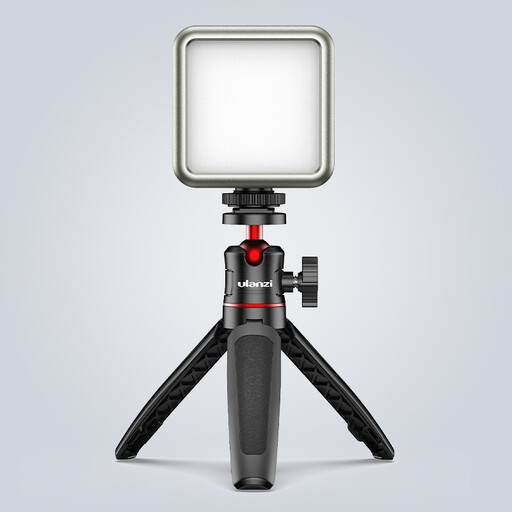
Ulanzi VL49 RGB video light with battery

Ulanzi VL49 RGB video light

An RGB version for colour accents. Use controlled white light on the paint when you want to show mixing techniques clearly.

Dimmable, with a 2000 mAh battery and a stated range of 2500–9500 K. The title also mentions a magnet on the back.

View on Joybuy
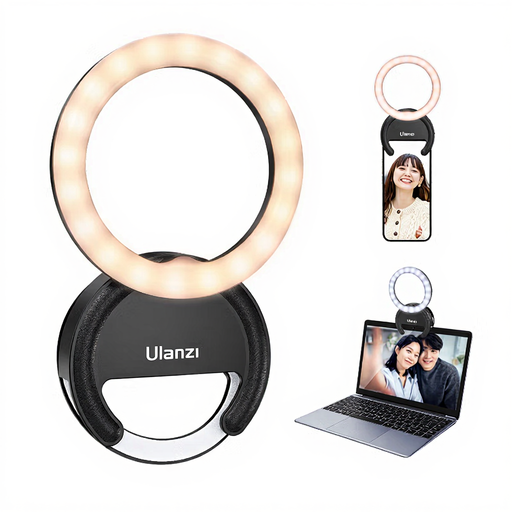
ULANZI 4-inch phone ring light

ULANZI 4" Phone Ring Light

A phone ring light for filming a lesson on a smartphone. Check that its position illuminates the mixing area evenly.

Three colour temperatures from 3000–7000 K and five brightness settings.

View on Joybuy
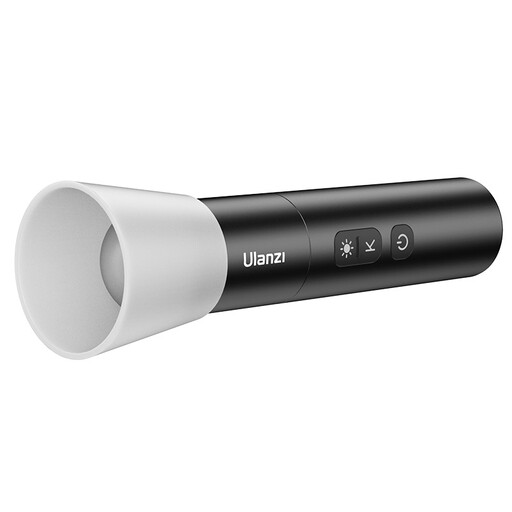
Ulanzi LM07 portable LED video light

Ulanzi LM07 LED video light

A portable light for filming on location. Record a test clip to see whether the beam and coverage suit your table.

Bi-colour range of 2000–5500 K, four brightness settings, a 2000 mAh battery and a stated weight of 187 g. The product description lists a CRI above 90 and a zoom function.

View on Joybuy

Frequently asked questions about video lights for paint lessons

Is a high CRI enough to show paint colours accurately on camera?

No, a CRI score alone isn’t enough to determine how paint will look on your camera. Compare the available colour information, set the white balance under your chosen light and record a test shot of the actual paint and camera setup.

How can I check for stripes in video filmed under artificial light?

Record a short test clip using the brightness setting and camera settings you plan to use. Sony explains that LED lighting, among other things, can cause banding or colour shifts in certain situations. Depending on the circumstances, suitable camera features may help.

What should I consider when setting up a video light?

Check that the stand and light modifier are compatible, and follow the manufacturer’s instructions, including any clearance needed for heat to escape. After moving or adjusting the light, check the white balance and illumination across the mixing area again.

What are my rights to change my mind and a legal guarantee in the Netherlands?

For many consumer purchases made at a distance, you generally have 14 days to change your mind, although there are exceptions. According to the Dutch Government, there is no fixed statutory end date for the legal guarantee: you’re entitled to a product that meets your reasonable expectations, and if there’s a fault, the seller is your point of contact.

Is CE marking relevant for a video light in the Netherlands?

According to the NVWA, applicable CE marking is compulsory for electrical video lights sold in the Netherlands. Which additional rules apply also depends on the electrical design. CE marking isn’t an independent assessment of a light’s colour rendering.
