
Teacher filming the whole work area
You want the card and your moving hands to remain visible from the camera’s position. Test the light’s position and spread on your own table.


Start with an overhead shot: choose a light that illuminates the whole card and can sit outside the work area and camera frame. A clamp-mounted panel saves space beside a shared table if the edge is suitable; a panel on a stand gives you more freedom over positioning, while a COB light with a light modifier needs more room to set up. A small light is best suited to highlighting details or adding fill light. Make a test recording using the actual card, movements, camera settings and workspace lighting.
You want the card and your moving hands to remain visible from the camera’s position. Test the light’s position and spread on your own table.
You need to position the light outside the crafting area and walkway. Your choice will depend partly on whether there’s a suitable table edge or room for a freestanding stand.
You want to compare shades and finishes between shots. To do this, assess the light settings, existing lighting and camera image together.
A good fit if: the table edge is suitable and you don’t want a separate stand beside the shared table.
Bear in mind: the clamp must fit the edge; the Elgato Key Light Air MK.2 needs a suitable power supply for maximum brightness, and one isn’t included.
A good fit if: you have space beside the table and want to position the light independently of it.
Bear in mind: stands can take up room in a shared walkway; check which accessories are included with each version.
A good fit if: you have room for a separate setup and want to direct the light using a suitable modifier.
Bear in mind: check whether the modifier, stand and power supply are included with the version you choose.
A good fit if: you mainly want to highlight a detail or need a small fill light.
Bear in mind: a measurement taken at close range won’t necessarily tell you whether the whole card or table will be lit evenly.
| What to consider | What should you check? | Who is this important for? |
|---|---|---|
| View of the card and activity | Film all four corners of the card and carry out the activity from your intended camera angle. | I want pupils to be able to follow the whole card and my hands, so I test the recording while doing the activity itself. Around 28% of consumers prioritise having a clear view of the entire work area. |
| Paper and ink colours | Check the colour settings and the stated CRI of the exact model; film your own materials using fixed camera settings. | If I want to demonstrate shades, I need to be able to compare them at each stage using the same camera settings. Around 22% of consumers prioritise colour rendering. |
| Glossy details | Make a test recording of glossy material and check the image after adjusting the light and camera angles. | I want glossy lettering and decoration to remain legible, even when the light falls on them. Around 22% of consumers prioritise minimising distracting reflections. |
| Positioning in a shared space | Measure the table edge and available space; also consider where the stand and cables will go. | When I share the table and walkway with others, I want to film without blocking their workspace. Around 17% of consumers prioritise the space the setup takes up. |
| Light flicker | Test with your camera settings and all the lights that will be on during the class. | I don’t want visible flicker in the class recording, so I also test the existing workspace lights. Around 11% of consumers give flicker top priority. |
A Bowens mount doesn’t automatically mean a light modifier is included. NP-F batteries aren’t included with the NEEWER NL660 kit described here.
Compare the contents of the exact version you’re choosing with the equipment you’ll need during the class.
Elgato states that the Key Light Air MK.2’s maximum brightness depends on its power supply. A suitable PD adapter or power bank isn’t included.
Check which power supply you can use throughout the entire recording.
Ulanzi’s stated measurement for the VL49 Pro applies at 0.5 m and doesn’t show how evenly your entire work area will be lit.
Assess a test recording of the whole card at the distance you intend to use.
Sony explains that LED lighting can cause visible flicker during video recordings. Lights already fitted in the workspace may also form part of the lighting in your recording.
Test the complete setup using your final camera settings and the lights that will remain on during the class.
The Key Light Air MK.2 is a desk panel with a clamp for a suitable table edge.
The NL660 is a bi-colour panel described as available either on its own or as a two-panel kit.
The LP600Bi is a bi-colour panel for anyone looking for a portable setup with the option of battery power.
The COB 60x S is a compact point light for a separate setup with a suitable light modifier.
The VL49 Pro is a small battery-powered light for portable detail or fill lighting.
These product picks focus on compact lights for highlighting details or adding fill light while filming. Make a test recording to see whether your chosen light will also illuminate the entire card.
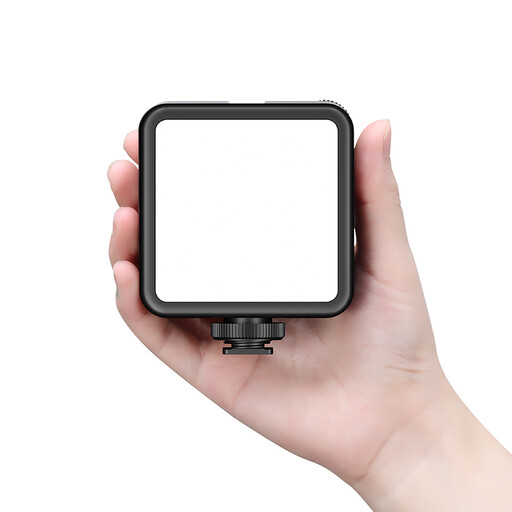 No image available
The cold shoe mount makes this light suitable for positioning by a camera; use a test recording to see whether it covers enough of the card.
The product description mentions adjustable brightness and colour temperature, as well as the option to stack multiple lights. Keep the connections dry and avoid prolonged direct exposure to the light.
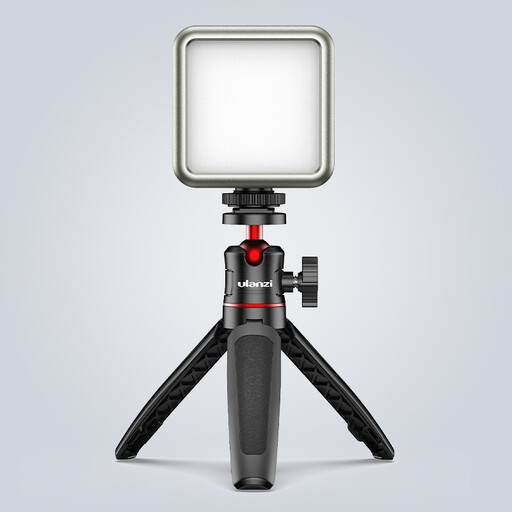 No image available
The magnet on the back may be useful for a small fill-light setup; check in advance that you can attach the light somewhere suitable.
The product title lists dimmable brightness, an adjustable range of 2500–9500 K and a 2000 mAh battery. Use a standard 5V adapter; the product description warns against damp conditions and looking directly into the LED at close range.
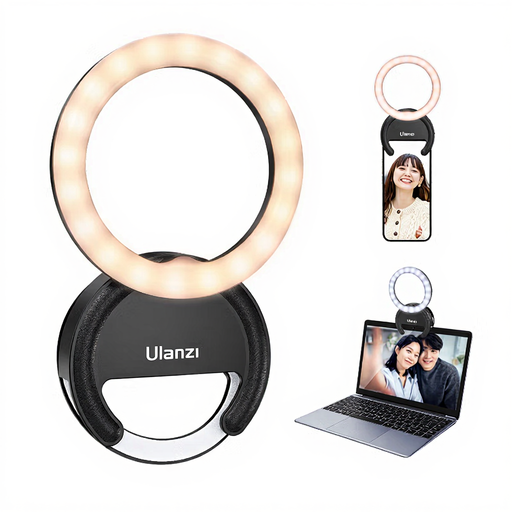 No image available
If you’re filming with a smartphone, the product description says this ring light clips directly onto your phone. Make a test recording to see whether its position works for an overhead shot.
The product title lists three colour temperatures from 3000–7000 K and five brightness levels.
 No image available
This portable mini fill light is designed for a small lighting setup; the product description mentions attaching it to a metal surface.
The description lists a magnetic base, a 1/4-inch thread, a rechargeable 500 mAh battery and a runtime of around 1.5 hours.
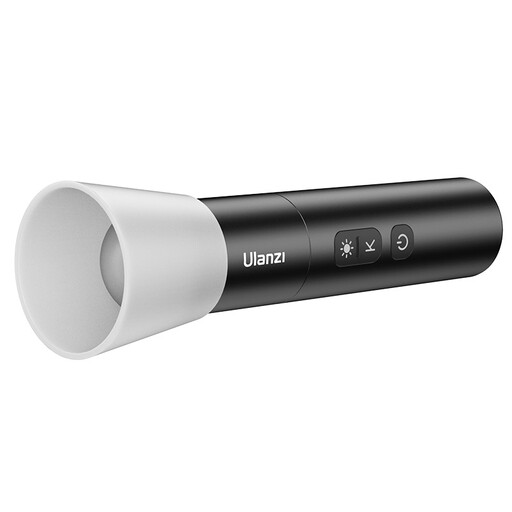 No image available
The zoom function lets you choose between a focused and a wider beam; test which setting works for the detail you’re filming.
The product title lists bi-colour light from 2000–5500 K, four brightness levels, a 2000 mAh battery and a weight of 187 g. Don’t look directly into the light, and don’t use it near flammable materials or strong heat sources.
Move the light in relation to the camera and test the whole card while carrying out the activity itself. Check whether you can adjust the panel angle and whether a diffuser is included with the version you’ve chosen; you don’t automatically need a second light source.
That depends on the exact model and the parts included. Godox lists an NP-F power option for the LP600Bi; NP-F batteries aren’t included with the NEEWER NL660 two-panel kit described here. Check the battery type and kit contents before buying.
First, make a test recording with the lighting and camera settings you’ll use during the class. Sony explains that LED lighting can cause visible flicker in video recordings; the specifications of one light alone can’t rule out flicker from the entire setup.
According to ACM ConsuWijzer, online consumer purchases generally come with a statutory cooling-off period of up to 14 days after delivery, subject to legal exceptions. If a product breaks sooner than you could reasonably expect with normal use, the seller must resolve the issue under the rules on the statutory guarantee; there isn’t one fixed statutory guarantee period for every light.
According to the Netherlands Food and Consumer Product Safety Authority, CE marking is mandatory for electrical consumer products. Other rules may also apply, depending on the exact light and power supply; for devices with Wi-Fi, Bluetooth or a radio frequency module, the NVWA also refers to the rules for radio equipment. CE marking isn’t proof of an independent inspection.