For a tulip film on a small desk, start by choosing a monitor that suits your SDR output and the space you have. For SDR, appropriate Rec.709 display and colour management matter more than an HDR logo alone. At 24.1 inches, with 1920 × 1200 pixels and hardware calibration, the EIZO ColorEdge CS2400S is a more compact option. 27-inch 4K models offer more pixels, but measure the stand and check the connections and calibration options for each model (EIZO Netherlands, BenQ Netherlands and ASUS Netherlands).
Who is this choice for?
SDR filmmaker grading colours
If you’re grading tulips and skin tones for an SDR film, look for appropriate Rec.709 display, colour management and calibration options—not just a wide claimed colour gamut. BenQ describes a Rec.709 mode for the PD2705U; Adobe explains how HDR and Log footage can be converted for a Rec.709 SDR workflow.
Editor with a small desk
You’ll want to leave enough space for your workspace. The EIZO ColorEdge CS2400S is 24.1 inches; the 27-inch options we looked at have different dimensions, including the stand. So measure the available width and depth before choosing a model (EIZO Netherlands, BenQ Netherlands and ASUS Netherlands).
Laptop editor who wants a single cable
You may want to connect your display and power your laptop through a single USB-C connection. Check that your laptop supports video through that port, and compare the stated power output for each model: BenQ lists 65 W for the PD2705U and ASUS lists 96 W for the PA279CRV.
What should you look for?
First decide on the colour space for your finished film, then measure the space for the screen and stand, and finally check that the connections work with your laptop.
| What to consider |
What should you check? |
Who is this important for? |
| Colour grading |
Check your output colour space, the appropriate monitor mode and the calibration options for the exact model. |
If I’m grading tulips and skin tones for SDR, I want the output colour space and colour settings to match. Around 36% of consumers rank colour grading as their top priority. |
| Desk space |
Measure the available width and depth, then compare them with the dimensions including the stand. |
With a small desk, I want to know how much space the screen and stand will take up before I choose. For around 29% of consumers, making sure it fits on the desk is the top priority. |
| Space for the footage and timeline |
Compare the resolution and screen size, and think about how many windows you want to display at once. |
When editing, I want enough screen space for the footage and timeline. Around 21% of consumers prioritise the available workspace on screen. |
| Connecting a laptop |
Check whether your laptop supports USB-C video and compare its power requirements with the stated charging output. |
If I want to handle video and power through one connection, I’ll first check what my laptop supports. Around 14% of consumers put a single-cable connection at the top of their list. |
Things to consider before buying
-
Looking only at the screen diagonal
Two 27-inch monitors can take up different amounts of depth when you include the stand. BenQ lists 256.8 mm for the PD2705U, while ASUS lists 21.50 cm for the PA279CRV.
Measure the available desk space and compare it with the dimensions including the stand before you order.
You may need to rearrange your desk; a suitable monitor arm is another option to consider separately.
-
Assuming an HDR logo or wide colour gamut means accurate SDR display
Your intended output and colour management settings both affect how your image is displayed. Adobe describes separate conversions of HDR and Log sources to Rec.709.
Decide on your output colour space and check that the monitor mode and software settings are appropriate for it.
-
Taking a seller’s reference to a two-year legal guarantee as the full picture in the Netherlands
The Dutch government says there is no fixed statutory guarantee period in the Netherlands. What you can expect from a product depends partly on the product itself; if it’s faulty, the seller is your point of contact.
Keep your statutory rights, any manufacturer’s guarantee and a separate guarantee package distinct.
Brands compared
BenQ
The PD2705U is a 27-inch 4K model to consider for SDR video work and a USB-C connection.
- BenQ specifies a Rec.709 mode and USB-C power delivery of up to 65 W for the PD2705U.
- The stated depth, including the stand, is 256.8 mm; check that it will fit on your desk (BenQ Netherlands).
ASUS
The ProArt PA279CRV is a 27-inch 4K option to consider if you’re looking for a wide claimed colour gamut and USB-C power delivery.
- ASUS specifies 99% DCI-P3, 96 W USB-C power delivery and a depth of 21.50 cm including the stand.
- The HDR specification alone doesn’t confirm that the model is suitable for every HDR grading workflow (ASUS Netherlands).
EIZO
The 24.1-inch ColorEdge CS2400S is worth considering if a smaller screen and hardware calibration are priorities.
- EIZO specifies 1920 × 1200 pixels and hardware calibration.
- Its resolution offers fewer pixels than the 27-inch 4K models we looked at (EIZO Netherlands).
LG
The UltraFine 27UP850K-W is another 27-inch 4K option with USB-C.
- LG lists 95% DCI-P3 as the typical value for this model, with USB-C power delivery of up to 96 W.
- According to LG, the software for the described calibration feature isn’t included.
Dell
The UltraSharp U2723QE is an example of a 27-inch 4K hub monitor you can compare by its connections.
- Dell specifies 100% Rec.709 and up to 90 W through the USB-C video connection for the U2723QE.
- These specifications apply to the model named and aren’t a statement about the entire Dell range.
Monitors at Joybuy
This selection includes 27-inch 4K monitors for footage and an editing timeline, plus a 23.8-inch FHD option if you’re considering a smaller screen.
 Image unavailable
LG UltraFine 27U711B-B 27-inch 4K IPS monitor
An option to consider if you’re looking for a 27-inch 4K screen for footage and an editing timeline.
27 inches; 3840 × 2160 pixels; IPS panel.
View at Joybuy
 Image unavailable
Dell Plus S2725QC 27-inch 4K monitor
An option if you’re looking for a 27-inch 4K screen and want to compare its stated USB-C power delivery with your laptop’s requirements.
3840 × 2160 pixels; USB-C Power Delivery up to 65 W; height-adjustable stand.
View at Joybuy
 Image unavailable
Dell UltraSharp U2725QE 27-inch 4K monitor
An option to compare if you’re considering a 27-inch 4K screen with a wide claimed colour gamut.
3840 × 2160 pixels; the product information lists 99% DCI-P3. This is a claimed colour gamut, not an independent colour measurement.
View at Joybuy
 Image unavailable
LG 27UQ850V-W 27-inch 4K monitor
An option if you’re looking for a 27-inch 4K screen and want to match USB-C power delivery to your laptop.
3840 × 2160 pixels; USB-C Power Delivery up to 90 W.
View at Joybuy
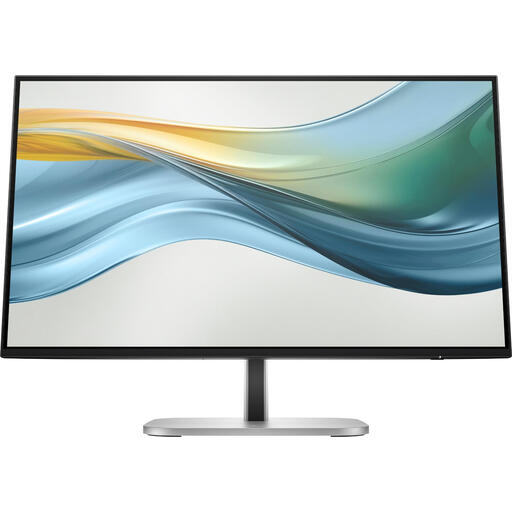 Image unavailable
HP Series 5 Pro 524pu 23.8-inch FHD USB-C monitor
A smaller-screen option to consider if desk space matters more to you than the extra pixels offered by 4K models.
23.8 inches; 1920 × 1080 pixels; 100% sRGB; USB-C Power Delivery up to 100 W. The product information states that the charger isn’t included.
View at Joybuy
Frequently asked questions
Do I need an HDR monitor for an SDR tulip film?
No—not just because your camera footage is HDR or Log. First decide on your output: Adobe explains how HDR and Log footage can be converted for a Rec.709 SDR workflow. An HDR logo doesn’t replace that decision or the need for suitable colour management.
Can I connect a USB-C monitor to my laptop with a single cable?
Only if your laptop supports video through the required USB-C mode. Also compare the charging output with your laptop’s power requirements: BenQ specifies 65 W for the PD2705U and ASUS specifies 96 W for the PA279CRV.
How do I compare monitors’ energy use?
Compare the energy label and product information sheet for the exact models. According to the European Commission, computer monitors are covered by energy labelling rules. The label uses a scale from A to G and also provides information about HDR energy use.
Is the legal guarantee on a monitor in the Netherlands always exactly two years?
No. According to the Dutch government, there’s no fixed statutory guarantee period in the Netherlands; what you can expect from a product depends partly on the product itself. If it’s faulty, the seller is your point of contact. A manufacturer’s guarantee is additional.


