Who is this laptop choice relevant to?

Editor working to a 4K deadline

You have little time between editing and exporting, and want to match your software’s requirements to your film’s resolution and effects. For Premiere on Windows at 4K or higher, Adobe recommends 32 GB of RAM or more and 8 GB of GPU memory, among other specifications.

Creator who also presents

You review the film on your laptop and may connect it to a presentation screen. That makes the exact screen specification and the connections you need just as important as the editing configuration.

Editor working across multiple locations

You carry your laptop and project files between filming, editing and presentation locations. Size, power supply and a practical way to transfer files all matter.

What should you look for when choosing?

Compact MacBook Pro

Best for: people who use macOS and regularly carry their laptop between editing locations. Apple lists hardware support for H.264, HEVC and ProRes, among other formats; check that these codecs suit your footage and software.

The trade-off: a smaller screen gives you less room for your timeline and preview than a 16-inch model.

Windows laptop with a creative display

Best for: people who value more screen space and a dedicated GPU. Compare the exact model’s display, RAM, GPU memory and storage.

The trade-off: check the weight, screen reflections and power supply you’ll need. A display specification alone doesn’t guarantee that a presentation will look the same on another screen.

Windows laptop focused on GPU performance

Best for: people who use demanding effects or store a lot of project material locally, and want to match the exact GPU configuration to their editing software.

The trade-off: GPU specifications alone don’t tell you about colour reproduction or battery life while editing. You’ll need to weigh up the size and power supply separately.

What to consider What to look for when buying Who is this important for?
Editing and exporting Check your software version, operating system, RAM and GPU memory against your source footage. For Premiere on Windows at 4K or higher, Adobe recommends 32 GB of RAM or more and 8 GB of GPU memory. If I need to edit and export before meeting the client, I want a configuration that suits my workflow. Around 36% of consumers put editing performance first.
Screen and presentation Compare the screen specification and reflections; also check that the laptop connects to your presentation screen. Match colour management and output to the intended display. If I review the film on my laptop and show it to a client, I pay attention to the screen and the connection I need. Around 29% of consumers make the screen and presentation their top priority.
Carrying it between locations Weigh up the size and weight against the screen space you want, and check which power supply comes with the model. Don’t infer battery life while editing video from a general battery claim. When I carry my laptop between filming, editing and meetings, I want to know what I’ll need to carry and connect along the way. Around 21% of consumers give portability top priority.
Storage and file transfer Compare the SSD capacity with the size of your source footage and working copies. Also check whether you need a card reader or connection for an external drive and presentation file. If I want to keep my source footage, working copies and export close to hand, I look at storage and file transfer. Around 14% of consumers prioritise this file workflow.

Buying mistakes to avoid

  • Confusing minimum requirements with 4K recommendations

    A programme’s requirements can vary depending on the resolution and workflow. A minimum requirement for HD doesn’t automatically mean the laptop is suitable for a 4K project.

    Compare the resolution, effects, software version, RAM and GPU memory with the recommendations for your editing software. Proxy files can make editing easier, but they don’t prove that every laptop meets your project requirements.

  • Choosing based only on the product family or GPU name

    A product range can include different screen, memory and storage configurations. A GPU’s name also won’t tell you which screen configuration you’re buying.

    Check the full model name and the specifications of the exact configuration you’re ordering, including the screen, RAM, SSD and connections.

  • Confusing a proxy with the final client export

    Adobe says that Premiere uses the full-resolution originals for export by default, even when you’ve enabled proxy files while editing.

    Check the export settings and play the final file back in the way you intend to show it before your presentation.

    This means an extra check and export step just before the meeting.

  • Assuming consumer returns rights apply to a business purchase

    Dutch government guidance distinguishes between purchases for private use and purchases for a business. For a business order, you can’t automatically assume that the consumer cooling-off period applies.

    Before placing an order on behalf of a business, check the return and service terms that apply to that purchase.

Brands to consider

Apple

MacBook Pro models are an option for people who edit on macOS.

  • Apple lists hardware support for H.264, HEVC and ProRes, among other formats.
  • Check compatibility with your software and the exact memory and storage configuration. Codec support isn’t a measured export time.

Lenovo

The Yoga Pro 9i is a Windows model for creators; the ThinkPad T1g Gen 8 is a separate business range.

  • For the Yoga Pro 9i configuration 83SF003UMH, Lenovo lists 32 GB of soldered memory, an RTX 5060 laptop GPU with 8 GB and a 16-inch OLED screen.
  • These specifications apply to that particular configuration, not every Lenovo laptop. Check the screen and memory details again for a different model.

ASUS

ProArt P16 models are designed for creative workflows; the ROG Strix SCAR 16 is a separate gaming range.

  • ASUS lists different GPU, screen and storage configurations for the ProArt P16.
  • Check the specifications of the exact configuration. A feature of one ROG configuration doesn’t automatically apply to the entire range.

HP

OMEN includes Windows laptops with dedicated GPUs.

  • The Dutch OMEN range includes models with different amounts of RAM and storage.
  • Check the screen on the specific model. A gaming GPU alone doesn’t prove that its colour reproduction is right for your presentation.

XMG

The NEO 16 (E25) is a 16-inch Windows range to consider when comparing options to take with you.

  • XMG describes configurations of up to an RTX 5090, with optional external water cooling.
  • Check which configuration you’re choosing and factor in the size and any extra components. Optional cooling isn’t included automatically.

Joybuy products for video editing

This selection features Windows laptops with different screen sizes and configurations for weighing up editing, local storage and presentation needs. Compare the individual specifications with your software and project before choosing a model.

ASUS ProArt P16 H7607BA-SE030X

ASUS ProArt P16 H7607BA-SE030X, 64 GB RAM, 1 TB SSD

A 16-inch model for people weighing up a larger built-in screen and local project storage.

The product description lists a 16-inch 4K OLED screen with 100% DCI-P3, HDMI 2.1 and an SD card reader. The configuration lists 64 GB RAM and a 1 TB SSD.

Weight: approximately 1.85 kg according to the product description.

View at Joybuy

ASUS ProArt P14 H7407BA-SM078X

ASUS ProArt P14 H7407BA-SM078X, 128 GB RAM, 1 TB SSD

A 14-inch model to take with you when a smaller size matters more than extra screen space.

The product description lists a 14-inch 3K OLED screen with 100% DCI-P3, HDMI 2.1 and an SD card reader. The title lists 128 GB RAM and a 1 TB SSD.

Weight: 1.48 kg according to the product description. The 14-inch screen offers less workspace than a 16-inch model.

View at Joybuy

Lenovo Yoga Pro 9 15N1X11 83SR0030MH

Lenovo Yoga Pro 9 15N1X11 83SR0030MH, 64 GB RAM, 2 TB SSD

A 15.3-inch model for people who factor in screen space and local storage when editing and reviewing footage.

The title lists 64 GB RAM and a 2 TB SSD. The product description lists a 15.3-inch OLED touchscreen with a resolution of 2560 × 1600 and a refresh rate of up to 165 Hz.

View at Joybuy
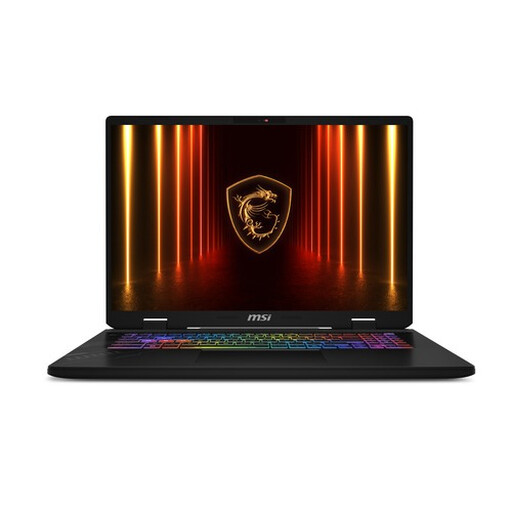
MSI Crosshair 17 HX AI D2XWFKG-071NL

MSI Crosshair 17 HX AI D2XWFKG-071NL, RTX 5060, 32 GB RAM, 1 TB SSD

A 17-inch model for people comparing the listed memory and GPU specifications with their Premiere project.

The product name lists an RTX 5060 with 8 GB of memory, 32 GB DDR5, a 1 TB SSD and a QHD+ screen. The product description lists 100% DCI-P3, Thunderbolt 4 and HDMI 2.1.

Weight: 2.8 kg according to the product description; bear this in mind if you’ll be carrying the laptop regularly.

View at Joybuy

MSI Titan 18 HX AI A2XWJG-492NL

MSI Titan 18 HX AI A2XWJG-492NL, RTX 5090, 64 GB RAM, 6 TB SSD

A large model for people who value plenty of local storage and a powerful GPU configuration, and don’t need to move their laptop around often.

The product name lists 64 GB DDR5, 6 TB SSD storage and an RTX 5090 with 24 GB of memory. The product description lists an 18-inch UHD+ Mini LED screen with 100% DCI-P3, HDMI 2.1, Thunderbolt 5 and an SD Express card reader.

Weight: 3.6 kg according to the product description; its size and weight make it a less portable option.

View at Joybuy

Frequently asked questions

Is a laptop that meets Premiere’s minimum specifications enough for this film?

Not without comparing your workflow with the recommended specifications. For Premiere on Windows at 4K or higher, Adobe recommends 32 GB of RAM or more and 8 GB of GPU memory. Also check your software version, effects and source footage against the exact laptop configuration.

How can you avoid confusing a working copy with the presentation export?

You can use lighter proxy files in Premiere to make editing easier. Adobe says that Premiere uses the full-resolution originals for export by default, even when proxies are enabled. Check the export settings and play the final file before your presentation.

What warranty and cooling-off period apply when you buy a laptop online?

For a purchase by a consumer in the Netherlands, the seller is responsible under ACM guidance for the legal guarantee that the product meets what you could reasonably expect. For an online purchase by a consumer, a 14-day cooling-off period after delivery generally applies. If you’re buying mainly for business, don’t automatically assume consumer rights apply; different rules apply.

Can you include or publish recognisable passers-by in a film for a client?

According to the Dutch Data Protection Authority, the GDPR applies when filming and publishing for professional or commercial purposes, and you need a valid legal basis. Consent is one possible example, but it isn’t the only legal basis; assess the footage and its intended use separately.
