For capturing small jewellery details at a fixed workbench, a mirrorless camera with a suitable macro lens is a sensible option. Check both the magnification and the working distance in front of the lens, as a camera body or kit lens won’t necessarily be suitable for macro photography. A compact camera with a fixed lens is more convenient if you move between work areas often, but check that the detail fills enough of the frame from your shooting distance. Test the lighting and sound in your workshop too, and keep other identifiable people out of shot and off-mic. According to the Dutch Data Protection Authority, a GDPR legal basis is required to record and publish identifiable people for professional or commercial purposes.
Who is this choice relevant to?
Creator of detailed demonstrations
You want viewers to be able to follow small settings, joints and tool movements. Magnification and the working distance between the lens and the piece are therefore important considerations. Nikon USA explains why jewellery’s small, shiny surfaces can be tricky to light; Sony Netherlands specifies the magnification and working distance for a separate macro lens.
Creator working under changing workshop lighting
You film shiny metal under shared lighting and want to check for reflections, colour differences or flicker before recording. Nikon USA describes the lighting challenges of jewellery, while Sony Netherlands provides settings that may help reduce flicker under certain lighting frequencies.
Demonstrator who moves around
You move between workbenches or talk while you work. A portable setup and clear audio are important, while other workshop users should be kept out of shot and off-mic. DJI specifies the features of the compact Osmo Pocket 3; the Dutch Data Protection Authority treats identifiable image and sound recordings as personal data.
What should you look for when buying?
Mirrorless camera with a macro lens
Choose this option: if engravings, settings or tool movements need to fill the frame at a fixed workbench. Compare the magnification and working distance of the separate lens.
Bear in mind: you may need to buy a suitable macro lens separately. A short working distance can also leave less room for your hands, tools and lighting.
Compact camera with a fixed lens
Choose this option: if you often move between workbenches and overview shots or explanations matter more than showing the tiniest details. DJI specifies that the Osmo Pocket 3 focuses from 0.2 m and has mechanical stabilisation.
Bear in mind: the stated focusing limit doesn’t prove that small pieces of jewellery will appear large enough in frame. With a fixed lens, you can’t swap in a macro lens.
| What to consider |
What should you check? |
Who is this important for? |
| Small details |
For the lens you choose, compare its magnification, minimum focusing distance and the working space in front of the lens. Sony specifies a maximum magnification of 1.0× for the separate SEL30M35; at its closest setting, the working distance is approximately 2 cm, according to Sony. |
If I want to show engravings or small settings filling the frame, I look at both magnification and the space available for my hands and tools. Around 36% of consumers put capturing small details at the top of their buying priorities. |
| Reflections and flicker |
Test a real piece of jewellery under the lighting you have. For a mains frequency of 50 Hz, Sony Netherlands suggests 1/50 or 1/100 second as possible video shutter speeds to help prevent flicker. Check the results with your lights and camera. |
When filming shiny metal, I want to check for reflections and distracting bands of light before the demonstration. Around 29% of consumers give lighting control their top priority. |
| Clear explanations |
Compare the connection options on the exact camera model and listen back to a test recording in your workspace. Canon lists a multi-function shoe on the EOS R50 V for accessories including microphones; check that your specific microphone is compatible. |
If I’m explaining something while other workshop activities are going on, I want to be able to hear my instructions clearly without picking up identifiable conversations from others. Around 21% of consumers prioritise clear explanations. |
| Moving and setting up |
Check that there’s room for the camera and its support, and that the fixed lens can show the piece at a large enough size from that position. DJI lists the Osmo Pocket 3 as weighing 179 g and focusing from 0.2 m. |
When I move between workbenches, I want to be able to move the camera without blocking the workspace for long. Around 14% of consumers choose portability as their main consideration. |
Common buying mistakes
-
Assuming a camera kit includes a macro lens
The Sony, Fujifilm and Panasonic kits mentioned come with different lenses from the macro lenses reviewed. A kit lens isn’t automatically the macro lens you need for close-ups.
Check the full kit name and the lens included. Then assess the magnification and working distance of that exact combination.
You may need to buy a suitable macro lens separately.
-
Confusing focusing distance with working space
The distance to the focusing plane isn’t the same as the clear space in front of the lens. For the SEL30M35 at its closest setting, Sony gives the distance between the subject and the front of the lens as approximately 2 cm.
Plan where to position the camera, your hands, tools and lighting before choosing a lens.
-
Assuming stabilisation means a camera is suitable for macro
The DJI Osmo Pocket 3’s ability to focus from 0.2 m and its mechanical stabilisation don’t specify its macro magnification.
Assess a test shot from your working distance. If the detail doesn’t appear large enough, consider a camera and interchangeable lens combination.
-
Buying for business as if consumer protection always applies
ACM ConsuWijzer distinguishes between purchases made as a consumer and contracts used mainly or exclusively for business. Consumer protection doesn’t apply to the latter.
Before buying, check in what capacity you’re purchasing and which terms apply to your order.
Relevant camera brands
Sony
The ZV-E10 II is a mirrorless camera with interchangeable E-mount lenses, so you can look into a separate macro lens for tabletop filming.
- Sony specifies a maximum magnification of 1.0× for the separate SEL30M35.
- Sony gives a working distance of approximately 2 cm at maximum magnification. The ZV-E10 II kit comes with an E PZ 16-50 mm OSS II; the macro capabilities of the separate SEL30M35 aren’t a feature of that kit lens.
Canon
The EOS R50 V accepts interchangeable RF lenses and is worth considering for a fixed demonstration setup.
- Canon lists a vari-angle screen and a multi-function shoe for accessories including microphones.
- The RF 35mm F1.8 Macro is a separate lens. Canon specifies a maximum magnification of 1:2 for this lens; it isn’t a feature of the camera body alone.
Fujifilm
The X-S20 is a mirrorless camera for video; the separate XF30mmF2.8 R LM WR Macro is one possible lens option for tabletop work.
- Fujifilm describes a product priority mode for the X-S20 kit that shifts focus from a face to an object in the foreground.
- The macro specifications apply to the separate XF30mm lens, not the XC15-45mm kit lens. Fujifilm specifies 1× magnification and a minimum focusing distance of 0.1 m from the focusing plane for the macro lens.
Panasonic
The LUMIX G100D is a compact Micro Four Thirds mirrorless camera option for video.
- The G100D bundle reviewed by Panasonic includes 4K/30p video and 12-32mm and 45-150mm lenses.
- The bundle doesn’t include the separate H-HS030 macro lens. Panasonic lists both H-HS030 lens variants as unavailable from Panasonic Netherlands; check lens availability before choosing this system.
DJI
The Osmo Pocket 3 is a compact camera with a fixed lens for portable filming and overview shots.
- DJI specifies mechanical gimbal stabilisation, three built-in microphones, a weight of 179 g and focusing from 0.2 m.
- These specifications don’t indicate macro magnification. Check whether the smallest jewellery detail appears large enough in frame from your shooting distance.
Joybuy product picks
These Joybuy product picks focus on compact video cameras for demonstrations. For a fixed-lens camera, check with a test recording that small jewellery details appear large enough in frame from your working distance.
 No image available
Osmo Pocket 4P Vlog Combo, black
The product title identifies this as a vlog combo. Check with a test recording that a small piece of jewellery appears large enough in frame from your working distance.
View at Joybuy
 No image available
Osmo Pocket 4P Standard Combo, black
The product title identifies this as a vlog combo. Check how large the piece appears in a test recording from your intended position.
View at Joybuy
 No image available
Osmo Pocket 4 Creator Combo
The product title mentions 2× lossless zoom; check with a test recording that the framing shows the jewellery detail you want.
The product title mentions 4K/240fps; according to the product information, this is available only in slow-motion mode.
View at Joybuy
 No image available
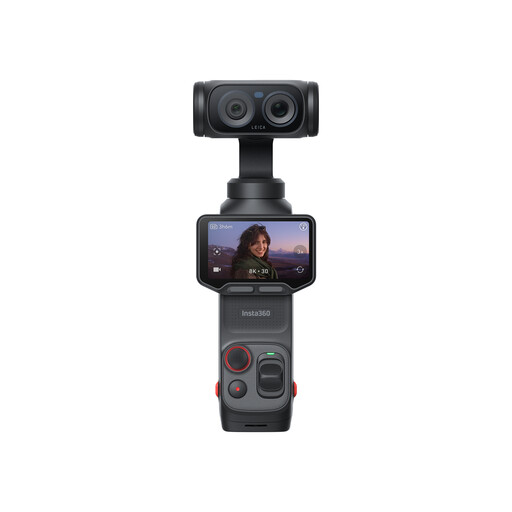
Insta360 Luna Ultra Standard Bundle Cosmic Black
The product title identifies this as a vlog camera. In a test setup, check that the smallest jewellery details appear large enough in frame from your working distance.
View at Joybuy
 No image available
DJI Osmo Pocket 3
This compact fixed-lens camera may suit demonstrations where you move between work areas. DJI specifies a weight of 179 g, mechanical stabilisation and focusing from 0.2 m; this focusing limit isn’t the same as macro magnification.
View at Joybuy
Frequently asked questions
How can you check that a detail on a ring will appear large enough in frame?
Start with the distance between the camera and the piece, then compare the magnification and working distance of the exact lens. Take a test shot with your hands and tools in frame: the minimum focusing distance doesn’t tell you how much clear space will be left in front of the lens.
What can you do about bands of light under workshop lights?
First, record a short video under the lights you actually use. For areas with a mains frequency of 50 Hz, Sony Netherlands suggests a shutter speed of 1/50 or 1/100 second as one possible approach. Check the results with your lighting and camera model.
Can you record other people in a shared workshop and publish the demonstration?
If people are identifiable in the image or sound, the recording contains personal data. According to the Dutch Data Protection Authority, a GDPR legal basis is required to record and publish footage for professional or commercial purposes. For employees, the legal basis is consent from the employee shown in most cases. The right approach depends on who you record and what you do with the footage.
When you buy a camera online, do you always have 14 days to change your mind and statutory consumer guarantees?
Not always: ACM ConsuWijzer distinguishes between consumer purchases and contracts used mainly or exclusively for business. For eligible consumer purchases, the usual online cancellation period ends 14 days after delivery; statutory guarantees are separate from any manufacturer’s warranty offered. Check in what capacity you’re buying the camera.


