
Someone with limited room to move a mouse
Your keyboard and other items leave very little room to move a mouse. You want to know whether a vertical mouse will fit, or whether a stationary trackball might be more practical.


A vertical mouse could work if you have enough room beside your keyboard to move it and its shape suits your hand. If space to move it is particularly limited, consider a thumb trackball too. It stays in place while you control the cursor, but requires a different way of pointing. Going wireless gets rid of the cable, not the space a standard mouse needs.
Your keyboard and other items leave very little room to move a mouse. You want to know whether a vertical mouse will fit, or whether a stationary trackball might be more practical.
You have some room to move a mouse, but want one that suits your hand size and the hand you use.
You can move a mouse, but would rather not have a cable running between your keyboard and other items. You also want to check whether Bluetooth or a USB receiver will work with your computer.
Measure not only the space where the mouse sits, but also the clear area you need to control the cursor. A trackball can be a good option for a very cramped desk, but you will need to operate it with your thumb.
| What to consider | What should you check? | Who should pay particular attention? |
|---|---|---|
| Room to move | Measure the clear space beside your keyboard and move the cursor to the edges of the screen without hitting other items or the edge of the desk. | If there’s little room left beside my keyboard, I want to know whether I can control the cursor without bumping into anything. Around 36% of consumers put room to move at the top of their list. |
| Hand size and handedness | Check whether the mouse is designed for left- or right-handed use, measure your hand according to the manufacturer’s instructions and see whether you can reach the buttons comfortably. | If the shape doesn’t suit my hand, a compact mouse on its own won’t help. Around 29% of consumers give the fit in their hand top priority. |
| Cable and connection | Check whether the model is wired or wireless, which USB ports are available and whether your computer supports Bluetooth. | If a cable makes my already busy desk even more cluttered, I also want a connection that works with my computer. Around 21% of consumers prioritise cable space and connection. |
| Use and maintenance | Test the pointer on your own desk; if you’re considering a trackball, check that you can clean the ball and sensor. | If I want to work accurately using a different type of control, I want to try it at my workstation first. Around 14% of consumers focus most on use and maintenance. |
A vertical mouse may fit on your desk but still bump into your keyboard, other items or the edge of the desk when you use it. A thumb trackball, on the other hand, doesn’t need to slide back and forth.
Measure both the space for the device and the clear area you need to control the cursor.
Hand fit and desk space are two different things to consider. For example, RTINGS distinguishes between the Logitech Lift and MX Vertical based on the hand sizes they suit.
First choose a model that suits your hand and handedness, then check that you can move it around your desk.
A model range’s name doesn’t always tell you how a particular version connects. The Trust Bayo II, for example, is available in both wired and wireless versions.
Before buying, check the full model name, connection type and connector for the version you’re considering.
Logitech offers both vertical mice and a thumb trackball for different desk setups.
The Verto and Bayo II are vertical mice; make sure you check which version of the Bayo II you’re choosing.
The HE Break range includes vertical mice in versions for different hand sizes and for left- or right-handed use.
The UniMouse is a vertical mouse with an adjustable angle, designed for anyone who wants to customise their grip.
The VerticalMouse D is available in different sizes and in wired and wireless versions.
These product picks are vertical mice for anyone with enough room beside their keyboard to move the device. Check that the handedness, connection and shape of each version suit your needs.
 No image available
Suitable for a workspace with enough room to move a vertical mouse.
This version is wired and designed for right-handed use. Bear the cable in mind and check that the connector works with your computer.
 No image available
An option if you have room to move a mouse and want a vertical grip.
Logitech says the Lift is designed for small to medium-sized hands; this version is for right-handed use.
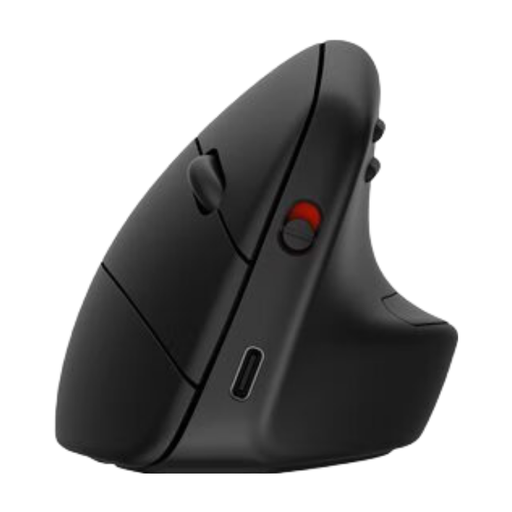 No image available
Suitable for a desk with enough room to move a vertical mouse.
The version described is for right-handed use; check that its connection and controls suit your computer and workspace.
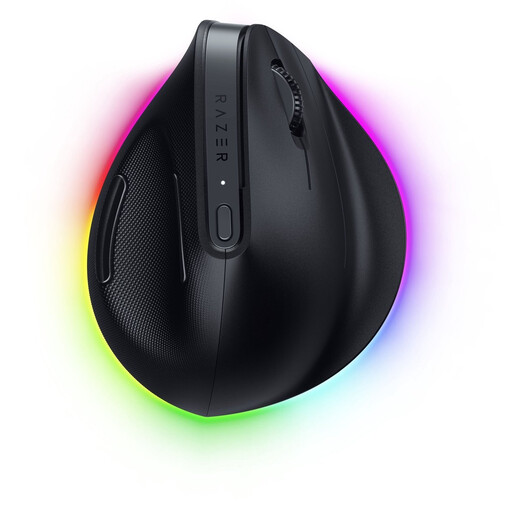 No image available
A vertical model for anyone with room beside their keyboard to move the mouse.
The version described is for right-handed use; bear in mind how much room you’ll need to move it around a small desk.
 No image available
This vertical mouse is designed for a workspace where you can still move the device around.
RTINGS describes the MX Vertical as better suited to larger hands than the Lift. The version described is for right-handed use.
No. Going wireless gets rid of the cable, but you still have to move a standard vertical mouse. Logitech says the ERGO M575 stays in place while you control the cursor.
Make enough room to use the mouse and consider your whole workspace, not just the shape of the device. Arboportaal also recommends alternating intensive screen-based work with tasks that don’t require a screen. This is workplace advice, not a guarantee that a particular model will prevent discomfort.
Dirt around the ball or sensor could be one cause. Logitech recommends switching off or disconnecting the device, then cleaning the ball and sensor according to the manufacturer’s instructions.
For most online purchases made by consumers, you usually have a statutory 14-day cooling-off period after delivery, although there are exceptions. In the Netherlands, you’re also covered by statutory consumer guarantees if a product doesn’t perform as you could reasonably expect when used normally; there’s no single fixed statutory guarantee period of two years. Check separately whether return costs apply in your case.
Check the product information and CE marking for the wireless version you choose. According to the Dutch Authority for Digital Infrastructure, radio equipment that meets the relevant European requirements must carry a CE marking before it can be placed on the market in the EU; the word ‘ergonomic’ alone doesn’t prove that it complies.