
Students who spend a long time working on layouts
If you spend a long time working on presentations, it’s important to choose a mouse that suits your hand. Don’t think of the vertical design as a treatment or a guaranteed way to prevent discomfort.


First, choose a vertical mouse that suits your hand size and whether you’re left- or right-handed. Then test whether you can select and move presentation elements accurately at a comfortable cursor speed. A quiet wireless model may suit a shared or cramped workspace, while a wired mouse means you don’t have to recharge it. A vertical design doesn’t guarantee that it will prevent discomfort, and it may take time to get used to.
If you spend a long time working on presentations, it’s important to choose a mouse that suits your hand. Don’t think of the vertical design as a treatment or a guaranteed way to prevent discomfort.
When moving and aligning small presentation elements, you’ll want to adjust the cursor speed to suit the way you work. Bear in mind that it may take time to get used to a different mouse shape.
If you study in a shared room, quiet clicks and a connection that works with your laptop and desk may be important considerations.
First compare the hand size and handedness options, then test cursor control, and finally check whether the noise level and connection suit your student room.
| What to consider | What should you look for? | Who is this important for? |
|---|---|---|
| Fit and hand position | Check the handedness options and size. Make sure your palm, thumb and fingers can reach the buttons comfortably. | If you spend a long time working on layouts, you’ll want a mouse that fits your hand and feels comfortable. Around 33% of consumers say fit and hand position are their top priorities. |
| Cursor control | Try selecting, dragging and aligning items using your own settings. Check whether the model lets you adjust the speed. | If you need to position small objects precisely, you’ll want to be able to move and adjust the cursor with control. Around 27% of consumers say this is their top priority. |
| Click noise | Check whether quiet buttons are specified for the exact version; don’t assume this based on the product range alone. | If you study in a shared room, you’ll want to work with as little distracting click noise as possible. Around 20% of consumers say quiet operation is their most important consideration. |
| Connection and use | Check your laptop’s connections and whether you’ll need a receiver, cable, battery or rechargeable battery. | If you have limited ports or desk space, you’ll want a connection and power option that suits your setup. Around 20% of consumers say connection and ease of use are their top priorities. |
A different wrist or forearm position doesn’t prove that discomfort will be prevented or treated.
Assess the fit and your workspace separately, and allow time to get used to the mouse. Don’t base your expectations about health benefits on a product claim alone.
Handedness options, size and connections can vary between versions. An unsuitable connection or control layout may mean you need an extra adapter or to exchange the mouse.
Before buying, check the full model number, handedness and connection details on the product page and packaging.
DPI is a product specification; getting used to the mouse and how the cursor responds also matter when positioning elements.
Try your usual presentation tasks at a cursor speed that works for you before making a decision.
The Lift is a vertical mouse worth comparing if hand size and quiet operation matter to you. Logitech says it’s designed to fit small to medium-sized hands; a left-handed version is also available.
The wireless Bayo II 25145 and wired Verto 25133 have different connections and speed settings, so compare the features of each model.
The HE Break is worth considering if hand size, handedness or a break indicator matter to you. The version reviewed is medium-sized, left-handed and offers three connection options.
These vertical mice are worth comparing for presentation work, with fit, cursor settings and connection options in mind.
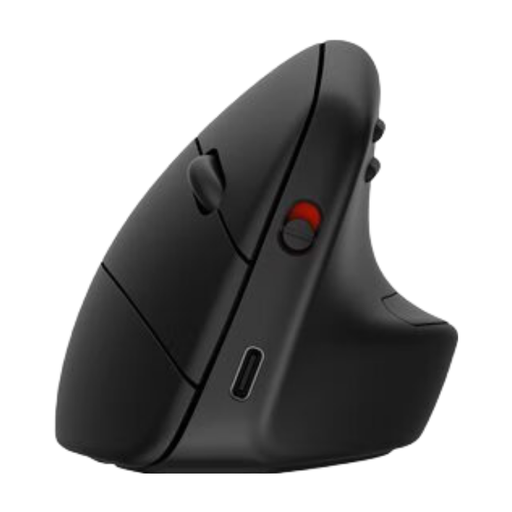 No image available
A vertical mouse worth comparing if you want to switch between devices.
The product information says it can connect to up to three devices via Bluetooth or a dongle, and has a detachable wrist rest.
Windows, Apple and Chrome are listed as supported systems; check that the connection works with your laptop.
 No image available
A wireless vertical mouse worth comparing if you want to be able to adjust the cursor speed.
The product information specifies a 4000 DPI sensor, a DPI switch and a rechargeable battery.
Bluetooth and a USB receiver are listed as connection options.
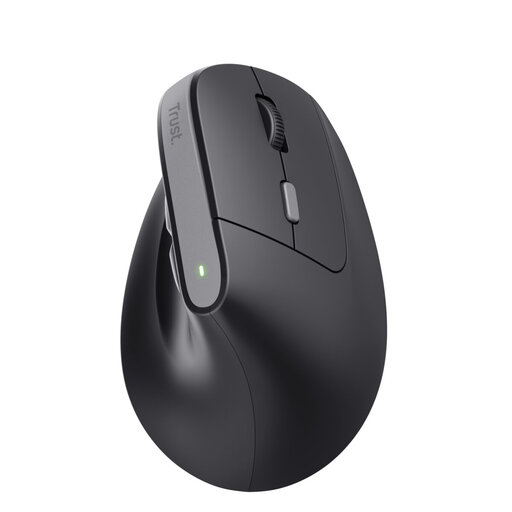 No image available
This vertical mouse is worth comparing if you’re looking for quiet buttons and adjustable cursor speed.
The product information specifies quiet buttons, a rechargeable battery and a 2.4GHz USB receiver.
According to the product information, the speed setting ranges from 800 to 2400 DPI; check that your laptop has a suitable USB connection.
 No image available
A wired vertical mouse worth comparing for a fixed workspace if you don’t want to recharge a battery.
The product information specifies a 1.5-metre USB cable and a DPI button with settings from 800 to 2400.
Bear in mind how much room the cable will take up on your desk.
 No image available
This vertical mouse is worth comparing if you’re looking for a quiet model that, according to the product information, is designed for small to medium-sized right hands.
Bluetooth and a USB receiver are listed as connection options. The product information also mentions four customisable buttons.
Check that the right-handed version suits you.
No, there’s no guarantee. A study in Ergonomics involving 16 participants measured less forearm rotation and activity in certain wrist muscles, but also found that it took longer to reach the target and that users needed time to get used to the mouse. The Cochrane Library describes the evidence for preventing problems through ergonomic interventions for office workers as uncertain. These conclusions haven’t been specifically studied in Dutch students making presentations.
First check the connection for the exact version: Trust specifies a 2.4GHz USB receiver for the Bayo II 25145 and a USB cable for the Verto 25133. Then try your usual selecting and dragging tasks, and give yourself time to get used to the vertical grip. General information from Arboportaal about posture at work doesn’t create an obligation for a student who is only studying.
For a standard online purchase by a consumer, you’ll generally have a statutory 14-day cooling-off period after delivery, subject to legal exceptions; ACM ConsuWijzer explains how this works. You’re also entitled to a product that is fit for purpose, and the seller is your point of contact if there’s a fault. According to the Dutch government, there is no fixed statutory warranty period in the Netherlands that applies to every product.
The obligations on screen work described by Arboportaal are aimed at employers and employees. Don’t infer that someone studying alone in their own room has to choose a particular mouse or meet specific workspace requirements; workplace rules may be relevant if you’re studying as part of a paid job.