What should you look for when choosing one?
For students looking for a vertical mouse to use alongside a compact keyboard in a small workspace, the key considerations are how it fits your hand, where it sits, how long it takes to get used to and whether it’s made for your dominant hand.
| What to consider |
What should you check? |
Who should pay particular attention? |
| Fit for your hand |
Check the recommended hand size, support for your hand and thumb, and whether the shape is designed for your dominant hand. |
If I study for long periods, I want a mouse that fits my hand and feels comfortable to use. Around 36% of consumers put hand fit and posture first. |
| Space and connection |
Check where the mouse can sit beside your keyboard and whether your laptop has a free, suitable port. |
With a small desk, I want to keep the mouse close without a cable or receiver getting in the way. Around 29% of consumers give top priority to positioning and connectivity. |
| Getting used to precise pointing |
Allow for a possible adjustment period and consider how it feels to use for your own tasks. |
If I often need to point precisely, I want to know whether the different grip feels comfortable for the tasks I do. Around 21% of consumers consider adapting to the controls the most important factor. |
| Left-handed design |
Look for a genuinely left-handed model; reversible buttons don’t automatically make a right-handed shape suitable. |
If I use a mouse with my left hand, I want a model shaped for it. Around 14% of consumers consider a left-handed design decisive. |
Vertical mice on Joybuy
These vertical mice are designed to be used alongside a compact keyboard. The selection includes both wireless and wired versions.
 No image available
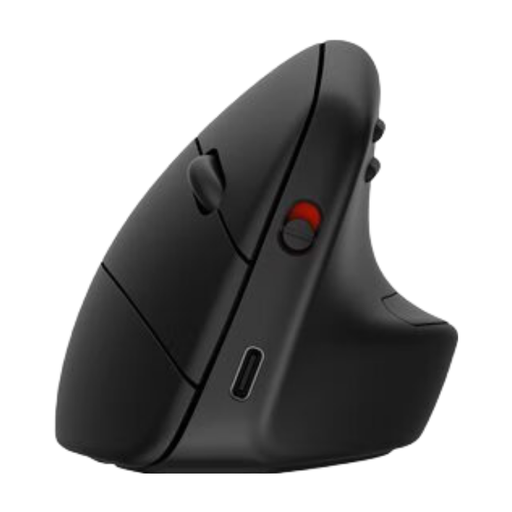
HP 925 Ergonomic Vertical Mouse
A wireless vertical mouse for anyone who wants to position their mouse close to a compact keyboard.
Connects via Bluetooth or a USB receiver, supports up to three devices and comes with a detachable wrist rest. This version is right-handed.
View on Joybuy
 No image available
Logitech MX Vertical
A wireless vertical mouse for a desk where you don’t want to route a cable alongside it.
Connects via Bluetooth or 2.4 GHz using a USB receiver. The specifications list a rechargeable battery and adjustable DPI. This version is right-handed.
View on Joybuy
 No image available
Trust Bayo II Vertical Wired
A wired vertical mouse for a fixed workspace with room to route the cable.
Wired USB connection and adjustable DPI from 800 to 2400. This version is right-handed.
View on Joybuy
 No image available
Logitech Lift Vertical Ergonomic Mouse Graphite
A wireless vertical mouse for anyone looking for a right-handed version. The manufacturer describes the Lift as suitable for small to medium-sized hands.
The specifications list a 57° angle and connectivity via Bluetooth or a USB receiver.
View on Joybuy
 No image available
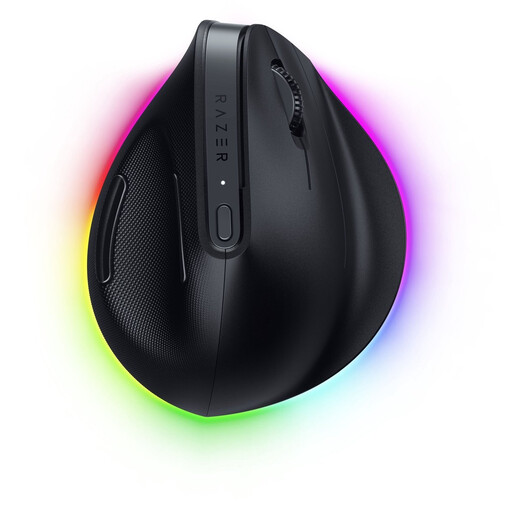
Razer Pro Click V2 Vertical Edition
A vertical version to consider if you’re looking for a different mouse shape for your compact workspace.
The description lists programmable buttons and an optical sensor. This version is right-handed.
View on Joybuy
Frequently asked questions
How should I position a mouse next to a compact keyboard?
Place the keyboard in front of you, with the mouse close by so you don’t have to reach far. Try out the layout with the mouse and any cable in the place where you’ll actually use them.
Will I need to get used to pointing accurately with a vertical mouse?
Possibly. A study of 16 participants, published in Ergonomics and available through PubMed, found that the vertical mouse tested resulted in a different forearm position and took longer to reach a target than a standard mouse: 4.2 compared with 3.4 seconds. The study didn’t test specific retail models, and it can’t predict how quickly you’ll get used to one.
What can I do if I experience discomfort while working?
Break up screen work with other tasks, and don’t rely solely on switching to a different mouse. Arboportaal recommends varying your activities when working at a screen. If discomfort persists, seek advice from a qualified professional rather than relying on a product claim.
What are my rights when buying a mouse online in the Netherlands?
According to the Dutch government, when you buy from a business at a distance, you’ll often have 14 days to change your mind. This arrangement doesn’t apply to online purchases from a private seller. If a product is faulty, you can contact the seller. The Netherlands has no fixed statutory guarantee period.


