Start by measuring the clear space beside your keyboard, then choose a mouse to suit your hand size and preferred handedness. A wireless vertical mouse is only suitable if there’s enough room for both the mouse and your hand. A vertical grip can change your forearm position, but research into pointing performance shows that precise control can also be more difficult under test conditions. This doesn’t prove that a mouse can prevent discomfort; getting used to it may be a factor when planning and arranging materials precisely.
Who is this guide for?
Planner with limited mouse space
If you work at a small desk with teaching materials or a keyboard beside you, first measure the clear space where you can move both the mouse and your hand. A wireless connection gets the cable off your desk, but it doesn’t make the mouse smaller.
Planner looking for the right fit
If you regularly use a mouse with programmes and documents, hand size and choosing a left- or right-handed version are important factors. Research into mouse posture doesn’t prove that a vertical mouse prevents discomfort.
Planner who switches between devices
If you prepare sessions on different computers, check that each version connects to your devices. Options such as Bluetooth, a USB receiver and a cable vary by model.
What should you look for?
First, measure the space beside your keyboard. Then compare hand size and handedness, and check that the connection and cursor speed suit the way you plan.
| What to consider |
What should you check? |
Who is this most relevant to? |
| Desk space |
Measure the clear space beside your keyboard and check that you can move the mouse there. |
If I plan lessons at a small desk with teaching materials beside my keyboard, I want to be able to point without reaching too far; around 36% of consumers rank available mouse space as their top buying priority. |
| Hand fit |
Check the hand size and whether the exact model is designed for left- or right-handed use. |
If I use the mouse often, I want a grip and handedness that suit me; around 29% of consumers prioritise hand fit and posture. |
| Device connection |
Check whether the version offers Bluetooth, a USB receiver or a cable that works with your computer. |
If I prepare lessons on different computers, I want a connection that works with my devices; around 21% of consumers start by considering how the mouse connects to their devices. |
| Cursor control |
Check whether the cursor speed is adjustable and try the select-and-drag movements you use regularly. |
When selecting and moving lesson materials precisely, I want to be able to control the pointer accurately; around 14% of consumers give pointer control top priority. |
Common pitfalls
-
Assuming wireless always saves space
A wireless mouse gets the cable off your desk, but the mouse and your hand still need room to move. Arboportaal advises paying attention to posture and varying your activities when working at a screen.
Measure the clear space beside your keyboard and think about the movements you make while planning.
-
Assuming a vertical shape will prevent discomfort
Research into vertical mice describes differences in posture and pointing performance under specific test conditions; it doesn’t prove that every user will get the same results. You may also need time to get used to a different grip.
Choose a mouse that fits your hand and the tasks you do. Vary your screen-based work, as Arboportaal advises, and don’t treat the mouse shape as a substitute for taking breaks or changing activities.
-
Assuming versions with the same model name are identical
Connectivity, cursor speed and handedness can vary between versions. For example, Trust lists different DPI settings for the wired and wireless Verto; the R-Go HE Basic version reviewed is medium-sized and right-handed.
Check the full version name, handedness and connection options before choosing.
Brands to compare
Logitech
According to Logitech, the Lift range is designed for small to medium-sized hands and also includes a separate left-handed version. Check the exact model and measure the space on your desk separately.
- The manufacturer lists a 57° angle for the Lift.
- A suitable fit and a wireless connection don’t, on their own, tell you how much room your hand will need on your desk.
Trust
The Verto range includes wired and wireless vertical mice. Compare the exact version if you’re looking for a particular connection or adjustable cursor speed.
- Trust lists 1000 and 1600 DPI for the wired Verto, and 800, 1200 and 1600 DPI for the wireless Verto.
- These are model specifications; they don’t prove that precise pointing will be easier for every user.
R-Go Tools
The HE Basic is worth considering if you want to compare size, handedness and connectivity. The version described is medium-sized and right-handed.
- According to R-Go Tools, this version connects via USB cable and Bluetooth, and has support surfaces for your thumb and little finger.
- The features of this version don’t tell you whether other versions will fit your hand.
Evoluent
According to Evoluent, the VerticalMouse 4 range includes a Small version, as well as separate models for left- and right-handed users.
- Evoluent suggests a hand length of around 178 mm as a guide when choosing between the standard VerticalMouse 4 and the Small.
- According to Evoluent, the Small VM4S isn’t available in a left-handed version, so check both the size and the model.
Vertical mice at Joybuy
These Joybuy picks are vertical mice for desk work and preparing lesson materials. Check the cursor speed, connection and handedness for each version.
 No image available
Wireless vertical mouse, 800/1200/1600 DPI
Suitable for desk work where you want to adjust the cursor speed.
The product name lists Bluetooth, a 2.4GHz connection and USB-C charging. The DPI settings listed are 800, 1200 and 1600.
View at Joybuy
 No image available
Wireless vertical mouse with 6 buttons
An option for desk work or study sessions where you want to choose between different cursor speeds.
The product name lists 800, 1200 and 1600 DPI. The connection is described as 2.4 GHz via a USB receiver.
View at Joybuy
 No image available
HP 925 Ergonomic Vertical Mouse
An option if you’re looking for a vertical mouse and a right-handed version suits you.
The version listed is right-handed.
View at Joybuy
 No image available
Logitech MX Vertical
Suitable if you’re looking for a vertical mouse with Bluetooth or a USB receiver and can use a right-handed version.
The product name lists a 4000-DPI sensor and connectivity via Bluetooth or a 2.4GHz USB receiver.
View at Joybuy
 No image available
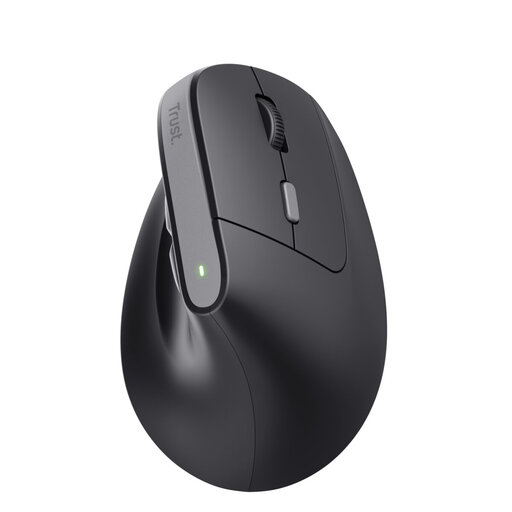
Trust Bayo II, right-handed
An option if you’re looking for a right-handed vertical mouse with wireless connectivity.
The product name lists RF wireless and 2400 DPI; the version is described as right-handed.
View at Joybuy
Frequently asked questions
Are employees legally required to use a vertical mouse when working at a screen?
Dutch government guidance doesn’t require a particular model of vertical mouse. Arboportaal does outline requirements for safe screen-based work and alternating it with other tasks or a break; these aren’t product requirements.
How can you set up a small desk for longer planning sessions?
Check that the mouse fits beside your keyboard and has enough room to move. Arboportaal recommends changing your posture and taking microbreaks when working at a screen.
How should you get started with a vertical mouse if precise selections feel different?
Try your usual pointing tasks with a mouse that fits your hand, and adjust the cursor speed if the model allows it. One small study with 16 participants examined pointing performance, among other things; another evaluation reported the lowest pointing performance for the fully vertical mouse under the conditions tested. These findings don’t predict how every current model will work for you.
What are your rights if you’re unhappy with the mouse or it breaks?
According to the Dutch government, many online purchases come with a 14-day cooling-off period. You’re also entitled to a product that is fit for purpose; if there’s a fault, you can contact the seller. The Netherlands doesn’t have a fixed legal warranty period of two years for every product.


