
Frequent file organiser
You often select and move files, and want to scroll and navigate smoothly. Research into vertical mice describes a different forearm position compared with a standard mouse; it may take time to get used to one.


First, choose a design that suits your hand size and preferred hand. Then compare the scrolling and navigation controls, and check that the mouse will work with your computer. Quiet wireless buttons can be handy at a shared desk, while a wired mouse doesn’t need a receiver or charging. No mouse is a substitute for a well-adjusted workstation or regular breaks from screen work.
You often select and move files, and want to scroll and navigate smoothly. Research into vertical mice describes a different forearm position compared with a standard mouse; it may take time to get used to one.
You take your mouse with you or work close to colleagues. The connection, how the receiver is stored and whether the buttons are quiet may therefore matter. Trust and Logitech describe these features for specific models.
You’re looking for a mouse for your left hand or a particular hand size. Logitech and Evoluent specify hand versions and suitable hand sizes for their models, so check the version before choosing.
Start with hand size and preferred hand to find a shape that suits the user. Then compare the controls for frequent navigation and check which connections are permitted on the shared work computer.
| What to consider | What should you check? | Who should pay extra attention? |
|---|---|---|
| Folder navigation | Check that the scroll wheel, cursor speed and navigation buttons suit the tasks you do most often. | If I often navigate long lists of folders, I want to scroll and select without unnecessary extra steps. Around 36% of consumers say controls for working with folders are their top priority. |
| Hand preference and fit | Check whether the mouse is designed for left- or right-handed use, and which hand size the manufacturer recommends for that version. | If I need a mouse for my left hand or a specific hand size, I want to be able to identify the right version before buying. Around 29% of consumers put hand fit first. |
| Quiet use and portability | Check which buttons are quiet and how any USB receiver can be stored. | When I work close to colleagues or often move between desks, I want to keep clicking to a minimum and take my mouse with me easily. Around 21% of consumers prioritise quiet use and portability. |
| Connection and settings | Check which USB ports are available, the rules for Bluetooth or receivers, and whether any software is required. | If I use a shared work computer, I want to know which connections and settings are allowed. Around 14% of consumers prioritise connectivity and permitted settings. |
An experimental comparison of a vertical mouse found differences in biomechanical measurements, but also slower target movements and a need to get used to it. This doesn’t prove that the mouse treats discomfort or suits everyone.
Consider the fit and allow time to adjust. Keep adjusting your workstation and taking breaks from screen work.
A different hand version, cable or wireless connection could determine whether the mouse will work at your workstation.
Check the full model name, hand version and connection on the product page, and compare them with your computer’s ports.
Evoluent states that Mouse Manager for the VM4L isn’t compatible with macOS. Your organisation may also restrict software installation on a shared computer.
Check which functions work without additional software, and ask IT for permission if needed.
The Lift is a vertical mouse available in separate left- and right-handed versions.
The wireless Bayo II and wired Verto offer different connection options for office work.
The VerticalMouse 4 Left Hand Wired VM4L is a wired model for left-handed users.
According to R-Go Tools, the HE Break range includes different sizes and left- and right-handed versions.
This selection includes vertical mice to compare for frequent scrolling and navigation. Check the connection, controls and hand fit for each model.
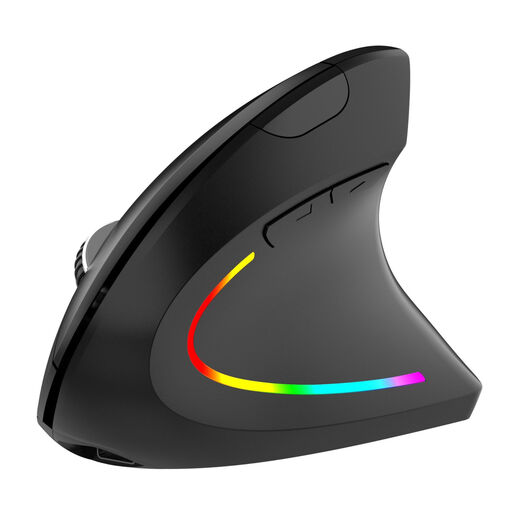 No image available
An option to compare if you often navigate files and want wireless control.
6 buttons; adjustable DPI; quiet buttons; rechargeable; LED.
 No image available
Worth comparing if you want wireless control and USB-C charging for office use.
Bluetooth and 2.4 GHz connection; 3 DPI levels: 800/1200/1600.
 No image available
An option to compare if you navigate files and want a wireless connection.
2.4 GHz connection; USB-C rechargeable battery; DPI range: 800–1600.
 No image available
A vertical mouse to compare if you’re looking for a model for office computer work.
 No image available
Worth comparing if you want a vertical mouse for multiple devices with wireless control.
Bluetooth and 2.4 GHz connection via Unifying USB receiver; 4000 DPI sensor; rechargeable battery; 4 buttons; PC/Mac/iPadOS.
That hasn’t been established for your situation. A small experimental study published in Ergonomics found less forearm pronation and lower activity in some muscles with a vertical mouse than with a standard mouse. However, it also found that users took longer to reach a target and needed time to adjust. Arboportaal also recommends adjusting your workstation and taking breaks from screen work.
Check which ports are available and what the rules are for Bluetooth, USB receivers and software. For the Evoluent VM4L, the manufacturer specifies USB-A and Windows software for advanced button settings; Evoluent says this software isn’t compatible with macOS.
Official guidance doesn’t specify a vertical mouse as a required product. Arboportaal explains that screen work must not pose a risk to health and safety, and should be regularly alternated with other work or a break.
For a distance purchase made by a consumer in the Netherlands, you generally have a statutory cooling-off period of up to 14 days after delivery. ACM ConsuWijzer also explains exceptions and the conditions for trying out and returning an item; check whether you’re buying as a consumer or on behalf of a business.
No. According to ACM ConsuWijzer, Dutch statutory warranty doesn’t have a fixed duration of exactly two years. You’re entitled to a product that lasts as long as you could reasonably expect with normal use. If there’s a fault, contact the seller.