Start with a model that suits your hand and preferred hand, then check that it connects to the shared computer. Adjustable cursor speed and easy-to-reach buttons can be useful for presentation work, but check whether you’re allowed to use any required software on your work computer. A vertical mouse is no substitute for a well-set-up workstation or taking breaks from screen work.
Who uses a vertical mouse at a shared desk?
Slide creator with long screen sessions
You regularly edit slides and want a mouse that suits your hand. Make sure your workstation is set up properly and take breaks from screen work too; Arboportaal highlights repetitive movements and static strain associated with computer work.
Computer-switching worker
You use the shared desk with different computers. Check which connections are permitted and whether you need to switch between devices.
Team sharing one mouse
Several colleagues use the same mouse. Check whether the hand orientation and size work for everyone, or whether a genuinely ambidextrous model would be a better fit for sharing.
What should you look for?
When choosing a vertical mouse for presentation work at a shared desk, the main considerations are fit, connectivity, controls and sharing. Decide which of these matters most to you.
| What to consider |
What to look for |
Who should pay particular attention? |
| Fit and hand position |
Check your hand length and whether the model is designed for left- or right-handed use. Logitech positions the Lift for small to medium-sized hands; Evoluent gives around 178 mm as a guide for regular VerticalMouse 4 models. |
If you spend a long time editing slides, you’ll want a mouse that suits your hand and preferred hand. Around 33% of consumers put hand fit first. |
| Connectivity |
Check whether Bluetooth, a spare USB port for a receiver or a cable is permitted on your work computer. The wireless Trust Bayo II uses a 2.4GHz USB receiver; HP specifies Bluetooth 5.3 or a dongle for the HP 925. |
If you switch between computers, you’ll want a connection that works at your shared workstation. Around 25% of consumers put connectivity first. |
| Controls for slide work |
Check that the cursor speed and buttons suit the way you work, and make sure any required software is allowed on your work computer. |
When positioning slide elements precisely, you’ll want to customise the controls without running into software restrictions. Around 25% of consumers prioritise controls when creating slides. |
| Sharing with colleagues |
Find out whether the same mouse will be used by people who prefer different hands. R-Go describes the Waver as suitable for both left- and right-handed users; models in different sizes or for different hands are not automatically interchangeable. |
If several colleagues share one mouse, you’ll want everyone to be able to use it comfortably. Around 17% of consumers put shared use first. |
Pitfalls when buying a vertical mouse
-
Assuming wireless always means no receiver is needed
According to Trust, the wireless Trust Bayo II connects via a 2.4GHz USB receiver. So wireless doesn’t automatically mean Bluetooth is available.
Check the exact connection type and whether you’re allowed to plug a receiver into the shared computer.
-
Assuming a left-handed model is suitable for everyone
A mouse designed for one hand isn’t necessarily suitable for colleagues who use the other.
Check whether the model is specifically for left- or right-handed use, or whether the manufacturer describes it as ambidextrous.
-
Assuming buttons can be programmed on any computer
Customisable functions can depend on the model, operating system and software available.
Check the requirements for the exact model and ask whether installation is permitted on the shared computer. For example, Evoluent states that Mouse Manager for the VerticalMouse 4 Small Right Wired is not compatible with macOS.
-
Seeing a vertical mouse as a complete ergonomic solution
For screen work, Arboportaal also highlights repetitive movements, static strain, workstation set-up and taking breaks.
As well as choosing a mouse, assess your desk set-up and take breaks from screen work.
Brands to consider as a point of reference
Logitech
Worth considering if you’re looking for a choice based on hand size and orientation, such as the Lift.
- Logitech specifies a 57° angle and quiet clicks for the Lift; these are manufacturer claims about this model.
- Check that you choose the left- or right-handed version that suits the user.
Trust
The Bayo II is available in wireless and wired versions, so you can choose the connection you need first.
- According to Trust, the wireless Bayo II has a stowable 2.4GHz receiver, a rechargeable battery and adjustable DPI.
- The wired and wireless versions differ, so check which one you’re choosing.
HP
The HP 925 is worth considering if switching between devices and customisable buttons matter to you.
- HP specifies that the HP 925 can connect to up to three devices via Bluetooth 5.3 or an HP dongle, and comes with a detachable wrist rest.
- These model specifications don’t, by themselves, tell you whether it will fit an individual user.
R-Go Tools
R-Go describes the Waver as ambidextrous and the HE Break as available in different sizes and hand orientations.
- The different versions give you options to compare, whether the mouse will be shared or used by one person.
- According to R-Go, the HE Break’s break indicator is controlled by accompanying software; check whether you’re allowed to use it on your work computer.
Evoluent
The VerticalMouse 4 is a useful reference if you want to choose specifically by hand length and model version.
- Evoluent gives around 178 mm as a guide to hand length for regular VerticalMouse 4 models.
- For the VerticalMouse 4 Small Right Wired, Evoluent states that Mouse Manager is not compatible with macOS; this limitation does not automatically apply to every model.
Vertical mice for presentation work at Joybuy
This selection includes vertical mice for presentation work, with wireless Bluetooth or receiver connections, as well as wired USB models. Check the hand orientation and connection for each model to make sure they suit your shared workstation.
 No image available
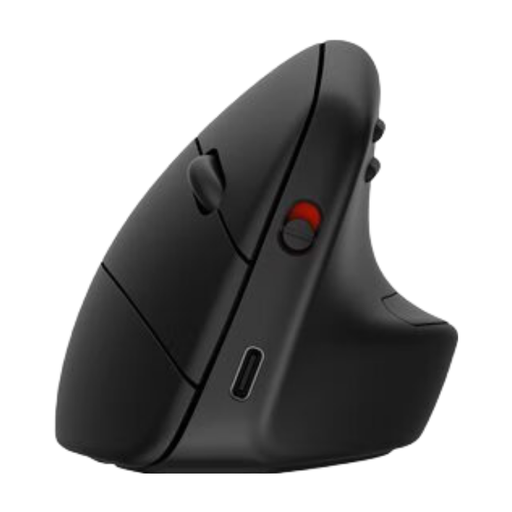
HP 925 Ergonomic Vertical Mouse
An option if you switch between computers and can use Bluetooth or the HP dongle at your workstation.
According to HP, it connects to up to three devices via Bluetooth 5.3 or the HP dongle, and has a detachable wrist rest. Right-handed version.
View at Joybuy
 No image available
Logitech MX Vertical Ergonomic Wireless Mouse
An option if you want to adjust cursor speed while working on slides and switch between computers.
4000-DPI sensor with adjustable DPI; four customisable buttons. Bluetooth and USB receiver; according to the product description, supports up to three devices. Right-handed version.
View at Joybuy
 No image available
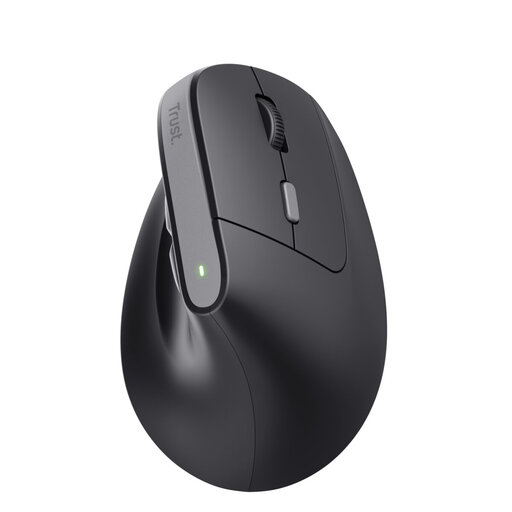
Trust Bayo II wireless vertical mouse, right-handed
An option if you want to work wirelessly and have a spare USB port for the receiver.
2.4GHz USB receiver that stores inside the mouse; adjustable DPI from 800 to 2400. The product description mentions quiet clicks and thumb buttons for forward and back.
View at Joybuy
 No image available
Trust Bayo II wired vertical mouse
An option if you work at one fixed workstation and don’t need a wireless connection.
Wired USB connection; adjustable DPI from 800 to 2400 and two thumb buttons, according to the product description. The cable limits where you can position it; right-handed version.
View at Joybuy
 No image available
Logitech Lift Vertical Ergonomic Mouse Graphite
An option if you have a small to medium-sized right hand and want a wireless connection.
According to the product description, it has Bluetooth or a USB receiver, four customisable buttons and quiet clicks. This version is for right-handed use and isn’t designed as a universal mouse for different hand orientations.
View at Joybuy
Frequently asked questions
Is a vertical mouse enough to prevent problems caused by screen work?
No. A vertical mouse can’t guarantee that you’ll avoid problems. Arboportaal also highlights repetitive movements, static strain, workstation set-up and taking breaks. So assess your whole workstation and take breaks from screen work.
Which connection works at a shared desk?
Choose a connection that’s permitted on the computer and compatible with the available ports. Check whether the model uses Bluetooth, a USB receiver or a cable; the wireless Trust Bayo II, for example, uses a 2.4GHz USB receiver.
Can I customise the buttons on the shared computer?
That depends on the model, operating system and software you’re allowed to use. HP specifies programmable buttons for the HP 925; Evoluent states that Mouse Manager for the VerticalMouse 4 Small Right Wired is not compatible with macOS. Check compatibility with the exact model and computer.
Can left- and right-handed colleagues share one vertical mouse?
Yes, if the model you choose is genuinely suitable for both hands. R-Go describes the Waver as ambidextrous; a model designed specifically for left- or right-handed use isn’t automatically suitable for both.
How can I check whether a vertical mouse fits my hand?
Check the manufacturer’s sizing guide and choose the right hand orientation. Logitech positions the Lift for small to medium-sized hands; Evoluent gives around 178 mm as a guide for regular VerticalMouse 4 models. This model information doesn’t replace assessing the fit for yourself.


