
People sharing a desk with colleagues who favour different hands
You want to pass one mouse on without the next person having to use a grip designed for the wrong hand.


If one mouse needs to be shared by left- and right-handed colleagues, choose a model that can actually switch hands; a separate left- or right-handed version won’t do that. For precision work by one person, hand size, easy-to-reach buttons and adjustable pointer speed are important considerations. However, a vertical mouse doesn’t guarantee reduced discomfort or an immediate improvement in precision. Also consider connectivity and the time it may take to get used to the vertical grip.
You want to pass one mouse on without the next person having to use a grip designed for the wrong hand.
You position, select and move small layout elements, and want the pointer speed and buttons to feel comfortable to use.
You focus on hand size and comfortable operation during repeated mouse use, without assuming that a particular model will prevent discomfort.
| What to consider | What to look for when buying | Who is this important for? |
|---|---|---|
| Sharing with people who favour different hands | Check whether the same model can be switched between hands; a separate left-handed version isn’t automatically suitable for sharing. | If I share a mouse with left- and right-handed colleagues, I want the same mouse to work for both hands. Around 31% of consumers put suitability for different hands first. |
| Fit during longer periods of use | Compare hand size and preferred hand, and check that the buttons and support areas are easy to reach. | People who use a mouse for long periods want a grip and buttons that suit their hand. For around 25% of consumers, fit is their main concern when buying. |
| Working with small layout elements | Try selecting and dragging elements as part of your own tasks, and check whether the pointer speed can be adjusted. | For anyone who regularly moves small presentation elements, control when selecting and dragging matters. Around 25% of consumers put precise layout work first. |
| Connecting to shared computers | Check which ports are available, which connections are permitted and whether any required software can be used on every work computer. | If I use a mouse with different work computers, I want to know in advance whether it will connect to them. Easy connectivity is the main concern for around 19% of consumers. |
A model available in separate left- and right-handed versions doesn’t automatically switch hands. Check whether the same physical mouse can be changed from one hand to the other.
Consider whether the same mouse needs to be used by people who favour different hands, and check how the exact model switches between them.
If no model works for both users, you may need a second mouse.
A study with 16 participants found that, with the vertical mouse tested, it took longer to reach the target than with a standard mouse: 4.2 versus 3.4 seconds. This result doesn’t prove that the mouse cures discomfort or that every model will perform in the same way. The study was published in Ergonomics and summarised via PubMed.
Try the grip with your own selection and drag-and-drop tasks, and give yourself time to get used to it. If discomfort persists, speak to a professional rather than relying on a mouse alone.
Connections and port requirements vary between models and computers. For the wired Evoluent VerticalMouse 4 Left Wired, Evoluent says that if your computer has USB-C only, you’ll need an adapter or hub, which isn’t included.
For every work computer, check the available ports, permitted Bluetooth connections and any software requirements.
You may need a separate adapter or hub to connect a USB-A mouse to a computer with USB-C only.
Worth considering if you’re looking for a mouse that can switch between hands for people with different preferences, or want to compare separate versions for each hand.
The Lift range is worth considering if regular users want a vertical mouse for small to medium-sized hands.
The Verto is a wired option for a fixed USB workstation; the Bayo+ is a separate wireless model with a rechargeable battery.
The VerticalMouse 4 Left Wired is a specific wired, left-handed option for medium to large hands.
This selection includes vertical mice for presentation and layout work. If you’ll be sharing a mouse, pay particular attention to which hand it’s designed for and check that it connects to the computers at your desk.
 No image available
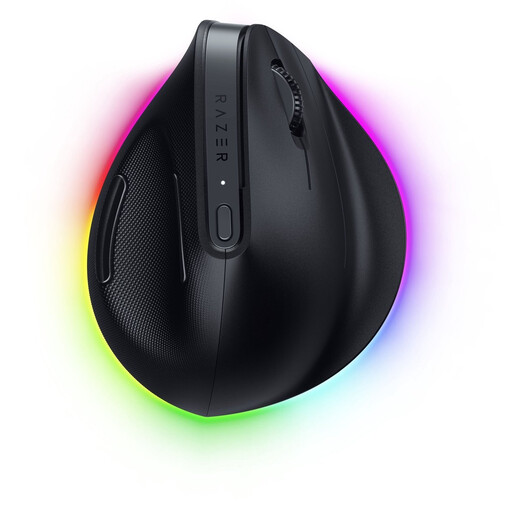
Worth considering if you’re looking for a vertical mouse with programmable buttons. Check that its connectivity and hand preference suit your work setup.
 No image available
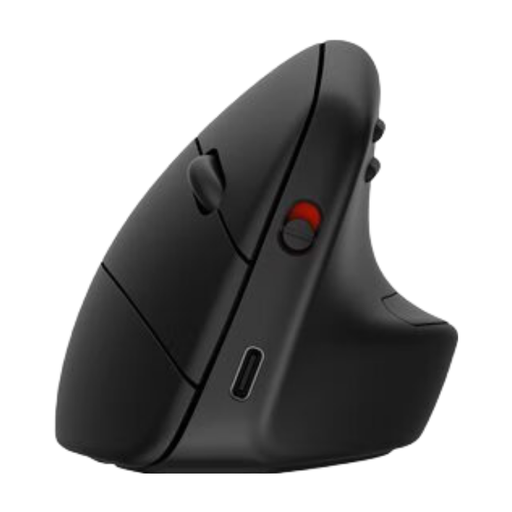
Suitable for a right-handed user looking for a vertical mouse. This version isn’t suitable for sharing with a left-handed colleague who uses the same mouse.
 No image available
An option for a right-handed user who wants to adjust the pointer speed for layout work. This version isn’t designed to be shared with left-handed colleagues.
The product name lists Bluetooth and a 2.4 GHz connection via a Unifying USB receiver, a 4000 DPI sensor, a rechargeable battery and four buttons.
 No image available
A wired option for a fixed workstation if you want to adjust the pointer speed for selecting and dragging. This version is designed for right-handed use, and the cable needs to suit your desk layout.
 No image available
An option for a right-handed user with small to medium-sized hands who wants a wireless connection. This version isn’t suitable for sharing with a left-handed colleague.
The official guidance cited doesn’t specifically require a vertical mouse. Employers must reduce the risks of working with display screens and ensure screen work is alternated at set times with other work or a break; a mouse doesn’t replace these measures.
First check the connection and which hand the mouse is designed for. Then try small selection and drag-and-drop tasks at a pointer speed that feels comfortable for you. Give yourself time to get used to the grip: in a study with 16 participants, pointing with the vertical mouse tested initially took longer than with the standard mouse.
In addition to any manufacturer’s warranty, statutory warranty covers what you can reasonably expect from the product under normal use. If the product turns out to be faulty sooner than expected, the seller is responsible for providing an appropriate solution free of charge; two years isn’t a general fixed end date for statutory rights in the Netherlands.
According to the Dutch Authority for Digital Infrastructure, retailers may sell only equipment that meets the applicable requirements. Radio equipment must include, among other things, a CE mark and a declaration of conformity; a listing in an online shop doesn’t in itself confirm that a specific mouse complies.
Take a used battery to a collection point, such as a shop that sells batteries. Don’t put it in your general waste.