First, choose a vertical mouse that suits your hand size and whether you’re left- or right-handed. Then compare whether you need quiet operation, adjustable cursor speed or a particular connection. A study of 16 participants, published in Ergonomics, found changes in pronation and forearm muscle activity during a pointing task, but also a longer time to reach the target with the vertical mouse. This doesn’t prove that a mouse treats or prevents discomfort. Give yourself time to get used to it, and vary your working posture.
Who is this relevant for?
Student who does a lot of editing
You regularly work on text and formatting, and want to check whether the mouse’s size, grip and your workstation setup suit you. Arboportaal recommends varying your working posture and taking microbreaks when working at a screen.
Student in a shared room
You want to click quietly while editing, and choose a connection that suits your computer’s ports and the space on your desk. Logitech describes the Lift as having quiet clicks; Trust lists quiet main buttons for the Bayo II.
Editor who does a lot of navigating
You switch between text, links and formatting tools, and want to compare cursor speed and easy-to-reach navigation buttons. Trust describes the Bayo II as having adjustable cursor speed and thumb buttons.
What should you look for when choosing?
For newsletter editing in a student room, the main things to consider are hand fit, quiet operation, cursor control and a suitable connection.
| What to consider |
What should you check before buying? |
Which consumers might find this important? |
| Grip and handedness |
Check the stated hand size, whether the model is designed for left- or right-handed use, and whether the buttons are easy for you to reach. |
If I’m editing text for a long time, I want to know first whether the shape suits my hand. Around 33% of consumers give grip and handedness top priority. |
| Quiet operation and desk space |
Look for specific information about quiet buttons, and check whether a cable or receiver will fit on your desk. |
In a shared room, I want to keep clicking noise down and avoid a cable getting in the way of my small workspace. Around 27% of consumers put quiet operation and desk space first. |
| Cursor control and navigation |
Compare adjustable cursor speed and easy-to-reach navigation buttons. Consider whether any button software will work with your computer. |
When selecting lots of text and formatting, I want to be able to adjust the pointer easily for the task. Around 20% of consumers particularly value cursor control and navigation. |
| Connection and power |
Check the connection type, available ports and whether the mouse uses a rechargeable battery, replaceable battery, USB receiver or cable. |
If I have few spare ports or don’t want a cable across my desk, the connection needs to suit my computer and workspace. Around 20% of consumers give connection and power top priority. |
Common mistakes
-
Assuming ‘ergonomic’ means it will prevent discomfort
In a pointing task involving 16 participants, the Ergonomics study found different pronation and muscle activity measurements, but also a longer time to reach the target. The results don’t prove that the mouse treats or prevents discomfort.
Choose a mouse that suits your hand and the tasks you do, give yourself time to get used to it, and vary your working posture. Arboportaal also recommends regularly looking away from the screen and taking microbreaks.
-
Assuming every version in a product range is the same
Left- and right-handed versions, connections and sizes can vary. For example, the Logitech Lift and CHERRY MW 4500 are available in separate versions for left- and right-handed use.
Before buying, check the full model specification, handedness, connection and power source.
-
Looking only at the highest dpi figure
A dpi figure on its own doesn’t tell you whether selecting text and pointing to small formatting tools will feel comfortable.
Check whether you can adjust the cursor speed, and try the mouse with your own screen settings and software where possible.
-
Assuming an extended warranty is essential protection
A commercial warranty doesn’t replace your statutory rights if a product doesn’t do what you could reasonably expect. ACM ConsuWijzer explains the statutory warranty.
First check what statutory protection applies, then compare any additional terms.
Brands to compare
Logitech
According to Logitech, the Lift is designed for small to medium-sized hands and comes in separate left- and right-handed versions. The MX Vertical is a different range, with a cursor speed switch.
- Logitech lists quiet clicks and quiet scrolling for the Lift.
- Fit and quiet operation depend on the model; check the handedness of the specific product you’re considering.
Trust
The wireless Bayo II and wired Verto offer different connections and features.
- Trust lists adjustable 800–2400 dpi and quiet main buttons for the Bayo II; for the Verto, it lists 1000/1600 dpi.
- The Verto has a 1.5-metre cable. Don’t confuse this wired model with the wireless Bayo II.
CHERRY
The MW 4500 and MW 4500 LEFT are wireless models for right- and left-handed use respectively, with a stated 45° shape.
- CHERRY lists three dpi settings up to 1200 dpi and thumb buttons.
- Check that the button-assignment software and chosen handedness suit your computer and preferences.
R-Go Tools
According to R-Go Tools, the HE Break range is available in different sizes and versions for left- and right-handed use, with wired and wireless options.
- The choice of sizes may be useful if a standard shape doesn’t fit; the range also has a software-controlled break indicator.
- Check the exact size, handedness, connection and software required for the model you choose.
Vertical mice at Joybuy
These product picks focus on vertical mice for newsletter editing, with options for cursor control, navigation and wireless connections.
 Image unavailable
Ergonomic vertical mouse, USB-C, Bluetooth and 2.4 GHz
An option if you want to adjust the cursor speed and connect wirelessly while editing.
Three dpi levels: 800/1200/1600. Six programmable buttons. Connects via Bluetooth or a 2.4 GHz USB receiver; charges via USB-C.
View at Joybuy
 Image unavailable
Ergonomic wireless vertical mouse, six buttons
This model suits editing tasks where you often switch between text and links.
Three dpi settings from 800–1600 dpi, six buttons and a rechargeable battery via USB-C. Wireless connection via a 2.4 GHz USB receiver.
View at Joybuy
 Image unavailable
HP 925 Ergonomic Vertical Mouse
An option for right-handed use if you want to switch between multiple devices.
Right-handed design, six buttons and a sensor resolution of 4000 DPI. Connects via Bluetooth or a receiver; according to the product description, it can connect to up to three devices.
View at Joybuy
 Image unavailable
Logitech MX Vertical
This mouse is an option if you’re comparing cursor speed switches and customisable buttons for right-handed use.
4000 DPI sensor, four buttons and a rechargeable battery. Connects via Bluetooth or 2.4 GHz using a Unifying USB receiver.
View at Joybuy
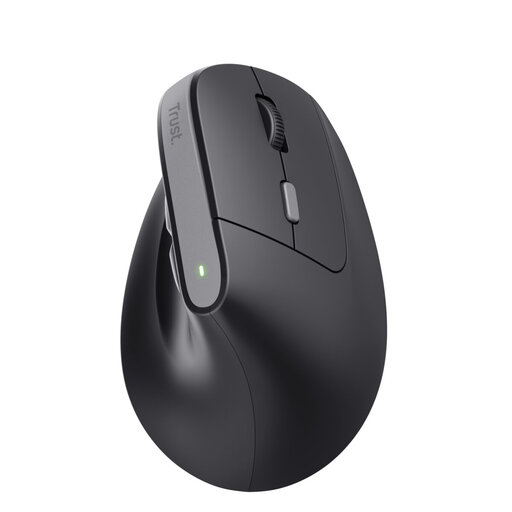 Image unavailable
Trust Bayo II, right-handed model
An option if you want to compare quiet main buttons and thumb buttons for use in a shared room.
Adjustable cursor speed from 800–2400 DPI and two thumb buttons. Wireless connection via a 2.4 GHz USB receiver.
View at Joybuy
Frequently asked questions
Is there evidence that a vertical mouse helps with RSI or wrist pain?
No, the available study doesn’t prove that a vertical mouse treats or prevents discomfort. In a pointing task involving 16 participants, the Ergonomics study found less pronation and lower activity in the forearm muscles studied, but also a longer time to reach the target. Vary your working posture too.
What should I check when setting it up and using it day to day?
First, check that the connection suits your computer: according to Trust, the Bayo II uses a USB receiver, while the Verto has a USB cable. Adjust the cursor speed to suit your task and take regular microbreaks; Arboportaal also recommends varying your working posture.
What if I’m not happy with the mouse after buying it online, or it breaks too soon?
For a standard online consumer purchase in the Netherlands, you’ll generally have 14 days from delivery to change your mind, subject to statutory exceptions outlined by ACM ConsuWijzer. You’re also covered by the statutory guarantee if, under normal use, the product doesn’t do what you could reasonably expect. A manufacturer’s warranty doesn’t replace this right.
What rules apply to a wireless mouse, and where can I take an old one?
For equipment with a radio frequency module, the Dutch Ondernemersplein describes the applicable rules for radio equipment and the responsibility for compliance and CE marking. This doesn’t confirm that any individual product complies. According to the Dutch government, you can take an old electric mouse to a suitable collection point or hand it in when buying a similar new device. Used batteries shouldn’t go in the bin.


