
Vandaag of morgen in huis

Kwaliteit gegarandeerd

Welkomstaanbiedingen ontgrendelen: GRATIS bezorging | Tot 80% korting | Gratis 30 dagen JoyPlus-proefperiode
Download de app
Looking for vegetarian snacks for on the go, with lunch or to share? The range includes everything from tofu and konjac to snacks made with wheat gluten, soya and nuts. This can make it difficult to know which option matches your diet, taste and nutritional preferences.
Pay particular attention to three common pitfalls:
Many Asian vegetarian snacks are made with soya, wheat gluten or a combination of the two. Seitan and other gluten-based products are not suitable for people with a wheat or gluten allergy. Tofu and soya products generally contain soya, while some snacks also list sesame or sulphites.
According to the product information, the Jin Zai Roasted Tofu Snack contains soya, sesame and sulphites. Based on the stated nutritional values, the snack provides 18.5 grams of protein per 100 grams, but also 3.1 grams of salt per 100 grams. This makes the allergen and nutrition tables more important than a general description such as “plant-based”.
A fair comparison starts with the same unit of measurement. Look at:
The HAO BA SHI Konjac Snack lists 68 kcal and 0.2 grams of protein per 100 grams, while the Wuxianzhai Vegetarian Meat Skewers list 21.6 grams of protein per 100 grams. Konjac and vegetarian meat therefore have clearly different nutritional profiles, even though both can be eaten straight from the pack.
Individual packs are practical when you are out and about. Jin Zai’s tofu snack consists of five individual portions in a 108-gram pack. This can be handy for work, train journeys or a lunchbox.
Also check the storage instructions. Several snacks can be stored unopened outside the fridge, but need to be refrigerated and eaten promptly once opened. A larger pack is only good value if you use it within the stated time frame.
A product name can also be misleading. The name Roasted Gluten-Free 150g includes “gluten-free”, while the supplied ingredient information lists water and gluten. Always check the current label and, if in doubt, contact the seller or manufacturer.
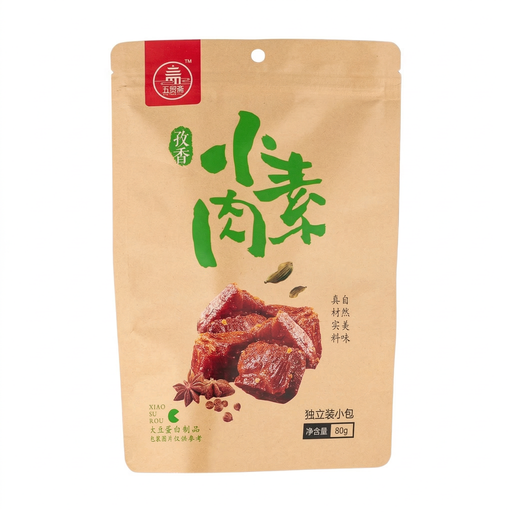
Why it suits this profile: The 80-gram pack is a manageable choice if you are trying vegetarian meat snacks for the first time. The cumin flavour is an alternative to very hot varieties.
The product information clearly lists wheat gluten and soya as ingredients/allergens. This allows you to compare the snack without relying solely on the name “vegetarian meat”.
80 grams per pack, cumin flavour, ready to eat and, according to the stated values, 23.5 grams of protein and 2.23 grams of salt per 100 grams.

Why it suits this profile: The firm tofu texture and individual portions are ideal for fans of savoury Asian vegetarian snacks that are easy to take with you.
The product page specifies the portion sizes, ingredients and allergens. This means you can see in advance that soya, sesame and sulphites are part of the recipe.
108 grams in total, five individual packs, ready to eat and 18.5 grams of protein per 100 grams according to the stated nutritional values.

Why it suits this profile: This tofu-free konjac snack is designed for anyone looking for a compact, spicy snack with a firm, chewy texture.
The 50-gram portion is clearly defined. The ingredients list includes soya and sulphites, among other ingredients; check this in advance if you avoid allergens.
50 grams, ready to eat, Sichuan pepper flavour and, according to the product information, 68 kcal per 100 grams.
We have put together a complete, up-to-date list of products that fully meet these strict selection criteria and the applicable European safety regulations.
No. A vegetarian snack may contain milk, eggs or other ingredients of animal origin. Check the ingredients list and look for a vegan label, if applicable. The packaging may also mention potential cross-contamination with allergens.
This varies by product and portion size. According to the nutritional information provided, the Wuxianzhai Vegetarian Meat Skewers contain 21.6 grams of protein per 100 grams, the Wuxianzhai Small Vegetarian Meat Cumin Flavor contains 23.5 grams, and the Jin Zai tofu snack contains 18.5 grams. Also compare the salt content and the actual portion size.
Always follow the instructions on the packaging. For several of the products mentioned, the guidance is to refrigerate them after opening and consume them promptly. Individual packs help to reduce waste when you do not want to eat the whole pack at once.
