
Vandaag of morgen in huis

Kwaliteit gegarandeerd

Welkomstaanbiedingen ontgrendelen: GRATIS bezorging | Tot 80% korting | Gratis 30 dagen JoyPlus-proefperiode
Download de app
People looking for vegetarian snacks often want more than just a quick bite. You may be looking for a plant-based alternative to meat, a protein-rich snack for on the go, or snacks from China with a spicy flavour. There is plenty of choice, but product names and marketing claims do not always tell the whole story. Use the following checks to avoid making the wrong purchase.
A snack may be made from soya, wheat or konjac and still contain ingredients that are not suitable for a vegan diet. Always check the full ingredients list and allergen information. Also look out for terms such as milk, lactose, egg, honey and possible traces.
Some products do not have clear vegan certification. In that case, it is safer to check the packaging and product page rather than relying on the name alone.
Protein-rich snacks are popular with vegetarians, vegans and flexitarians. However, a high protein content says nothing about the overall nutritional profile. For example, a spicy soya snack may contain around 20 grams of protein per 100 grams, but also more than 2 grams of salt per 100 grams.
Therefore, always compare protein, salt, fat and serving size. A 62- or 80-gram pack contains less than 100 grams, but the flavourings may be relatively concentrated per serving.
The product name Roasted Gluten-Free 150g refers to being gluten-free, but the listed ingredients mention water and gluten. This is a clear reason to check the current packaging and allergen information before buying. If you need strictly gluten-free snacks, do not select this product based on the title alone.
Muesli and granola can also contain gluten. Oats, spelt, barley, rye and wheat are often used in the same products or product ranges. “Gluten-free snacks” are therefore only suitable if the labelling and composition genuinely confirm this.
Soya protein, wheat gluten, pea protein or nuts are often used to create a satisfying bite. Soya and wheat gluten products usually have a fibrous or chewy texture resembling vegetarian meat. Nut mixes, granola and muesli also provide protein, but often contain more fat and carbohydrates.
A few examples from the product information:
Use these figures as a point of comparison, not as a health claim. Nutritional values may change depending on the packaging or recipe.
Spicy vegetarian snacks and snacks from China often use chilli, Sichuan pepper, soya sauce, sesame and spice blends. This creates a distinctive flavour, but can also increase the salt content. For example, Be&Cheery Konjac Vegetarian Tripe lists 3.2 grams of salt per 100 grams. Hao Ba Shi Vegetarian Beef Steak Spicy Flavor lists 3.1 grams of salt per 100 grams.
With muesli and granola, it is useful to distinguish between sugars and added sugars. Holie’s Granola Glutenfree Peanut Chocolate lists 4 grams of sugars per 100 grams and 0% added sugar according to the product description. It is still an energy-dense product, with 438 kcal per 100 grams.
Pay particular attention to:
Not every product is ready to eat. According to the product information, HONGWANJIA Wheat Gluten must first be soaked for 1 to 2 hours in warm water at 40–50 °C and then cooked. Other products, such as Hao Ba Shi, Bestore and Wuxianzhai, are ready to eat according to the product information.
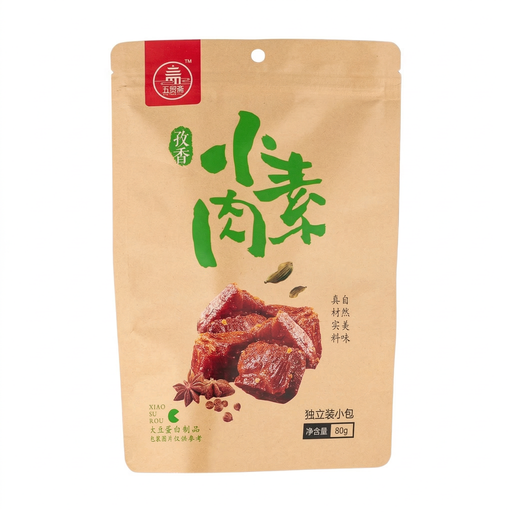
Why it suits this profile: A compact portion for anyone trying vegetarian meat or a savoury soya snack for the first time without buying a large pack.
The product page lists protein, salt, allergens and a net weight of 80 grams. This allows you to assess the portion and composition in advance.
Ready to eat; 23.5 grams of protein per 100 grams; cumin flavour; contains wheat and soya.
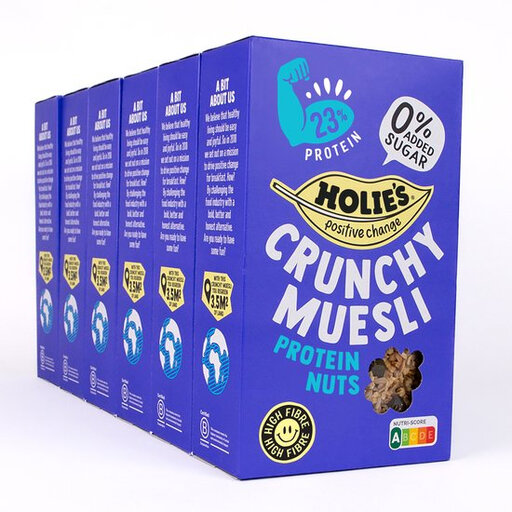
Why it suits this profile: Suitable for anyone who values nutritional information, a multipack and convenience for breakfast or snack times.
The product information states 0% added sugar, 22 grams of protein and 21 grams of fibre per 100 grams. However, check the current packaging, as the page lists several nutritional tables.
Contains oats, wheat protein, almonds and hazelnuts; 6 packs of 400 grams; suitable with yoghurt or as a standalone snack.

Why it suits this profile: For fans of spicy vegetarian snacks with a firm texture that can be eaten straight from the individual pack.
The snack lists trans fats as 0 grams, but also contains 3.1 grams of salt per 100 grams. The product information therefore allows you to weigh up flavour and nutritional values together.
20 grams of protein per 100 grams; ready to eat; Sichuan mala flavour; contains soya, wheat and sesame.
For home use, muesli, granola and a nut mix are practical because you can combine them with yoghurt, fruit or a meal. Pay attention to portions: products such as granola and nuts contain relatively high levels of energy per 100 grams, even when they contain no added sugar.
Individually wrapped snacks are more convenient when you are on the go. Look at:
We have compiled a complete, up-to-date list of products that fully meet these strict selection criteria and the applicable European safety regulations.
Products based on soya protein, wheat gluten and some protein granolas contain relatively high levels of protein according to their nutritional tables. Examples include HONGWANJIA Wheat Gluten with 24 grams and Wuxianzhai Cumin Flavor with 23.5 grams per 100 grams. Always compare salt, fat and allergens as well.
No. “Vegetarian” mainly describes the absence of meat and does not automatically say anything about salt, sugar, fat or fibre. Check the nutritional table and decide whether the product suits your eating pattern and the occasion on which you want to use it.
Choose snacks that are ready-to-eat according to the product information and are offered in individual packs. Check the storage advice after opening. A muesli bar, nut bar or small soya snack is generally easier to take with you than wheat gluten, which must first be soaked and cooked.
