
Vandaag of morgen in huis

Kwaliteit gegarandeerd

Welkomstaanbiedingen ontgrendelen: GRATIS bezorging | Tot 80% korting | Gratis 30 dagen JoyPlus-proefperiode
Download de app
If you’re looking for vegetarian snacks in the UK, you’ll quickly come across spicy Chinese snacks, vegetarian meat, tofu snacks and konjac snacks. The choice is vast, but the packaging doesn’t always tell the full story. A product might look plant-based, yet still contain milk derivatives. Likewise, terms like “high in protein” or “light” don’t mean much if you don’t check the nutritional profile.
This buying guide helps vegetarians, vegans and flexitarians spot the practical differences. Here you’ll find vegan snacks, vegetarian beef jerky, gluten snacks and ready-to-eat vegetarian snacks for home, on the go, or as an accompaniment to rice and noodles.
Many Chinese vegetarian snacks are based on soya, wheat gluten, konjac or tofu. However, flavourings can contain ingredients of animal origin. A clear example is a product with “beef flavouring”: the Hao Ba Shi Lamp Shadow Vegetable Beef Jerky Original Flavor lists beef and milk among its ingredients. This makes the product unsuitable for vegans, despite its vegetarian positioning.
So always check:
High-protein vegetarian snacks can be handy as a savoury bite, but the protein percentage is only one part of the nutritional picture. For example, the Hao Ba Shi Nanxi Tofu Jerky contains 20g of protein per 100g, but also 2.5g of salt per 100g. The Wuxianzhai Vegetarian Steak, according to the product information, provides 28g of protein per 100g and 2.55g of salt.
So compare the full table:
A product with 20g of protein per 100g will give you roughly 10g of protein in a 50g serving. That simple calculation helps avoid unrealistic expectations.
The term mala refers to the combination of chilli and Sichuan pepper. Chilli provides the heat; Sichuan pepper, according to the usual flavour description, gives a tingling or numbing sensation in the mouth. The intensity varies from product to product.
A konjac snack with mala seasoning is generally lighter and softer in texture than a firm tofu snack or vegetarian beef jerky. If you’re after a substantial bite, it’s better to look at soya protein, tofu or wheat gluten. If you mainly want a small, individually wrapped portion, konjac is a better bet.
The first ingredients usually give a good indication of the texture:
Bear in mind that “vegetarian meat” is mainly a description of style and texture. It doesn’t automatically tell you anything about the protein content or nutritional balance.
In this range, soya, wheat and sesame appear regularly. Wheat gluten is present in various gluten snacks and in some soya protein products. If you eat a vegan diet, you also need to check that flavourings and sauces don’t contain milk derivatives.
According to the product information for individual items, you should also look out for:
The packaging in your order remains the definitive source, as ingredients and nutritional values can change.
Individual sachets are practical for work, study, travel or a lunchbox. A larger pack can be more economical if you’re sharing the snacks or using them regularly. Also consider the preparation: most of the selected products are ready-to-eat vegetarian snacks that you can eat straight from the pack. Some can also be used as a topping for rice, noodles, soup or hotpot.
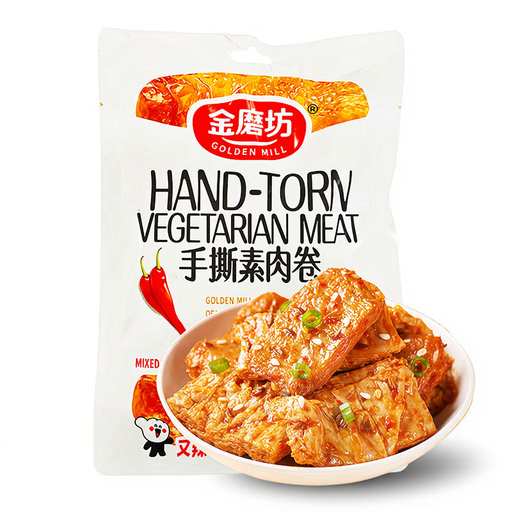
Why this fits the profile: These mixed rolls are ready to eat, contain 18g of protein per 100g and can be used as a snack or added to a lunchbox.
The nutritional information lists protein, fat, carbohydrates and salt per 100g. Do check for soya and wheat allergens before ordering.
120g per pack, ready to eat and suitable as a snack or lunchbox addition.
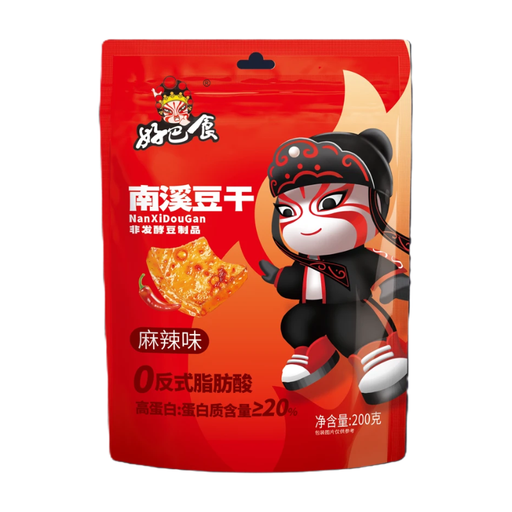
Why this fits the profile: The tofu jerky combines a chewy texture with Sichuan pepper and chilli. With 20g of protein per 100g, it suits anyone looking for a firm, savoury snack.
The product information clearly states the protein and salt values. The flavour isn’t just described as “spicy” – it specifically mentions chilli and Sichuan pepper.
200g per pack, 20g of protein per 100g and ready to eat.

Why this fits the profile: Seven individual sachets make portion control easy. The snack is based on soya protein isolate and, according to the product information, contains 12g of protein per 100g.
The portioned packaging helps prevent you from opening a large bag all at once. Check the declared soya allergy and the salt value of 2.58g per 100g.
128g divided into seven sachets, mala flavour and a chewy texture.
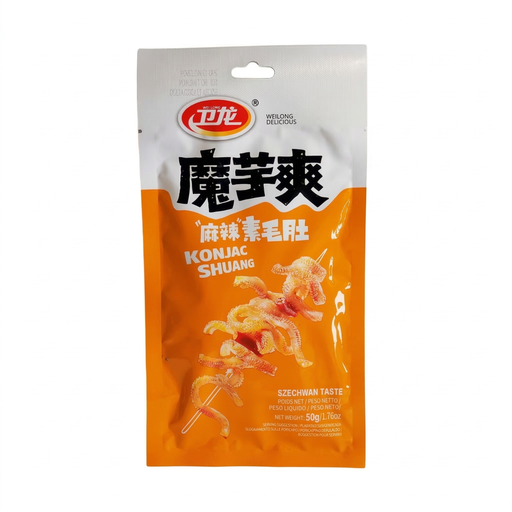
Why this fits the profile: This small konjac snack contains 84 kcal per 100g according to the label and is ready to eat. It suits anyone looking for a spicy treat with a light texture.
The product isn’t marketed as a high-protein snack: the protein content is 0.5g per 100g. This allows you to compare it fairly with tofu and soya protein products.
50g per pack, 84 kcal per 100g and a Sichuan-style spicy flavour.
We’ve put together a full, up-to-date list of products that fully meet these strict selection criteria and comply with current European safety regulations.
Products based on soya protein, tofu or wheat gluten often contain more protein than konjac snacks. In the selection mentioned, values range from 12g of protein per 100g for the Bestore tofu snack to 28g for the Wuxianzhai Vegetarian Steak. Always compare the label and the actual serving size.
No. Check the full ingredients list. Some products contain milk, lactose or animal-derived flavourings. Soya, wheat and sesame may also be present. If you follow a strict vegan diet, it’s a good idea to check the product information and allergens before purchasing.
Unopened products can usually be stored in a cool, dry place at room temperature, according to the product information. After opening, instructions vary: some snacks need to be resealed, while others should be refrigerated and consumed quickly. Always follow the storage advice on the packaging.
