
Vandaag of morgen in huis

Kwaliteit gegarandeerd

Welkomstaanbiedingen ontgrendelen: GRATIS bezorging | Tot 80% korting | Gratis 30 dagen JoyPlus-proefperiode
Download de app
Vegetarian snacks come in many forms, from spicy soya protein snacks and vegan jerky to vegetarian sausage, luncheon meat and Chinese vegetarian snacks seasoned with Sichuan spices. This wide range makes choosing appealing, but it can also make it difficult. Packaging terms such as “meat-like texture”, “authentic flavour” or “high protein” do not always tell you what you will actually get.
That is why it is important to focus on the ingredients list, nutritional values, portion size and preparation method. This helps you avoid choosing a snack that does not suit your diet, turns out to be too salty or ends up sitting unused in the cupboard after just one taste.
Not every product containing plant-based proteins is automatically suitable for vegans. Some vegetarian snacks contain egg, milk or ingredients that may include animal-derived components, for example. Always check the wording on the current packaging.
Allergens are important too. This range includes soya, wheat, gluten and sesame, among others. A product may be vegan according to its product description, but still be unsuitable for someone with an allergy or intolerance.
“Beef jerky”, “lamb skewers” or “luncheon meat” refer to the shape, flavour or occasion for which the product is intended. They do not mean that the texture or seasoning will feel the same to everyone. A snack made with konjac is different from a product made with puffed soya or wheat gluten.
If you are mainly looking for a firm bite, look for terms such as chewy, “shredded” or “hand-torn”. For use in stir-fries or hotpot, sliceable products such as vegetarian sausage or luncheon meat are often more practical.
Plant-based meat alternatives are often heavily seasoned. Compare the salt content per 100 grams, rather than just the size of the bag. In the products mentioned, for example, this ranges from 1.5 to 6.75 grams of salt per 100 grams. Individual mini packs can be convenient when you are out and about, but they make it less obvious how much you are ultimately eating.
The description “meat-like texture” is a product claim. Assess it alongside the base ingredients listed and the shape of the product, rather than relying on the marketing copy alone.
Look for clear information about animal-derived ingredients and allergens. Products containing soya are not suitable if you have a soya allergy. Some snacks combine soya with wheat, for example through soya sauce or wheat gluten. Qi Shan Vegetarian Luncheon Meat lists soya and wheat as allergens. Wulama Vegetarian Lamb Skewers list soya and sesame.
Also check the flavour enhancers and preservatives. According to the product information, Wuxianzhai Vegetarian Beef Mala contains E621 and E635, among other ingredients, while the Wulama skewers list E621, E635, E202 and E282. This does not automatically make a product unsuitable, but it is information worth considering before you buy.
Ready-to-eat vegan snacks are convenient for eating at the office, during a train journey or as a side dish. Other products are more versatile when briefly fried, added to a rice bowl or incorporated into a stir-fry.
Check the instructions after opening. Qi Shan Vegetarian Sausage consists of ten small 25-gram sachets. Once an individual sachet has been opened, the product should be refrigerated and eaten within 24 hours according to the description. Other products need to be sealed properly and consumed promptly. Store unopened packs according to the information on the label.
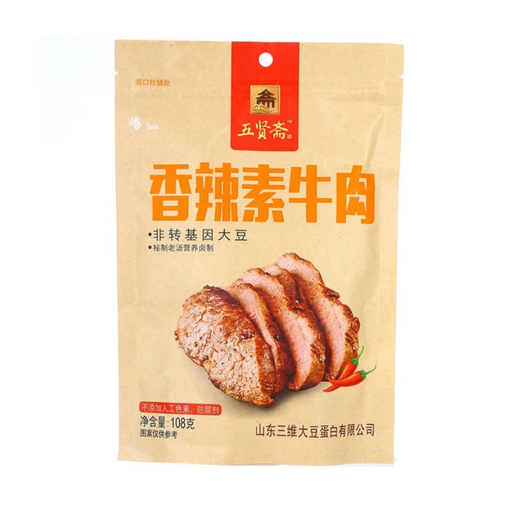
Why it suits this profile: A ready-to-eat vegetarian snack with a familiar spicy flavour and a compact 108-gram pack. Suitable as an introduction to Asian-style plant-based meat.
The ingredients and allergens are listed: the product contains wheat gluten. This means you can check whether it is suitable before ordering.
108 grams per pack, ready to eat and, according to the product information, containing 15.2 grams of protein and 3.8 grams of salt per 100 grams.
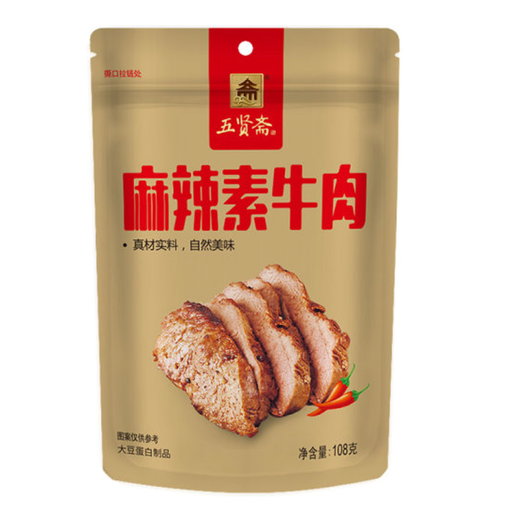
Why it suits this profile: For fans of Sichuan flavours. The product description lists Sichuan pepper and chilli as the basis of its mala profile, with mini portions for controlled snacking.
The pack contains individually wrapped mini sachets. This avoids the issue of having a large opened bag that is less practical when you are out and about.
42% puffed soya according to the product information, 20.9 grams of protein per 100 grams and ready to eat.
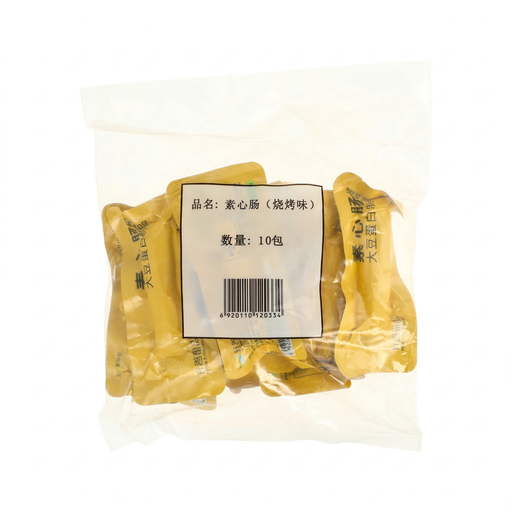
Why it suits this profile: Ideal if you want to use vegetarian sausage not only as a snack, but also in sandwiches, stir-fries, salads or hotpot.
The pack contains ten separate 25-gram portions. You do not have to open the entire pack every time.
250 grams in total, 14 grams of protein per 100 grams, and suitable for eating straight away or briefly frying according to the product information.
We have put together a complete, up-to-date list of products that fully meet these strict selection criteria and the applicable European safety regulations.
If you enjoy spicy vegetarian snacks, consider the Wuxianzhai Vegetarian Beef Tripe Snack with mala flavour. According to the product information, this vegetarian tripe snack is made with konjac and contains 27.3 grams of protein and 2.6 grams of salt per 100 grams. By contrast, Wuxianzhai Cumin Flavor Vegetarian Tripe uses puffed soya and wheat gluten, among other ingredients, with cumin as its main flavour.
For a jerky-like texture, Xiang Xiang Zui Shredded Vegan Jerky with charcoal-grilled flavour and Be&Cheery Hand-Torn Vegetarian Meat with barbecue flavour are logical choices. Both are ready to eat. With Xiang Xiang Zui, check the listing for soya and wheat; soya and wheat are also listed as allergens for the Be&Cheery version.
If you would prefer a product that can be used across several meals, Qi Shan Vegetarian Luncheon Meat Original Flavor can be used in slices, stir-fries or hotpot. The product description lists water, isolated soya protein, pea protein and wheat in the fermented soya sauce. Be&Cheery Shredded Vegetarian Meat Spicy Flavor is another option if you are looking for a spicy, fibrous texture.
No. “Vegetarian” excludes meat, but may still allow some ingredients of animal origin. Always check the vegan designation, ingredients list and allergen information on the current label.
Products with a torn or fibrous texture, such as vegan jerky and hand-torn vegetarian meat, are the closest in shape to jerky. The final bite depends on the base used, such as soya protein, wheat gluten or other plant-based proteins.
Store unopened snacks in a cool, dry place away from direct sunlight when stated in the product information. Seal opened packaging properly and follow the instructions on the label. Some individual portions, such as Qi Shan Vegetarian Sausage, must be refrigerated after opening and eaten within 24 hours.
