
Vandaag of morgen in huis

Kwaliteit gegarandeerd

Welkomstaanbiedingen ontgrendelen: GRATIS bezorging | Tot 80% korting | Gratis 30 dagen JoyPlus-proefperiode
Download de app
Fancy a savoury snack with Sichuan spices, a firm bite, or a portion of vegetarian meat to take on the go? Vegetarian Chinese snacks come in many forms: from konjac snacks and tofu snacks to vegetarian beef jerky and gluten-rich snacks. The difference isn't just about flavour. Ingredients, allergens, salt content, protein and portion size all determine whether a product really suits your diet.
A product may be described as vegetarian, yet still contain milk, honey or other animal-derived ingredients. For example, the HAO BA SHI Lamp Shadow Vegetable Beef lists beef flavouring and lactose in its ingredients. If you eat a vegan diet, it's wise to check the full packaging and allergen information.
Soya and wheat are also common in vegetarian meat, tofu snacks and gluten bars. This makes these snacks less suitable for anyone with an allergy or intolerance. So don't rely solely on words like "vegetarian", "plant-based" or "meat alternative".
According to the product information, konjac snacks often contain relatively little energy. The HAO BA SHI Konjac Snack, for instance, contains 68 kcal per 100 grams. However, that comes with 3.1 grams of salt per 100 grams. A small packet may seem light, but can still contain plenty of flavourings and salt.
Always compare the nutritional values per 100 grams and the amount you actually eat. This is especially important with individually wrapped snacks: several small bags can together make up a full portion.
Vegetarian beef jerky, tofu jerky and snacks based on wheat gluten often provide more protein than konjac. That doesn't automatically mean they're a balanced meal replacement. The HAO BA SHI Nanxi Tofu Jerky contains 20 grams of protein per 100 grams, but also 16.2 grams of fat and 2.5 grams of salt.
Use protein-rich snacks as a savoury treat or supplement, not as a replacement for a varied diet.
The base determines the bite and often the nutritional value too:
A chewy texture is subjective. So read the product description and look at the base ingredient rather than relying solely on the name "vegetarian meat".
Compare at least these three values:
Bear in mind that nutritional values are given per 100 grams, while the packet might contain, for example, 50, 80 or 200 grams.
Sichuan mala combines chilli with a tingling effect from Sichuan pepper. That's different from just "spicy". If you're after a direct chilli flavour, look at fresh pepper varieties, such as the Wuxianzhai Fresh Pepper Vegetarian Meat.
For the office, train journeys or lunchboxes, individually wrapped snacks are practical. Do check the storage advice after opening. Some products need to be refrigerated and consumed quickly once opened. A larger bag is better value per gram, but only if you can use the contents within the recommended time.

Why this fits the profile: A small portion to get to know konjac and Sichuan pepper without buying a large pack straight away. Ready to eat and individually wrapped.
The packet is only 50 grams, making portion size and nutritional values easy to manage. Do check the soya and sulphite information.
68 kcal and 3.5 grams of fat per 100 grams according to the product information; ready-to-eat and portable.

Why this fits the profile: For fans of a firm tofu bite and the combination of chilli and Sichuan pepper. The pack contains seven sachets, handy for multiple snacking occasions.
The nutritional information is given per 100 grams: 12 grams of protein, 13.2 grams of fat and 2.58 grams of salt. This lets you assess both spiciness and nutritional profile together.
Seven portion sachets, 209 kcal and a tofu and soya protein base. Contains soya; check the label if you have allergies.
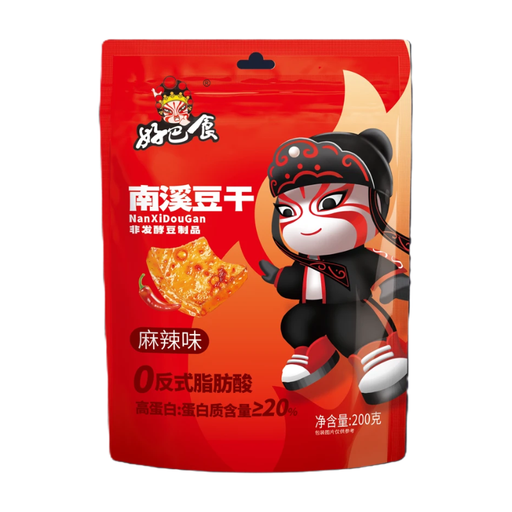
Why this fits the profile: A larger pack for anyone who wants to snack on tofu jerky, combine it with noodles, or add it to rice and soup.
The product information states 20 grams of protein per 100 grams, but also 16.2 grams of fat and 2.5 grams of salt. This makes the trade-off transparent.
200 grams content, 20 grams of protein per 100 grams and a ready-to-eat format with a tofu base.
We've put together a full, up-to-date list of products that fully meet these strict selection criteria and comply with current European safety regulations.
Not always. Some snacks contain milk derivatives, animal flavourings or other ingredients that don't fit a vegan diet. Check the full ingredients list and look for clear vegan information. Also watch out for cross-contamination if you're allergic to soya, wheat or sesame.
Always follow the packaging. Unopened snacks are usually best kept in a cool, dry place away from direct sunlight. Products like tofu and konjac snacks sometimes need to be refrigerated and eaten quickly once opened. Individual sachets stay sealed until you use them, which is handy for on the go.
According to the stated nutritional values, konjac snacks generally contain less energy than snacks based on oil, gluten or soya protein. The HAO BA SHI Konjac Snack contains 68 kcal per 100 grams; the WEILONG Konjac Snack contains 84 kcal per 100 grams. Also look at the salt content and the actual portion size before making your choice.
