
If you freeze small portions
You want to store individual portions of stock from time to time and first check whether your existing freezer has enough space. The Voedingscentrum recommends setting your freezer to −18 °C.


You may not need a separate freezer if you can set your existing freezer to −18 °C and have room for small portions of vegetable stock. If you do need extra space, compare suitable under-counter models by capacity, drawer layout, freezing capacity and annual energy consumption. A larger model gives you more room to store food, while NoFrost can make a real difference if you want to defrost less often by hand.
You want to store individual portions of stock from time to time and first check whether your existing freezer has enough space. The Voedingscentrum recommends setting your freezer to −18 °C.
You often make several portions at once and want some well-organised extra freezer space without immediately opting for a large upright model. The Consumentenbond lists capacity and layout as factors to consider when choosing a freezer.
You need extra space but want to avoid buying a second appliance that’s larger than your supplies require. Milieu Centraal points out that an appliance that’s too large can use energy unnecessarily.
Start by checking the freezer space you already have. Only compare an additional model if your existing freezer can’t be set to −18 °C or doesn’t have enough room. Then look at the capacity and layout that suit your portions, and compare the annual energy consumption of appliances with similar capacities.
| What to consider | What should you look for? | Who is this important for? |
|---|---|---|
| Capacity and space | Count how many portions you store at once, then compare the usable capacity, external dimensions and drawer layout of the exact model. | If I only store a few portions, I want enough space without an unnecessarily large appliance; around 31% of consumers prioritise a suitable capacity and fit. |
| Freezing portions | Check whether the freezer can be set to −18 °C, and compare its stated freezing capacity in kg per 24 hours with the size of your batches. | If I regularly make several portions at once, I want to be able to store them conveniently; around 31% of consumers prioritise portion storage and freezing capacity. |
| Annual energy consumption | Compare the stated kWh per year for models with a capacity that suits your supplies; don’t judge energy consumption by the label letter alone. | If I’m buying a second appliance, I want to factor in its ongoing energy use; around 23% of consumers consider annual energy consumption their main priority. |
| Defrosting and location | Check the freezing technology and the permitted ambient temperature for the exact model, particularly if you plan to put it somewhere unheated. | If I want to spend less time defrosting by hand or plan to put the freezer somewhere cool, I check the model’s requirements; around 15% of consumers prioritise maintenance or location. |
A larger appliance offers little benefit if you only store a few portions, while a second appliance will still use energy continuously.
Work out how many dated portions you want to store at once, then check whether your existing, suitable freezer space is enough.
These terms don’t necessarily refer to the same technology or maintenance requirements. A manufacturer’s claim of reduced frost build-up isn’t the same as a confirmed NoFrost specification.
If spending less time defrosting by hand matters to you, check the exact freezing technology used in the model.
The label letter alone doesn’t tell you how much energy an appliance with a different capacity will use each year.
Compare the stated annual energy consumption in kWh as well as the capacity of models that suit your supplies and available space.
The VR600 is a freestanding under-counter model you can compare by capacity, drawer layout and stated freezing capacity.
The VV856WIT is an under-counter model you can assess by capacity, drawer layout and stated annual energy consumption.
The ATB48E1AW is a compact model you can compare by LowFrost technology, freezing capacity and stated energy consumption.
The FNe 1404 Pure is an under-counter model for anyone comparing a smaller capacity with NoFrost technology.
The BREMEN132-040BW is an extra-compact model you can compare with other under-counter options.
These freestanding, compact freezers are options for anyone looking for separate space to store small portions. Compare the features of the exact model with the space you have available and the amount you need to store.
 No image available
A freestanding model to compare if you’re looking for separate freezer space for portions.
The product name lists No-Frost and a D energy rating.
 No image available
A compact freezer to compare if you want to match the capacity to a small amount of food.
The product name lists a capacity of 60 litres.
 No image available
A freestanding model to compare with other compact options if you want to keep portions separate.
The product name lists a capacity of 60 litres and 3 compartments.
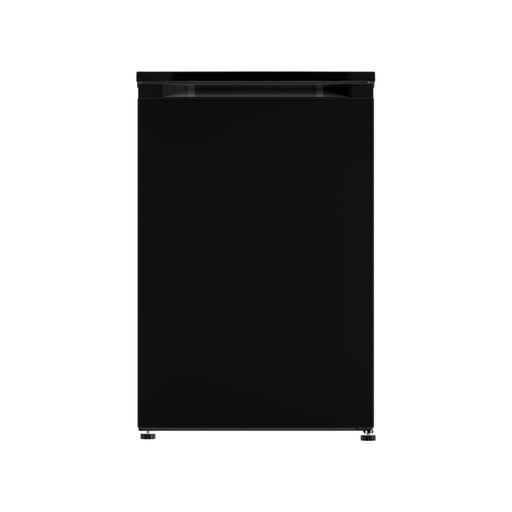 No image available
An under-counter model to compare if you’re looking for separate freezer space with a clearly stated capacity.
The product name lists a C energy rating and a capacity of 85 litres.
This model needs to be defrosted by hand.
 No image available
An under-counter model to compare if you want to store portions in a separate freezer.
The product name lists a B energy rating and a capacity of 87 litres.
This model needs to be defrosted by hand.
Yes, as long as the freezer compartment can be set to −18 °C and has enough room for your portions. According to the Voedingscentrum, a freezer compartment with a one- or two-star rating can’t be set to this temperature.
Cool the stock quickly, for example by placing the pan in cold water and stirring it. Divide the stock into clean, sealable portions and put them in the fridge or freezer within 2 hours of cooking, as recommended by the Voedingscentrum.
The Voedingscentrum’s storage guide recommends 3 months; after that, the quality may deteriorate. If the stock is packaged, check the label too.
In the Netherlands, you’re entitled to a product that meets the terms of your purchase, but there’s no fixed statutory warranty period. Report any fault to the retailer and check whether an extended warranty offers additional rights under its terms and conditions.
When you buy a similar new appliance as a private customer, the retailer must take your old appliance free of charge under the Dutch take-back scheme; this also applies to online purchases. The Dutch government explains how this scheme works for returning old appliances.