
Vandaag of morgen in huis

Kwaliteit gegarandeerd

Welkomstaanbiedingen ontgrendelen: GRATIS bezorging | Tot 80% korting | Gratis 30 dagen JoyPlus-proefperiode
Download de app
A vegetable slicer can save you a great deal of chopping, but not every model suits every kitchen. A compact vegetable slicer is handy for cucumber and onion, while a potato cutter is primarily designed for chips. If you also want to slice meat, bread or cheese, you will need a different type of appliance.
The biggest buying mistakes usually stem from three errors:
Start with the ingredients you prepare most often. Raw vegetables require different features from potatoes, meat or bread.
Stainless steel blades are a sensible choice for slicing, grating and chopping. Also check whether the blades can be removed. This makes cleaning easier, but also calls for care: sharp parts should not be left loose in a full washing-up bowl.
A plastic housing can help keep the weight down. For more intensive use, a metal construction may offer greater stability. Do not just look at the material name; also consider how the appliance sits on the worktop.
A vegetable slicer with a collection container prevents sliced ingredients from spreading directly across the worktop. Check the container’s capacity. A capacity of 0.3 litres is compact, while a food chopper with 1.5 to 2 litres is better suited to larger quantities.
Also measure the available space. A manual slicer measuring around 30 cm will often fit in a kitchen cupboard, but an electric slicer can be considerably wider and heavier. Consider storage, cable length and the space needed to move ingredients safely.
Look for a non-slip base, a food holder and a lock that prevents operation when the bowl or lid is not positioned correctly. With a motorised appliance, a pulse button is useful for short processing tasks. Also check whether the parts are dishwasher-safe.
Always follow the instructions. When using a slicer, use the food holder and never touch a blade with your fingers. With electric models, unplug the appliance before removing a blade or collection container. According to the product information, the Fritel SL 3710 may run for a maximum of 10 minutes continuously, followed by a 30-minute cooling period.
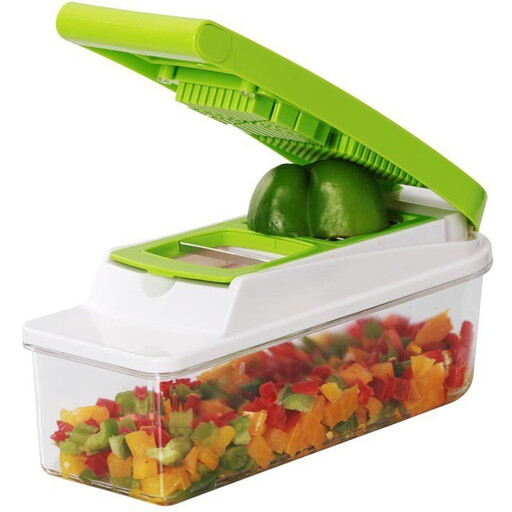
Why it suits this profile: This manual set offers five cutting techniques and a collection container for everyday preparation of vegetables and cheese.
The functions are clearly defined, and the collection container helps limit loose scraps on the worktop. Clean it with a damp cloth.
Five cutting techniques, stainless steel blades, a collection container and a compact size of 31.2 x 11.5 x 14 cm.
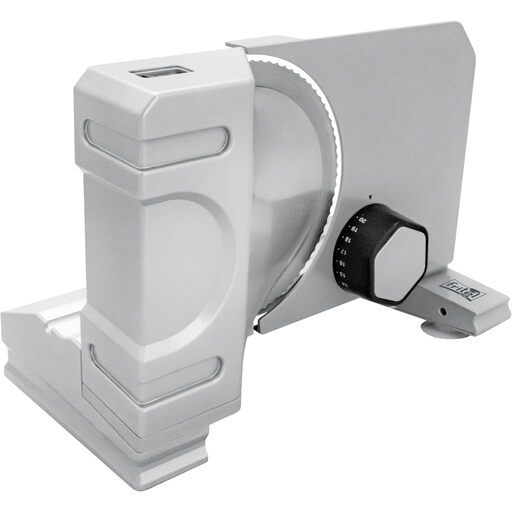
Why it suits this profile: This electric model is designed for bread, cheese, charcuterie, vegetables and meat, with an adjustable cutting thickness of 0 to 20 mm.
The product information lists a food holder, non-slip feet, a collection container and a clear limit for continuous use.
150 W motor, 15-degree angled carriage, 190 mm blade diameter and adjustable slices up to 20 mm.

Why it suits this profile: The two glass bowls, with capacities of 0.6 and 2 litres, are practical when you chop both small portions and larger quantities.
The concealed safety lock prevents operation when the appliance has not been assembled correctly. The bowls and lid are not heat-resistant.
300 W power, two glass bowls, two speeds and stainless steel blades for chopping and finely processing ingredients.
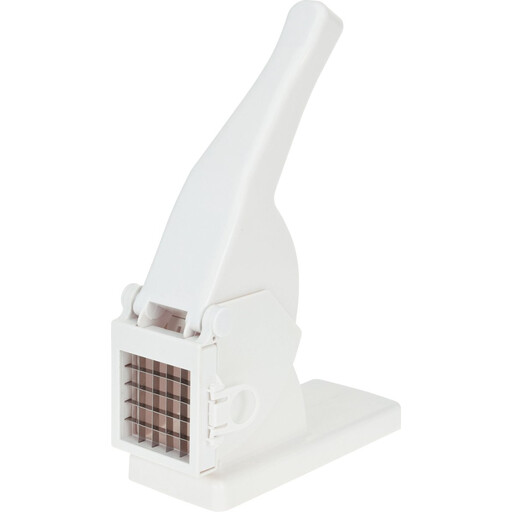
Why it suits this profile: This manual potato cutter is designed for chips and can also be used for vegetables.
Its intended use is straightforward: making chips and cutting vegetables. The model is not dishwasher-safe, which you should bear in mind before buying.
Stainless steel components, plastic housing and dimensions of 26 x 13.5 x 9 cm.
We have compiled a complete, up-to-date list of products that fully meet these strict selection criteria and the applicable European safety regulations.
Yes, particularly for grating and slicing. The container catches the sliced ingredients and helps keep the worktop tidy. Do check its capacity and make sure it remains securely positioned beneath the cutting section.
A vegetable slicer usually makes slices, strips or grated pieces. A kitchen chopper uses rotating blades to divide ingredients into smaller pieces. For even cucumber slices, choose a vegetable slicer; for onion, herbs or nuts, a kitchen chopper is a better fit.
Its lifespan depends on the materials, frequency of use and maintenance. Do not leave blades loose in water, use a hand guard and follow the maximum operating time for electric appliances. Products covered by a statutory guarantee are generally covered in the EU by a minimum two-year statutory guarantee of conformity; additional rights may apply under the relevant national legislation.
