
Vandaag of morgen in huis

Kwaliteit gegarandeerd

Welkomstaanbiedingen ontgrendelen: GRATIS bezorging | Tot 80% korting | Gratis 30 dagen JoyPlus-proefperiode
Download de app
A vegetable and food slicer can save you a lot of preparation time. However, not every model is suited to the same task. A basic vegetable peeler works differently from a kitchen mandoline, while an electric meat slicer can also handle bread, cheese and vegetables. If you focus only on the number of features or a low price, you could end up with a tool that’s difficult to clean, quickly becomes blunt or doesn’t feel safe enough to use.
A multi-purpose tool sounds practical, but first check what you actually want to use it for. A product with a paring blade, julienne cutter and bottle opener is handy for small everyday tasks. For evenly sliced potatoes or large quantities of root vegetables, you’re more likely to need a vegetable slicer with blades, a vegetable slicer or a mandoline.
So pay attention to the shape of the blade, not just the product title. A serrated blade, for example, is designed for a different task from a smooth paring blade.
“Stainless steel” doesn’t automatically tell you how thick or sturdy a blade is. Check whether this refers to the entire blade, just the cutting edge or the housing as well. 304 stainless steel is often used for kitchen tools because of its smooth surface and resistance to corrosion. According to the product description, the PURECOOK product is made entirely from 304 stainless steel. This is a product specification, not a guarantee that the blade will stay sharp with every use.
For plastic models, the blade attachment is particularly important. A loose holder can make the tool uncomfortable to use and affect your control while slicing.
Sharp blades call for a good grip, a hand guard or a pusher. With a kitchen mandoline, check whether ingredients can be held securely in place. For an electric slicer, a stable surface, non-slip feet and a finger guard are all worth looking for.
Also check for hard-to-reach seams. A tool that can only be rinsed under running water is not the same as a component that the product information says is dishwasher-safe. Always follow the manufacturer’s care instructions and check blades for damage before use.
A fruit and vegetable peeler is often all you need for peeling potatoes, cucumbers, apples and pears. If you want to make strips of carrot, cucumber or spring onion, look for a julienne function or a serrated cutting edge. For potatoes, a potato slicer with fixed blades or an adjustable thickness setting may be more practical.
An electric meat slicer is a better choice if you regularly want to slice bread, cheese, cold meats and vegetables to the same thickness. Check the adjustment range. According to its product specifications, the Severin AS 3915 Slicer has an adjustable cutting thickness of 0 to 15 mm, while the ritter serano⁷ can slice up to 23 mm, according to its product description. This kind of range is verifiable and tells you more than a general claim about “precision”.
A stainless steel vegetable slicer is usually easy to wipe clean and takes up little space. A wooden handle can feel comfortable in your hand, but it needs to be dried thoroughly after cleaning. Also check the length and width: a compact tool suits a small kitchen, campervan or outdoor kitchen, while an electric machine needs more worktop space.
Choose a model whose blade and housing are easy to reach after use. For electric models, remove the blades according to the instructions and unplug the machine before cleaning or changing parts. Never immerse the machine itself in water.
For everyday use, a simple tool is often more practical than an extensive set. A set with several cutting surfaces can be useful for families or keen cooks, as long as you have enough storage space.
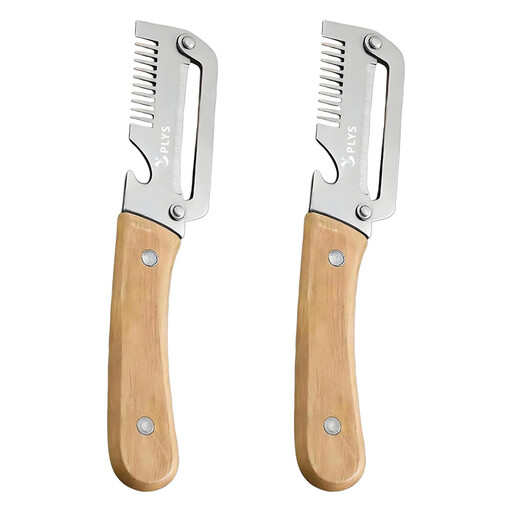
Why it suits this type of user: The set combines peeling, fine slicing and a bottle opener in a compact design. That makes it a good fit for beginners, small kitchens, rented homes and campers.
The functions are clearly divided between a serrated end, a curved peeling blade and an opening at the side. The tool is approximately 19 cm long and weighs around 71.3 g.
Stainless steel blade, curved wooden handle and two tools per set. According to the product description, the tool can be rinsed with water.
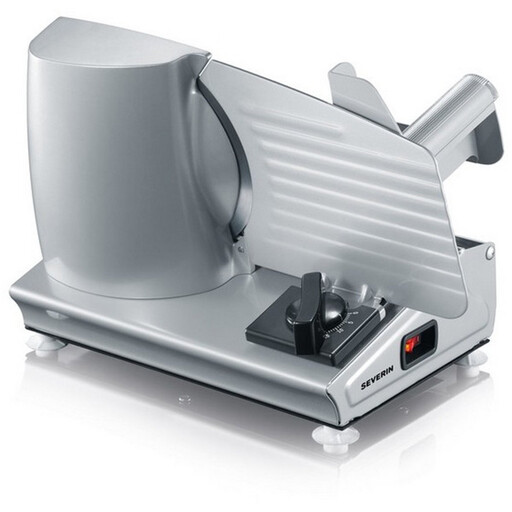
Why it suits this type of user: This model is designed for anyone who wants to slice bread, cheese, cold meats and vegetables to an adjustable thickness, without opting straight for a larger catering-style machine.
According to the product specifications, the cutting thickness is adjustable from 0 to 15 mm. The supplied pusher keeps your fingers further away from the blade while slicing.
180 watts of power, a stainless steel sliding plate, rubber feet and two blades: one smooth and one serrated.
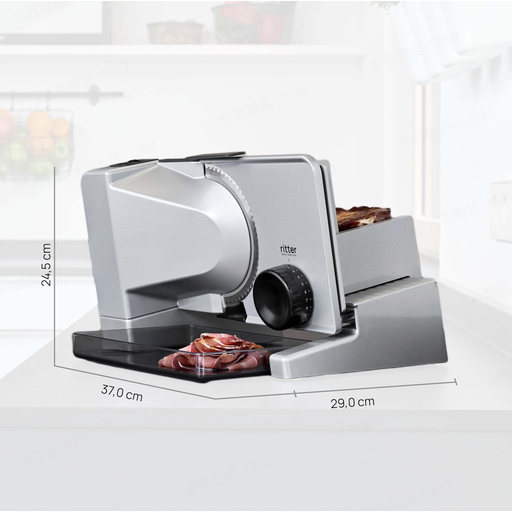
Why it suits this type of user: This model is aimed at people who regularly slice large quantities of bread, cheese, meat or vegetables and value a metal construction and a wide range of settings.
The product description lists a smooth blade for meat and cheese, a serrated blade for bread and an adjustable thickness of up to 23 mm. This makes its intended uses clear.
All-metal construction, removable carriage, collection tray and electronic speed control, according to the product information.
We’ve put together a complete, up-to-date list of products that meet these strict selection criteria and the applicable European safety requirements.
A vegetable slicer is a broad product category covering tools for slicing, grating or peeling. A kitchen mandoline usually has a flat cutting surface with a blade and is designed to make even slices or strips. Always use the hand guard supplied with a mandoline, and don’t push ingredients towards the blade with your bare fingers.
Rinse a manual model straight after use and remove any food residue around the blade. Dry metal parts thoroughly before putting them away. If the product information says a component is dishwasher-safe, still follow the recommended cleaning method. For an electric bread slicer or meat slicer, unplug it first; never immerse the motor housing in water.
An electric machine could be a good fit if you regularly slice bread, cold meats, cheese and vegetables, or need an adjustable thickness. For occasional peeling, grating or julienne slicing, a manual vegetable slicer is usually easier to store and clean. So first consider how often you’ll use it each week, how much space you have and what slice thickness you need.
