
Vandaag of morgen in huis

Kwaliteit gegarandeerd

Welkomstaanbiedingen ontgrendelen: GRATIS bezorging | Tot 80% korting | Gratis 30 dagen JoyPlus-proefperiode
Download de app
A vegetable cutter can save you a great deal of chopping, but not every model suits every kitchen. A cheap manual cutter can be useful for cucumber or potatoes, while an electric appliance is better suited to larger quantities. The right choice depends on the type of ingredients, the shape you want to cut and how much time you are prepared to spend cleaning.
Pay particular attention to three common pitfalls:
A manual vegetable cutter works without electricity and is usually compact. This type is suitable for occasional slicing, grating or making chips. A vegetable cutter with collection bowl keeps cut ingredients together and helps reduce mess on the worktop.
An electric chopper or food chopper is more appealing if you often process onions, herbs, nuts, vegetables or meat. Pay attention to the bowl capacity, motor power and number of speeds. A higher wattage does not automatically mean a finer result, but it does indicate the appliance’s electrical power.
For other applications, specialised appliances are more practical:
Look at the material used for the cutting section. Stainless steel is commonly used for blades and graters. It is important that the blade is firmly secured and can be removed safely for cleaning. A plastic housing can be lightweight and affordable, while metal generally provides greater weight and stability.
Pay attention to the bowl, too. Glass is transparent and less likely to absorb odours or become discoloured. Plastic is often lighter. For example, the Bear chopper comes with two glass bowls. According to the product description, these bowls are dishwasher-safe, but the bowl and lid are not heat-resistant.
Think about how much you usually prepare. A 500 to 600 ml bowl is suitable for small portions of herbs, onion or sauce. A capacity of 1.5 litres makes more sense for families or larger quantities.
Also check the dimensions. An appliance may be technically suitable but awkwardly large for a small Dutch kitchen worktop or cupboard. A collection bowl is useful, but you may need to empty a small reservoir several times while cooking.
For manual models, a hand guard, non-slip base and secure grip are important features. With electric models, the appliance should only start when the bowl and lid are correctly positioned. Check whether the blade is removable and which parts the manufacturer says can go in the dishwasher.
Extra care is needed with an electric slicer. Always use the supplied food pusher and never touch the blade with your fingers. Follow the instructions for the maximum operating time and cooling period. For example, the Fritel SL 3710 specifies a maximum of 10 minutes of continuous use, followed by a cooling period.
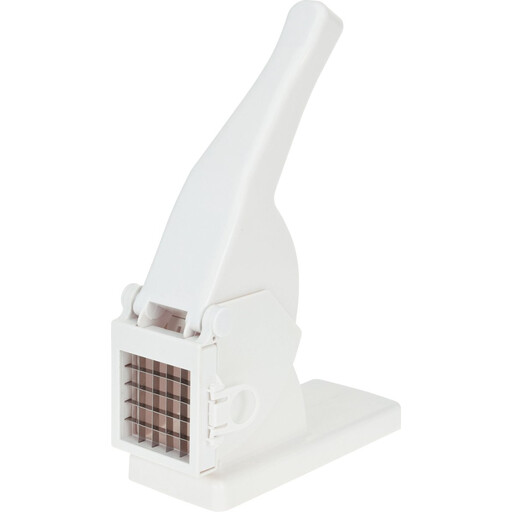
Why it suits this profile: This manual model is designed for potatoes and vegetables and does not require a power connection. It is well suited to anyone who occasionally makes chips or vegetable slices.
Its purpose is clearly defined: cutting potatoes and vegetables, without unnecessary electrical functions. Please note that this model is not dishwasher-safe.
Plastic and stainless steel; dimensions of 26 x 13.5 cm; suitable for cutting potatoes and vegetables.

Why it suits this profile: If you want to cut bread, cheese, charcuterie, vegetables and meat into evenly sized slices, this model offers a versatile electric slicing machine.
The cutting thickness can be adjusted from 0 to 20 mm. The tilting carriage, non-slip feet and food holder make the design easy to assess in practical terms.
150 W motor; 190 mm blade diameter; plastic collection tray and removable carriage.
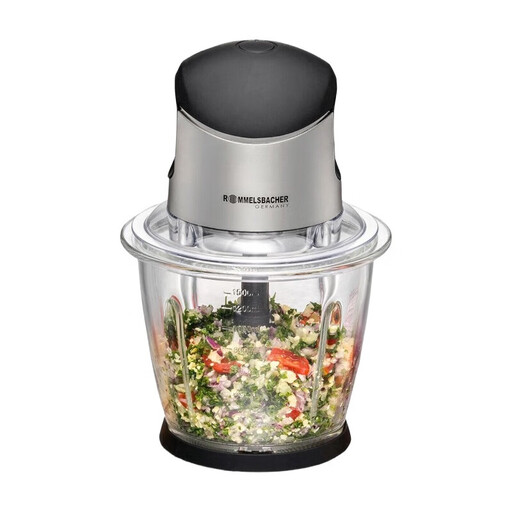
Why it suits this profile: This food chopper is designed for a wide range of ingredients, including onions, herbs, nuts and meat, making it suitable for anyone who regularly prepares larger quantities.
The 1.5-litre capacity makes the volume clear. According to the product description, the removable parts are dishwasher-safe, making maintenance more straightforward.
500 W power; 1.5-litre glass bowl; stainless steel four-blade knife.
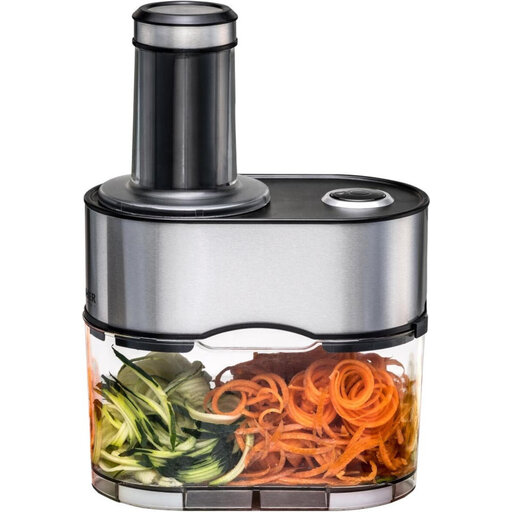
Why it suits this profile: This model is specifically designed to create vegetable and fruit spirals, making it suitable for anyone who uses a spiraliser regularly.
Its function is clearly focused on spiralising. A large 2.5-litre collection bowl prevents the spirals from landing directly on the worktop.
Five blades; 2.5-litre collection bowl; dishwasher-safe parts and storage space for the blades and cable.
We have compiled a complete, up-to-date list of products that fully meet these strict selection criteria and the applicable European safety regulations.
Yes, especially when cutting several portions. The bowl collects the cut vegetables and helps keep the worktop tidy. Do check the capacity, though: a smaller bowl is suitable for everyday use in small quantities, but less convenient for a large family.
Its service life depends on the materials, frequency of use and maintenance. Clean the blades immediately after use, dry metal parts thoroughly and do not force hard ingredients into a manual model. Electric appliances should be used according to the instructions. Under EU consumer law, consumers are entitled to the legal guarantee applicable under the agreement; for many of the products mentioned, this is at least two years.
Electricity costs depend on the wattage and how long the appliance is used. An appliance rated at 500 W uses approximately 0.042 kWh during 5 minutes of use. With normal, brief use per meal, energy costs generally remain limited. Focus mainly on capacity and ease of cleaning, as these can make more difference in everyday use than a small difference in wattage.
