
Vandaag of morgen in huis

Kwaliteit gegarandeerd

Welkomstaanbiedingen ontgrendelen: GRATIS bezorging | Tot 80% korting | Gratis 30 dagen JoyPlus-proefperiode
Download de app
Slicing vegetables is often the most time-consuming part of cooking. A good vegetable chopper promises to make this process faster, easier, and more consistent. But the market is flooded with models that over-promise and under-deliver. Many people buy a device that becomes dull, broken, or awkward to use after just a few months.
As a Joybuy Product Recommendation Officer, I see which products are returned daily and why. To help you avoid a bad purchase, I've listed the most common pitfalls. These are the points where marketing speak often conceals the reality.
Before you make a choice, it's wise to look beyond just the price or appearance.
To find a durable and functional vegetable chopper, there are a few technical specifications you shouldn't ignore. These determine the performance and lifespan of the device.
The quality of the blades is crucial. Look for models that explicitly mention high-grade stainless steel (SS), such as 304 SS. This type of steel is not only more resistant to rust but also retains its sharpness for longer. For the housing, a sturdy construction of metal or thick, BPA-free plastic is a sign of durability. A heavier device with non-slip feet will be more stable on your countertop.
The choice between manual and electric depends on your needs.
Not every chopper is the same. Think carefully about what you primarily want to use it for.
Based on objective specifications, we have selected a number of products that suit different user profiles and avoid the pitfalls mentioned earlier.
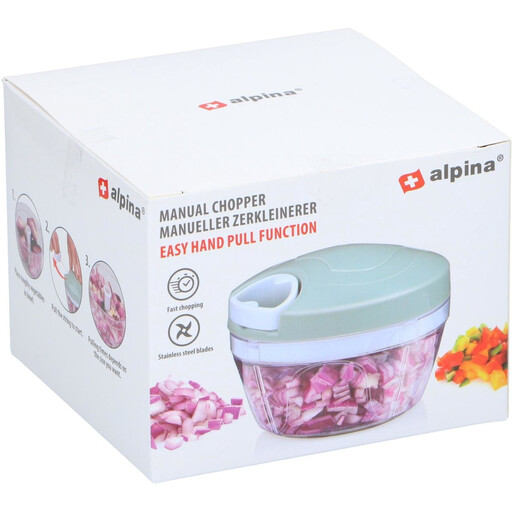
Why it's a match: Ideal for those who want to quickly chop an onion, some herbs, or a few vegetables without pulling out a large appliance. Compact, requires no electricity, and fits in any kitchen drawer.
Its simple, manual design has no complex parts, making it easy to clean. The stainless steel blades are designed for basic tasks, without pretending to be a multifunctional wonder.
Compact and practical design. The parts are dishwasher-safe, which simplifies maintenance.
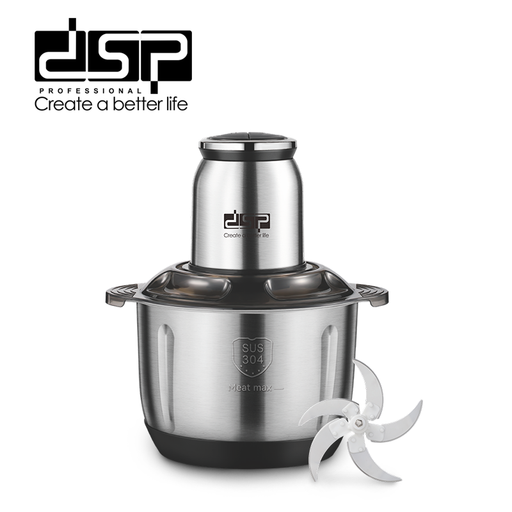
Why it's a match: For those who regularly cook for a family or prepare larger portions. This chopper combines a powerful motor with a very spacious bowl, suitable for meat, vegetables, and more.
The 500W motor and the large 304 SS bowl provide the power and durability often lacking in cheaper models. The non-slip mat ensures stability and safety during use.
Very large capacity of 5 litres and two speed settings for control over the texture, from coarse chopping to fine grinding.

Why it's a match: For the home cook who strives for perfection. This slicer is designed for the precise cutting of bread, cheese, and deli meats, from paper-thin to 23 mm thick.
The all-metal construction avoids the pitfall of a wobbly housing. The German engineering guarantees durability and sharp blades that do not dull quickly.
Made in Germany, with a powerful DC motor and electronic speed control for ultimate control and precision.
We have compiled a complete, up-to-date list of products that fully meet our strict selection criteria for quality and safety.
Always check first if the removable parts are dishwasher-safe. This is usually mentioned in the product description. For manual cleaning, it is advisable to use a dish brush to safely remove food residue from the blades. Never submerge the motor unit of an electric chopper in water.
A chopper is designed to cut ingredients into small, irregular pieces, ideal for a salsa or spice paste, for example. You use a mandoline to cut uniform slices, discs, or strips (julienne). Think of paper-thin potato slices for a gratin or perfect cucumber slices for a salad.
This depends on its use. For chopping soft vegetables, onions, and herbs, a power of 200 to 300 watts is often sufficient. If you also want to process harder ingredients like nuts, carrots, or even meat, or if you often cook for larger groups, then a model with a power of 400 watts or more is a wiser investment.
