What should you look for when choosing?
First decide which allergen you need to avoid. Then check the vegan and gluten-free information, before choosing a flavour and pack size to suit your needs. AH, Jumbo, PepsiCo Product Checker NL and the Netherlands Food and Consumer Product Safety Authority provide product-specific or general information to help you distinguish between these attributes.
| What to consider |
What should you check? |
Who is this most relevant to? |
| Specific allergen |
Check the ingredients list and the warning about possible cross-contamination on the current packaging. |
If I need to avoid, for example, soya, I want to check both the ingredients and the warning. Around 36% of consumers put avoiding a specific allergen first. |
| Vegan option |
Check the exact flavour and packaging; distinguish between a retailer’s claim, a certification label and a conclusion based on the ingredients. |
If I eat vegan but don’t have a specific allergen or gluten as a key requirement, I look for clear information about the particular product. Around 29% of consumers prioritise confidence that a product is vegan. |
| Gluten-free |
Look for an explicit gluten-free claim and check the other allergen information too. |
If I need to avoid gluten as well as eat vegan, I want to see an explicit gluten-free claim rather than rely on maize as the main ingredient. Around 21% of consumers put avoiding gluten first. |
| Net weight and how you’ll use them |
Compare the pack weight with how much you expect to use, and follow the storage instructions after opening. |
If I’m looking for plain chips to share or serve with a dip, I want a pack size that suits the occasion. Around 14% of consumers mainly look for a suitable pack size. |
Tortilla chips at Joybuy
These Joybuy products are worth comparing for plain and flavoured options, vegan and gluten-free claims, ingredients and allergen warnings.
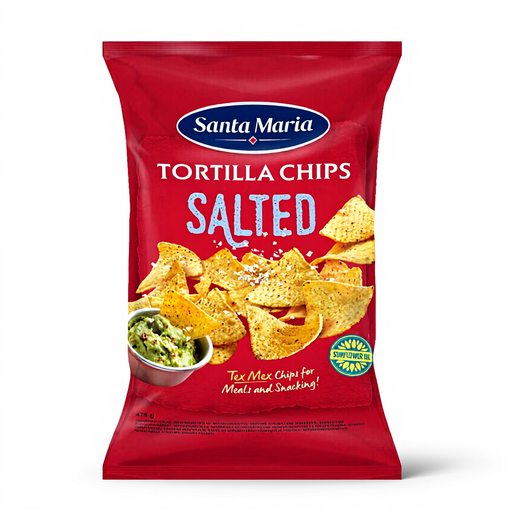 Image unavailable
Santa Maria Tortilla Chips Salted - 475 g
A salted variety to consider if you’re looking for something vegan and gluten-free, but not if you need to avoid soya.
The product information lists the pack as 475 g, vegan and gluten-free; it also mentions soya.
View at Joybuy
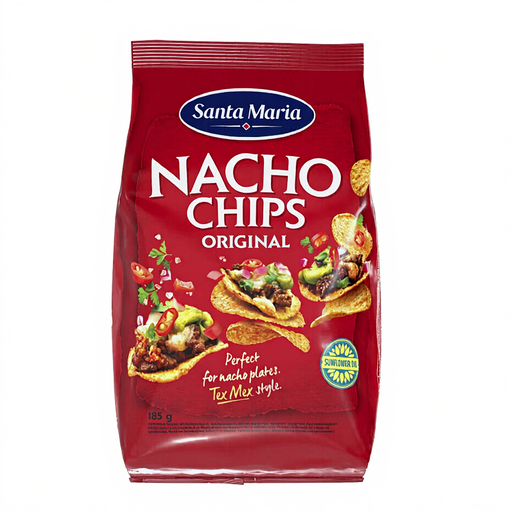 Image unavailable
Santa Maria Original Nacho Chips - 185 g
A round variety for anyone looking for tortilla chips to serve with dips or Tex-Mex dishes; not suitable if you need to avoid soya.
The product information lists the chips as vegan and gluten-free, and mentions soya. The pack contains 185 g.
View at Joybuy
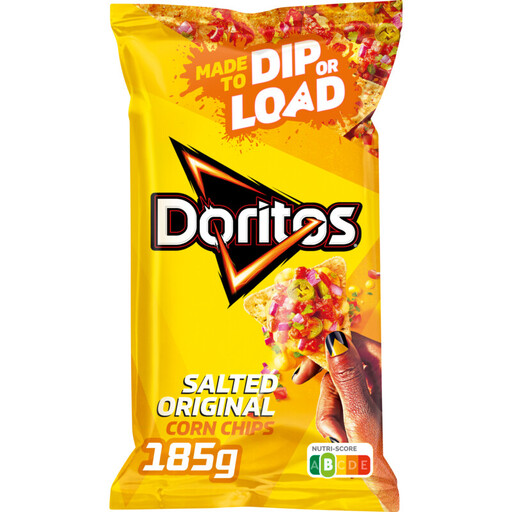 Image unavailable
Doritos Dippers Naturel - 185 g
A plain variety for dipping; don’t choose it if you need to avoid cereals containing gluten, wheat or soya.
The product information lists 83% maize, rapeseed oil and salt. The chips may contain cereals containing gluten, wheat and soya.
View at Joybuy
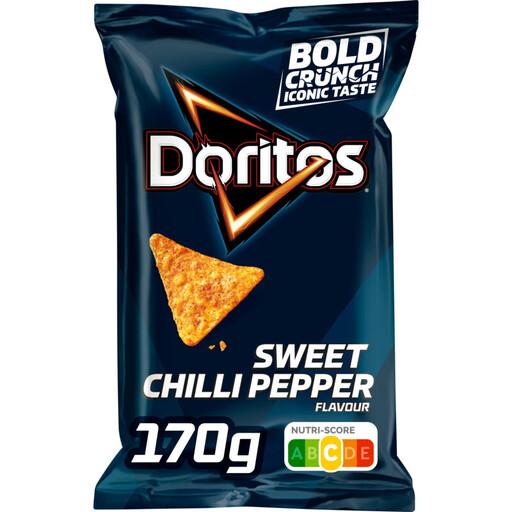 Image unavailable
Doritos Sweet Chilli Pepper Tortilla Chips - 170 g
A seasoned variety to consider if you’re looking for a vegan label; not suitable if you need to avoid gluten, wheat or soya.
The product information carries a Vegan label and mentions gluten, wheat and soya. The pack contains 170 g.
View at Joybuy
Frequently asked questions
Does lactose-free mean suitable for someone with a milk allergy?
No. Lactose intolerance relates to milk sugar, while a cow’s milk allergy relates to milk proteins, as the Netherlands Nutrition Centre explains. If you have a milk allergy, check the ingredients and any milk warning rather than relying on a lactose-free label alone.
Can a vegan certification label appear alongside an allergen warning?
Yes. The Dutch Vegetarian Association stresses that the V-Label is not an allergen declaration. So assess the vegan label and information about the possible presence of allergens separately.
Which allergens must appear on Dutch food labels?
The 14 allergens covered by law must be listed in the ingredients and clearly distinguished from the other ingredients, according to the Netherlands Food and Consumer Product Safety Authority. Bold type is commonly used, but it is not the only permitted format.
What rules apply to warnings about possible cross-contamination?
The new Dutch rules for precautionary allergen warnings have applied since 1 January 2026. According to the Netherlands Food and Consumer Product Safety Authority, a warning must be based on a risk assessment and use the prescribed wording, such as ‘May contain X’ or ‘Not suitable for people with an X allergy’. Such a warning does not provide a general guarantee about other allergens.
Is the ‘gluten-free’ claim regulated?
Yes. The European Commission refers to Implementing Regulation 828/2014 for the conditions governing the claims ‘gluten-free’ and ‘very low gluten’. It has applied since 20 July 2016. Check the claim on the exact packaging; a maize base alone doesn’t confirm that a product is gluten-free.


