
Snackers who want to manage their portions
If you want to eat nuts but need to know how much energy your weighed snack provides, compare portions in grams rather than estimating by the handful.


The nuts reviewed are not low in calories: for solid foods, the European Commission allows a maximum of 40 kcal per 100 g for a low-energy claim. So compare the energy per 100 g, check that the ingredients are suitable for a vegan diet, then weigh the portion you actually plan to eat.
If you want to eat nuts but need to know how much energy your weighed snack provides, compare portions in grams rather than estimating by the handful.
If plant-based ingredients matter to you, check the full ingredients list rather than relying on words such as ‘natural’ or ‘unsalted’. Look out for flavourings and coatings too.
Individual packs can be handy when you’re out and about. Make sure the contents match the portion you want to eat: a 30 g pack isn’t automatically low in energy.
Start with the amount you want to eat and the energy per 100 g. Then check the ingredients and packaging format that suit your needs.
| What to consider | What should you check? | Who is this important for? |
|---|---|---|
| Energy in your portion | Compare kcal per 100 g; weigh your portion and calculate kcal per 100 g × portion weight ÷ 100. | If I want to manage the energy in my snack, I’d rather weigh a portion than guess by the handful; around 39% of consumers prioritise the energy in a portion. |
| Plant-based ingredients | Check the ingredients list and vegan labelling for the exact product variant. | If you eat a vegan diet and want to avoid animal-derived ingredients, check the full list and the product variant; around 23% of consumers prioritise plant-based ingredients. |
| Nutritional content as well as calories | Compare protein, fibre and salt for the same quantity; also check whether oil or other ingredients have been added. | If I’m weighing up protein, fibre or salt as well as calories, I compare the figures for the same quantity; around 23% of consumers make nutritional content their main consideration. |
| Packaging and portion size | Check the weight of each pack and the energy for that amount. | When I’m out and about, I want packaging that’s easy to take with me and suits the amount I plan to eat; around 15% of consumers prioritise pre-portioned packs. |
A portion pack tells you how much is inside, not how much energy the product provides per 100 g. Duyvis lists 662 kcal per 100 g for its Unsalted Nutmix Walnut; based on that figure, a 30 g portion provides 198.6 kcal.
Check the pack weight and work out the energy in your portion. Small packaging doesn’t make energy-dense nuts low in calories.
The AH cashews and Duyvis peanuts reviewed contain sunflower oil, despite being labelled as unsalted.
Check the ingredients and preparation method separately. Compare the nutritional values on the label rather than inferring them from the product name.
A vegan label doesn’t mean a product is free from nuts or peanuts. Jumbo pistachios carry a warning that they may contain traces of other nuts and peanuts.
If you have an allergy, check the allergen information and any warnings on the packaging of the exact product variant.
Worth considering for unsalted peanuts and Unsalted Nutmix Walnut, which is also available in individual packs.
The 100 g AH Unsalted Cashews mentioned carry a vegan label and include a nutritional table.
The 200 g Jumbo Unsalted Pistachios mentioned are an option if you’re looking for a single type of nut.
Alesto is worth considering as a range of nuts and dried fruit, including cashews.
The 500 g Trader Joe’s Unsalted Nut Mix mentioned contains almonds, hazelnuts, walnuts and Brazil nuts.
The 500 g PLUS Unroasted Unsalted Nut Mix mentioned is intended for anyone looking for a mix of nuts.
These Joybuy products are worth considering if you’re choosing nuts as a snack and want to check the ingredients and nutritional values of the exact variant.
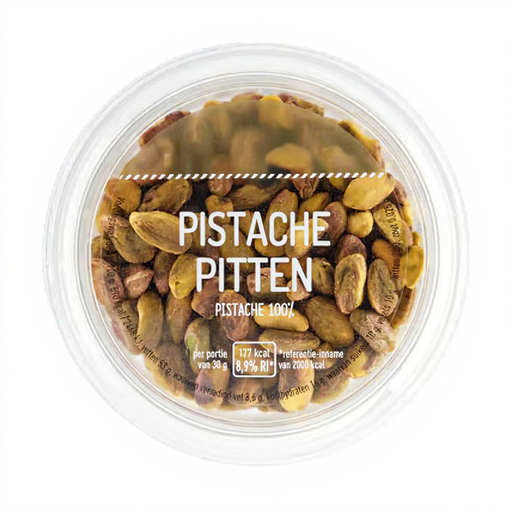 Image unavailable
The description lists pistachio kernels as a snack; check the ingredients on the packaging before choosing them as a vegan option.
Pack size: 100 g.
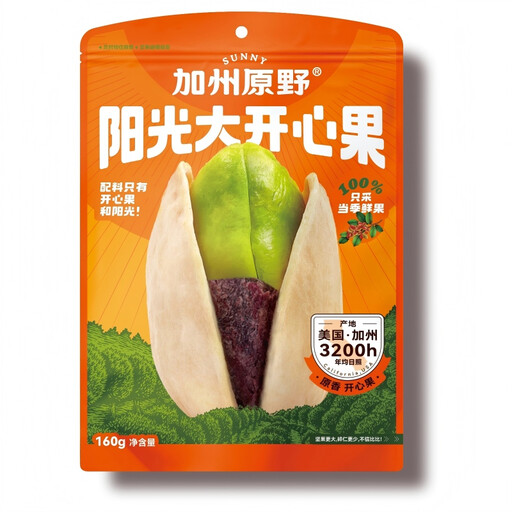 Image unavailable
These ready-to-eat pistachios are easy to weigh out into portions; the listed ingredients are pistachios, salt and sugar.
Energy: 602 kcal per 100 g. Salt: 1.5 g per 100 g.
The nuts need to be removed from their shells.
 Image unavailable
The description lists cashews as a snack; if a vegan ingredient profile matters to you, check the ingredients in the seasoning mix.
Energy: 586 kcal per 100 g. Salt: 0.92 g per 100 g.
According to the product information, no fat or oil is added; the seasoning mix contains salt.
 Image unavailable
These unsalted peanuts are an option if you’re looking for peanuts; the product information lists 99% peanuts and sunflower oil.
Energy: 2690 kJ per 100 g. Protein: 27 g per 100 g. Salt: 0.02 g per 100 g.
The product information warns that the product may contain traces of cashews.
 Image unavailable
These unsalted cashews are an option if you’re looking for a single type of nut; check the ingredients on the exact product packaging.
Energy: 596 kcal per 100 g. Salt: 0.067 g per 100 g.
The nuts reviewed aren’t low in calories. According to the European Commission, a low-energy claim for solid foods is limited to a maximum of 40 kcal per 100 g; the products reviewed are above that limit. A smaller portion reduces the energy in what you eat, not the energy per 100 g.
No. Use 25 g here as a portion for comparison, not as a personal maximum. The Voedingscentrum gives 25 g as a handful of unsalted nuts; the portion you choose is up to you.
No. ‘Unsalted’ on its own tells you nothing about all the ingredients. Check the ingredients list and vegan labelling for the exact variant, including any flavourings and coatings.
Read the allergen information and any warnings about possible traces on the packaging of the exact variant. The Netherlands Food and Consumer Product Safety Authority requires allergens present in a product to be clearly declared; a vegan label doesn’t mean a product is allergen-free.
On 20 May 2026, the NVWA warned about 170 g packs of Trader Joe’s unsalted cashews with barcode 2003020120930 and best-before date 23-09-2026 because they may contain metal fragments. Do not eat these, even if the date has now passed. Albert Heijn also issued a warning about AH Extra Large Salted Peanuts in a tub with a best-before date of 04-11-2026. That warning applies to that specific date, not to all AH peanuts.