What should you look for when choosing?
Start with the nutritional information and ingredients on the pack you want to buy. A description of how a product is made doesn’t automatically tell you how much fat the finished product contains.
| What to consider |
What should you check? |
Who should pay particular attention? |
| Total fat |
Compare the fat content per 100 g. ‘No added fat’ doesn’t tell you how much fat the product naturally contains. |
If a lower total fat content is your main consideration, start with the nutrition table. Around 36% of consumers prioritise total fat. |
| Vegan ingredients |
Read the ingredients and vegan information for the exact variant, not just the brand name or product range. |
If you want to know whether this particular flavour and pack fit your vegan shop, check the label on that variant. Around 29% of consumers prioritise ingredients. |
| Portion size |
Consider how much you eat alongside the nutritional values per 100 g. A smaller portion doesn’t change the composition per 100 g. |
If you want to keep eating ordinary nuts and mainly adjust the amount you eat, portion size is a separate consideration. Around 21% of consumers prioritise portion control. |
| Storage and packaging |
Choose an amount that suits how you use the product and follow the storage instructions. Fresh chestnuts need different planning from dried nuts. |
If you want to use a pack in time and avoid waste, consider the amount and how long it can be stored. Around 14% of consumers prioritise storage and using up the pack. |
The table helps you distinguish between different shopping priorities. The nutritional values in this article are product-specific figures per 100 g; don’t compare them with a portion weight as if they were measured on the same basis.
Chestnut products at Joybuy
This selection focuses on chestnut products with a stated fat content per 100 g. For vegan use, check the ingredients and vegan information for the exact variant.
 No image available
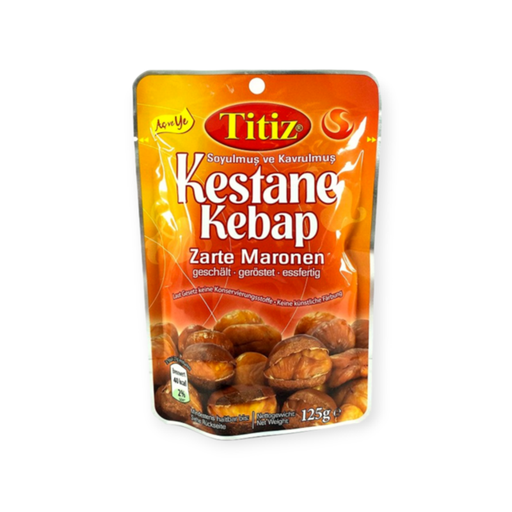
Titiz roasted chestnuts 125 g
A good fit if you’re comparing fat content per 100 g; the product information describes the chestnuts as vegan and ready to eat.
The nutrition table lists 1.4 g of fat per 100 g. The pack contains 125 g.
View product
 No image available
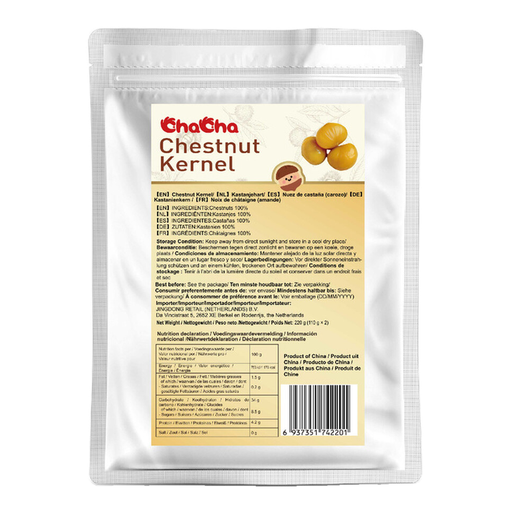
ChaCha chestnut kernels 220 g (2 × 110 g)
A good fit if you’re looking for a ready-to-eat snack in individual packs; check the ingredients if vegan suitability is important to you.
The nutrition table lists 1.5 g of fat per 100 g. The product information lists chestnut kernels as the only ingredient and advises eating the contents straight after opening.
View product
 No image available
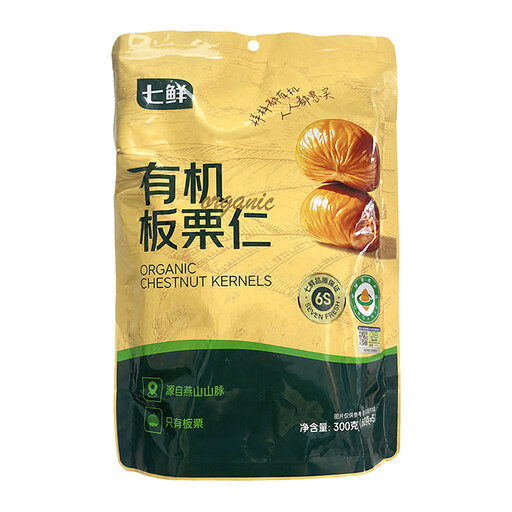
7FRESH chestnut kernels 300 g
A good fit if you’re looking for ready-to-eat chestnut kernels; check the ingredients and vegan information on the pack before choosing.
The nutrition table lists 0.0 g of fat per 100 g, and chestnuts are the only ingredient listed. According to the product information, the kernels should be eaten straight after opening.
View product
 No image available
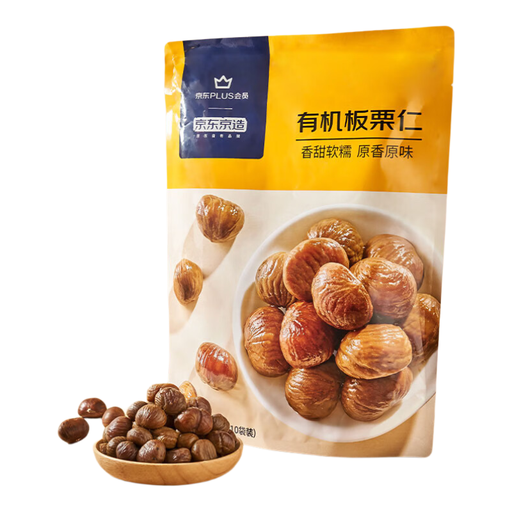
J.ZAO S++ Grade peeled chestnuts 1 kg (10 sachets of 100 g)
A good fit if you’re looking for ready-to-eat chestnuts in individual sachets; check the pack for vegan information before choosing.
The nutrition table lists 1.7 g of fat per 100 g. The ingredients list shows chestnuts as the only ingredient; the product information describes them as peeled and ready to eat.
View product
 No image available
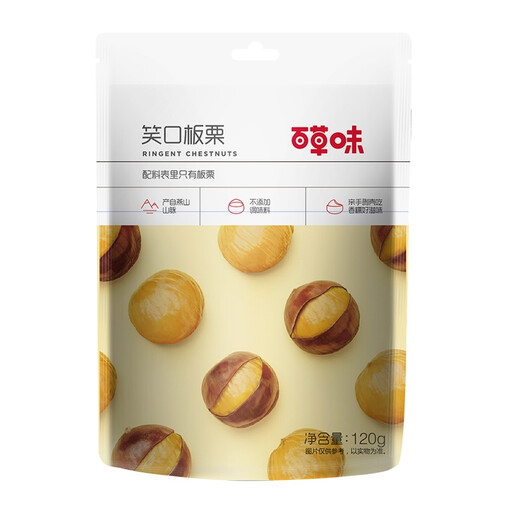
Be&Cheery Smiling chestnuts 120 g
A good fit if you’re looking for a ready-to-eat chestnut snack; check the ingredients and vegan information on the exact pack.
The nutrition table lists 1.2 g of fat per 100 g. The ingredients list shows chestnuts and sugar; the product information describes the chestnuts as steamed and pre-cut.
View product
Frequently asked questions
What does ‘low fat’ mean on a pack?
For solid foods, the European Commission sets a maximum of 3 g of fat per 100 g for a product to make a ‘low fat’ claim. Compare that figure with the nutrition table for the specific variant; it isn’t advice to choose all nuts below that limit.
Does unsalted mean that no oil has been added?
No. The AH and Jumbo cashews we looked at are unsalted but list sunflower oil. The PLUS unsalted, unroasted cashews we looked at list cashews as their only ingredient. Read the ingredients list for the variant you’re buying.
Is a vegan nut snack suitable for someone with a nut or peanut allergy?
No. Vegan information doesn’t answer whether a product is suitable for someone with an allergy. The NVWA explains the rules for allergen information on labels; check the ingredients and warnings on the specific pack before choosing.
How do you prepare the AH sweet chestnuts we looked at?
AH’s product instructions say to carefully score a cross into each chestnut and roast them on a baking tray in an oven at 200 °C for 15–20 minutes. Leave them to cool briefly, then peel them. These instructions apply to that product, not to all chestnut products.
How should you store dried nuts and chestnuts?
Store dried nuts in a well-sealed container in a dry place; the Netherlands Nutrition Centre recommends keeping them somewhere cool. Fresh chestnuts spoil more quickly. Follow the product-specific storage instructions for the pack you buy.


