
Vandaag of morgen in huis

Kwaliteit gegarandeerd

Welkomstaanbiedingen ontgrendelen: GRATIS bezorging | Tot 80% korting | Gratis 30 dagen JoyPlus-proefperiode
Download de app
Making a cup of tea seems simple, but the wrong water temperature can completely ruin the flavor of a delicate green tea or a premium coffee. And for new parents, the right temperature for baby formula isn't a luxury, it's a necessity. A kettle with temperature control seems like the solution, but the market is flooded with models that overpromise and underdeliver.
As a Joybuy Product Recommendation Officer, I see the challenges consumers face every day. Before you purchase a new electric kettle, it's crucial to look past the marketing hype. Here are three common pitfalls that can cost you money and satisfaction.
To avoid a bad purchase, it's wise to focus on a few key specifications. These determine the performance, safety, and lifespan of your appliance.
The most important feature of a tea kettle with temperature control is precision. Check if the model offers the temperatures you need. A good range typically includes:
Models with adjustable increments of 5 or 10 degrees offer the most flexibility.
The kettle's material affects taste, durability, and safety.
Essential safety features include boil-dry protection and an automatic shut-off. These ensure the kettle turns off when it's empty or when the water has reached the set temperature.
The capacity of most kettles ranges from 1 to 1.7 liters. A 1.7-liter kettle is practical for families or if you often have guests. For a single-person household or for travel, a smaller model of 0.5 to 1 liter can be more efficient.
The power, expressed in Watts (W), determines how quickly the water boils. A model with 2200W or more will typically bring a full pot of water to a boil within a few minutes.
Based on these criteria, we have selected a few models that suit different user profiles.
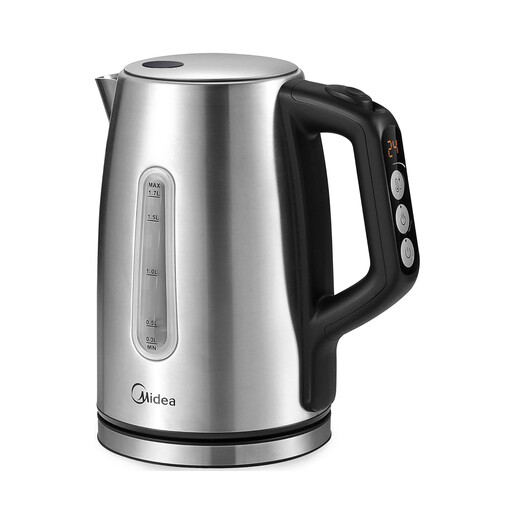
Why This Fits Their Persona: This user wants to optimize the flavor of various teas. The six precise temperature settings, including 40, 70, 80, and 90°C, provide the precision needed for everything from delicate white tea to robust oolong.
This model bypasses the pitfall of limited temperature options. It offers a wide and practical range of temperatures, so you're not stuck with useless presets.
The combination of six presets, a double-wall stainless steel body, and a 60-minute keep-warm function makes this a very comprehensive choice.
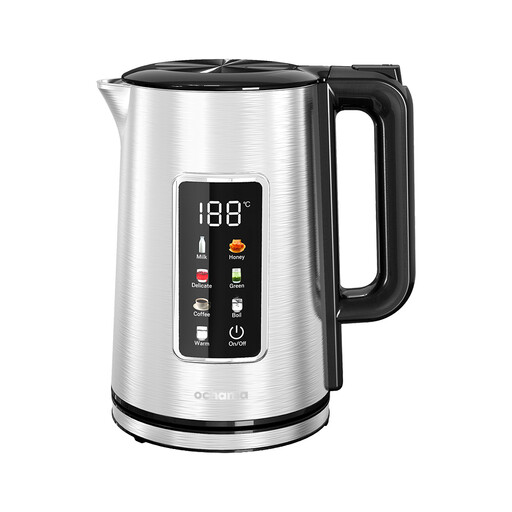
Why This Fits Their Persona: For a family, speed, capacity, and safety are crucial. This model has a large 1.7-liter capacity, boils quickly thanks to 2100W of power, and its double-wall, anti-scald construction is a key safety feature in a kitchen with children.
This model tackles the pitfall of poor insulation. The double-wall stainless steel body ensures the exterior remains cool to the touch, significantly reducing the risk of burns.
The combination of a large capacity, fast boiling time, and a clear color display showing the current temperature makes it a practical and safe appliance for daily family use.
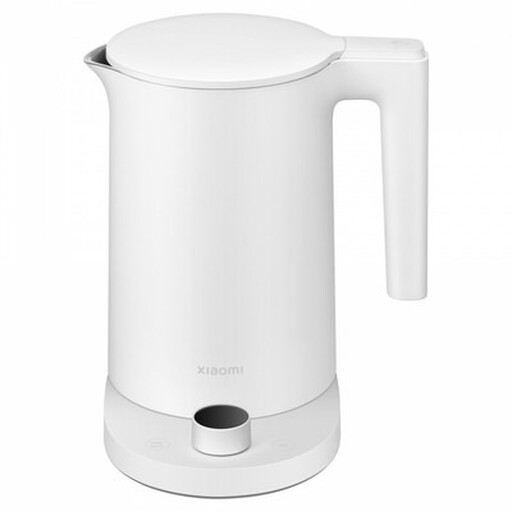
Why This Fits Their Persona: This user values sleek design and functional technology. Xiaomi's minimalist design fits into any modern kitchen, and the app connectivity allows for precise, to-the-degree temperature setting and remote control.
This model avoids the trap of useless 'smart' features. Here, the app isn't a gimmick but a tool for ultra-precise temperature control, which enhances the device's core functionality.
The combination of a sleek, modern design with the capability for highly accurate temperature control via an intuitive app.
We have compiled a complete, up-to-date list of products that fully meet these strict selection criteria and Dutch safety regulations.
The frequency of descaling depends on the water hardness in your area. In areas with hard water, it's recommended to do this every month; with softer water, once every three months is sufficient. Regular descaling with white vinegar or a special descaler ensures the temperature sensors remain accurate and the appliance continues to heat efficiently.
Both materials have their advantages. A stainless steel kettle is generally more robust and durable. A double-wall stainless steel model also offers superior insulation. A glass kettle looks elegant and you can watch the water boil, but it is more fragile and often heavier. The choice is personal, as long as you opt for high-quality, food-safe materials like 304 stainless steel or borosilicate glass.
The energy consumption of the keep-warm function depends heavily on the insulation. A well-insulated, double-wall kettle uses significantly less power to keep water at temperature than a single-wall model. In many cases, using the keep-warm function for an hour is more energy-efficient than bringing the water to a full boil multiple times.
