
Colleague in a quiet workspace
Wants to make a fresh shake without disturbing colleagues for too long. The Consumentenbond assesses noise and ease of use as part of its blender tests.


If you’re making one shake and there’s no suitable socket, a rechargeable blender could be a practical choice. If you have a permanent spot for it, a personal blender with a drinking cup is another option. For several colleagues, a jug blender may be better suited to how it will be used, but usable capacity and cleaning matter. None of these types can be shown to be quiet enough for your workspace without a noise assessment of the exact model; also check the applicable product safety information.
Wants to make a fresh shake without disturbing colleagues for too long. The Consumentenbond assesses noise and ease of use as part of its blender tests.
Shares a worktop or appliance and wants to be able to remove milk residue properly. The Voedingscentrum emphasises using clean kitchen utensils when preparing dairy; check which parts can be cleaned for each model.
Doesn’t have a convenient place with a socket and wants a personal cup to take with them. Portable models from Nutribullet and Bosch differ, among other things, in how they are powered.
Choose this option: if you want to make one shake somewhere without a socket.
Bear in mind: you’ll need to charge it beforehand; the stated number of blending cycles isn’t an independent measure of how long it can be used.
Choose this option: if there’s a permitted spot with a socket and you want to use your own drinking cup.
Bear in mind: the motor base needs a permanent spot; dishwasher-safe parts tell you nothing about noise levels.
Choose this option: if colleagues need a shared jug or several portions.
Bear in mind: clean shared parts after use and check the usable capacity, not just the jug’s maximum capacity.
The table helps you match your main reason for buying to a specific check for your working environment.
| What to consider | What to look for when buying | Who is this important for? |
|---|---|---|
| Noise and disruption | Look for a noise assessment of the exact model and check how long it takes to make a shake; wattage alone doesn’t tell you how loud a blender is. | In a quiet workspace, I want to disturb my colleagues as little as possible. Noise is the top purchasing priority for around 33% of consumers. |
| Cleaning and sharing | Check which cup, lid and blade parts can be removed, and whether they’re dishwasher-safe for this model. | In a shared kitchenette, I want to be able to remove milk residue properly after use. Easy cleaning is the top priority for around 27% of consumers. |
| Space, socket and portion size | Check whether blending is allowed at the office, where the appliance can be placed or charged, and whether the cup is large enough for your portion. | If I don’t have a permanent spot for a blender, I want to make my own shake without relying on a free socket. A portable set-up is the main consideration for around 20% of consumers. |
| Texture and quantity | Compare test results for smoothies similar to your recipe and plan portions based on the usable capacity. | For my recipe, I want the right quantity and texture without relying solely on wattage or maximum jug capacity. These factors are decisive for around 20% of consumers. |
For the Philips HR2041/00, Philips states a maximum capacity of 1,9 l and a usable capacity of 1 l. These figures therefore don’t refer to the same quantity.
Compare the usable capacity with the number of portions you want to prepare.
The Consumentenbond assesses noise separately from smoothie preparation. A power rating or portable design doesn’t tell you how loud the exact model is.
Look for a noise assessment of the model and take the rules and environment of your workplace into account.
A milkshake can leave residue in the cup, lid and around the blades. Dishwasher-safe doesn’t automatically apply to every part or every model.
Check the manual and clean used parts according to the manufacturer’s instructions.
The Portable NBP003YE is a rechargeable personal model with one drinking cup.
The VitaPower MMB2111S is a mini blender with a to-go cup for use near a socket.
The HR2041/00 is a jug blender for anyone who wants to make more than one personal serving.
According to Braun, the PowerBlend 1 JB1051BK combines a jug with an included smoothie-to-go bottle.
These products are options for shakes and smoothies, ranging from hand blenders to jug models. Before buying, check the product safety information for the exact model on offer and find out whether blending is allowed at your office; the listed specifications don’t tell you how loud a blender will be there.
 No image available
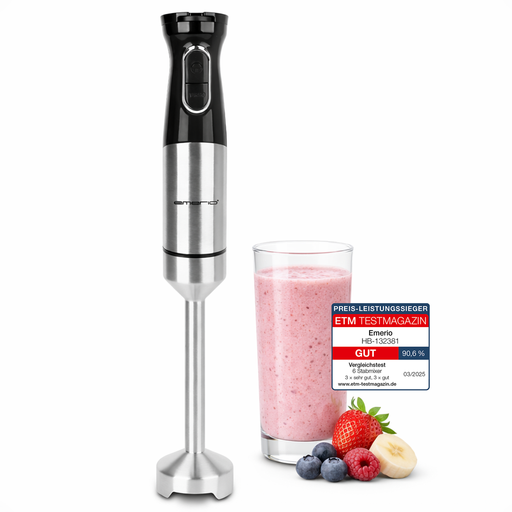
A hand blender to compare if you want to make a shake and find a separate measuring jug useful.
The product information lists a detachable blending foot and a 0,50 l measuring jug. The title states 1000W and variable speed.
 No image available
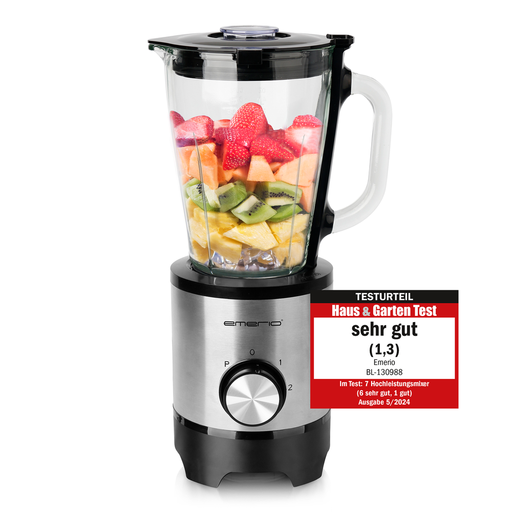
A jug model to compare if you want to make more than one personal serving.
The product information lists a 1,5 l glass jug, plus a dishwasher-safe jug, lid and blades. The glass jug is fragile, so handle it with care.
 No image available
A blender to compare if you’re looking for a jug model for smoothies or shakes.
The title states 600W and 1,5 l. The product information lists three speeds and says that at least 300 ml of liquid must be added during use.
 No image available
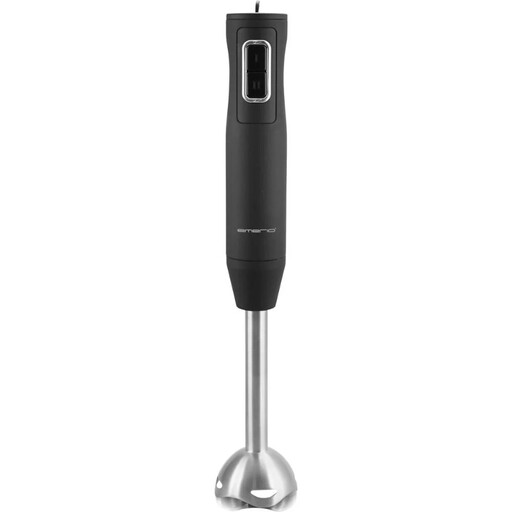
The product information lists milkshakes as one of its uses, making this model an option to compare for making a shake.
The product information lists a stainless steel shaft and two speeds.
 No image available
A mini blender to compare if you’re looking for a model for smoothies.
The title lists a capacity of 0,6 l and a power rating of 350 W. The product information lists two speeds, a pulse function and removable dishwasher-safe parts.
Electrical and electronic equipment covered by the applicable EU rules must carry a CE mark. The European Union’s Your Europe website explains these product rules; check the information for the exact model on offer, as a shop listing alone doesn’t prove that a specific item complies with the rules.
Use clean kitchen utensils and clean the parts you’ve used according to the manual for the exact model. The Voedingscentrum recommends clean surfaces and kitchen utensils when preparing dairy; don’t immerse the motor base unless the instructions explicitly allow it.
Contact the seller: according to ACM ConsuWijzer, if a product doesn’t meet what you could reasonably expect, the seller must offer an appropriate solution free of charge. The right solution depends on the circumstances.