
Vandaag of morgen in huis

Kwaliteit gegarandeerd

Welkomstaanbiedingen ontgrendelen: GRATIS bezorging | Tot 80% korting | Gratis 30 dagen JoyPlus-proefperiode
Download de app
Choosing a new vacuum cleaner seems straightforward, until you have to decide between a robot vacuum cleaner, stick vacuum cleaner, cordless vacuum cleaner or wet and dry vacuum cleaner. Marketing often focuses on high suction power, smart features and long battery life. However, these figures do not always tell you how practical the appliance will be in a typical Dutch household.
Pay particular attention to three common pitfalls:
The right choice starts with the floors and cleaning tasks in your home.
Manufacturers often state a value in Pa for robot models, while stick vacuum cleaners sometimes also show motor power in watts or kPa. These values cannot be compared directly between different appliances. A powerful vacuum cleaner only offers a practical advantage if the floor brush, airflow and filtration are well suited to your flooring.
For hard floors, a soft roller brush is useful for picking up dust and crumbs. For carpets, a motorised brush and adjustable suction setting are more important. An anti-tangle brush helps with pet hair, but regular maintenance is still necessary.
Check whether the stated running time applies to eco, standard or turbo mode. A model with a maximum operating time of 50 or 60 minutes may run for considerably less time on the highest setting. A removable battery makes it possible to swap batteries during cleaning.
With a robot vacuum cleaner, the mapping function, automatic return to the charging station and ability to resume cleaning are also relevant. Also check whether the station empties the dust, refills the water or simply charges the appliance.
A large dust container reduces the number of interruptions, but often makes an appliance heavier. With a wet and dry vacuum cleaner, you need to empty the dirty-water tank after use and allow the parts to dry. Otherwise, unpleasant odours may develop.
A filter should be cleaned according to the instructions and replaced only once completely dry. Do not use a robot with a mopping function to vacuum up spilled liquids unless the manufacturer explicitly permits this. Also look for CE marking, clear instructions, an EU responsible party, and information about the warranty and spare parts.
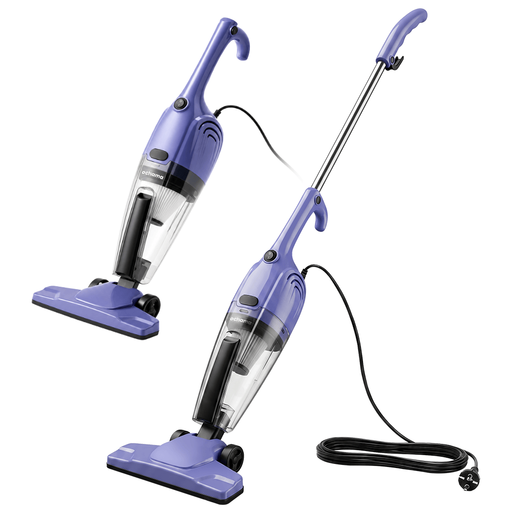
Why it suits this profile: A compact corded model for small homes, student rooms or quick daily cleaning without having to manage battery levels.
The mains connection prevents an unexpectedly short battery life. The visible dust container and washable filter make maintenance straightforward.
Stated motor power of 550 W, 4.5-metre cable, 0.5-litre dust container and use as either a stick or handheld vacuum cleaner.

Why it suits this profile: For households that value automated cleaning, map management and a comprehensive maintenance station.
The product information lists automatic dust emptying, mop washing at 75 °C and hot-air drying. However, check how much space is needed for the station.
Stated suction power of 20,000 Pa, TrueMapping 2.0, multi-floor management and automatic carpet detection.
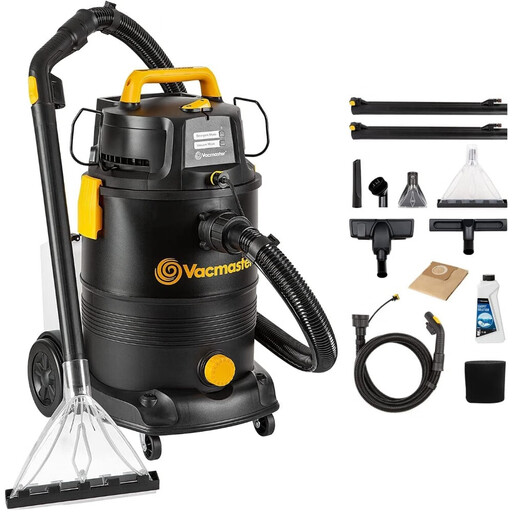
Why it suits this profile: For major cleaning jobs, carpets, car interiors, furniture and households where dry and wet cleaning need to be combined.
This is not a lightweight daily stick vacuum cleaner, but a model with separate filters and tanks. This makes it more clearly suited to specific wet or textile-cleaning tasks.
Stated power of 1300 W, 30-litre collection tank, 6-litre cleaning-solution tank and HEPA material for dry vacuuming according to the product information.
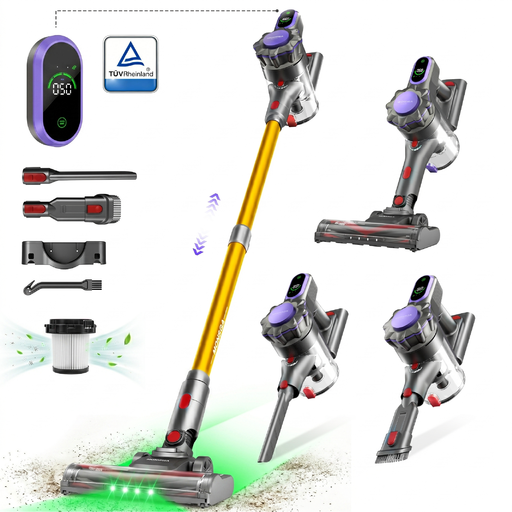
Why it suits this profile: For anyone who regularly clears hair, crumbs and dust from hard floors, carpets, furniture and the car.
The removable battery prevents the vacuum cleaner from becoming unusable immediately after one long cleaning session. The anti-tangle brush helps limit hair build-up, but still requires regular checking.
Stated power of 550 W, up to 55 minutes in floor mode, 0.7-litre dust container, LED display and five-stage filtration.
We have compiled a complete, up-to-date list of products that fully meet these strict selection criteria and the applicable European safety regulations.
Yes, many robot models are suitable for hard floors and carpets, but the results depend on the pile height, brush and settings. Check whether the model detects carpets automatically and whether the mop lifts up. A robot vacuum cleaner is mainly intended for regular maintenance; stubborn dirt may require manual cleaning.
Its lifespan depends on usage, maintenance and the availability of filters, brushes, batteries and dust bags. Empty the dust container in good time, clean the filters according to the instructions and remove hair from the brush roll. With a battery-powered model, whether the battery can be replaced is an important consideration.
As well as the purchase price, you need to factor in electricity, filters, dust bags, cleaning fluid and any replacement batteries. A robot vacuum cleaner with an automatic emptying station can save time, but uses additional consumables. A cordless model does not need dust bags, but the battery and filters may incur costs later on. Before buying, therefore, check how often maintenance is needed and review the spare-parts list.
