
Vandaag of morgen in huis

Kwaliteit gegarandeerd

Welkomstaanbiedingen ontgrendelen: GRATIS bezorging | Tot 80% korting | Gratis 30 dagen JoyPlus-proefperiode
Download de app
Installing large-format tiles, heavy glass panes, or marble slabs is a physically demanding job. The risk of back injuries or damaging expensive materials is always present. A vacuum suction cup for tiles, also known as a tile lifter or vacuum lifter, is designed to make this process safer and more efficient. This tool helps you lift and position heavy, smooth materials with significantly less effort.
In this article, we'll provide practical buying tips and highlight some popular choices to help you find the right tool for your project.
Before making a choice, it's wise to consider a few specifications. This will help you find a model that suits the materials and the scope of your work.
The most important feature of a vacuum lifter is its maximum lifting capacity. Always check the weight of the materials you intend to lift and choose a lifter with a sufficient safety margin. For lifting heavy tiles or large glass panes, a higher lifting capacity is essential. Also, look for the presence of a pressure gauge or a digital pressure meter. This indicator shows whether the suction cup is maintaining a safe vacuum, reducing the risk of an unexpected release.
There are two main types: manual and electric models.
Vacuum lifters work by creating an airtight seal. Therefore, they are only suitable for smooth, non-porous surfaces. This includes glass, ceramic tiles, porcelain, marble, granite, and metal. A glass suction cup is essentially the same tool, but the name highlights its application. Always ensure that both the material's surface and the rubber suction pad are clean and dry for optimal adhesion.
Based on product specifications and functionality, we have selected a few models that are compelling for both professionals and serious DIY enthusiasts.
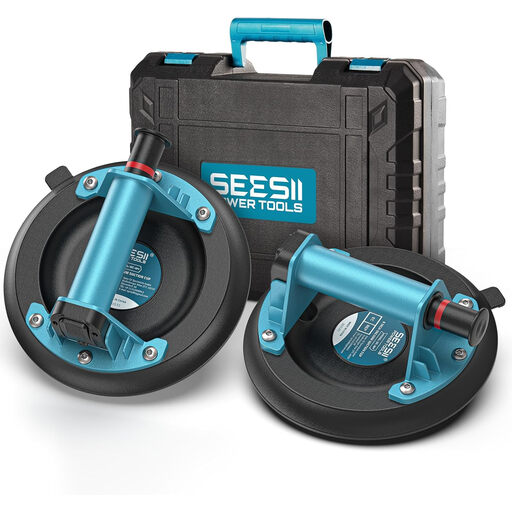
Why It Stands Out This set of two manual vacuum lifters offers a solid and reliable solution for handling large materials. Using two lifters simultaneously provides better balance and control when lifting, for example, a large suction cup for large tiles or glass panes. The construction with ABS plastic and a thick rubber suction pad is designed for durability.
Advantages
Who Is This For? This set is an excellent choice for professionals and DIYers looking for a reliable, no-nonsense solution. It's ideal for those who regularly lift heavy materials but don't need the extra features of an electric model.
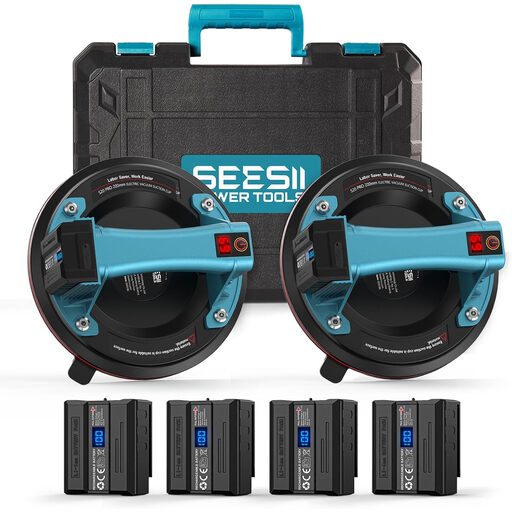
Why It Stands Out This electric tile lifter from Seesii takes convenience and safety to the next level. Its key feature is the automatic vacuum compensation. A sensor continuously monitors the pressure and activates the motor to maintain the vacuum. The digital display provides real-time information on pressure and battery status, ensuring maximum control.
Advantages
Who Is This For? This is the go-to choice for the professional tiler, glazier, or contractor who works with heavy, expensive materials daily. The combination of high lifting capacity, automatic safety features, and ample battery capacity is designed for maximum productivity on the job site.
Haven't found the perfect lifter for your job yet? No problem. There are many different types of tools available to assist with your project. From hand tools to specialised machinery, the right equipment makes the work lighter and the results better.
Take a look at our broader category for more solutions.
1. How does a vacuum suction cup for tiles work? A vacuum suction cup is placed on a smooth, non-porous surface. Using a hand pump or an electric motor, the air underneath the suction pad is removed. This creates negative pressure (a vacuum) that presses the cup firmly against the surface, allowing you to lift the object.
2. Can I use a tile suction cup on any surface? No, a vacuum lifter only works on completely smooth and non-porous surfaces, such as glass, polished natural stone, ceramic tiles, and metal. A vacuum cannot be created on rough, porous, or untreated materials like unfinished wood or concrete.
3. Is a battery-powered vacuum suction cup better than a manual one? Not necessarily "better," but different. A manual model is simpler and won't fail due to a dead battery. A battery-powered model offers more convenience, especially for repetitive use, and often includes extra safety features like automatic pressure compensation. The choice depends on the frequency of use and your personal preference for convenience versus simplicity.
Joybuy Product Recommendation Officer
