
Vandaag of morgen in huis

Kwaliteit gegarandeerd

Welkomstaanbiedingen ontgrendelen: GRATIS bezorging | Tot 80% korting | Gratis 30 dagen JoyPlus-proefperiode
Download de app
An overflowing wardrobe, not enough space for the winter duvet, or a suitcase that just won't close. Sound familiar? Vacuum storage bags seem like the perfect solution for instantly saving space. Yet, the wrong choice often leads to frustration: bags that reinflate after a week or material that tears at the slightest touch.
Before you invest in space-saver bags, it's helpful to know the common pitfalls. Many bags on the market look identical, but the differences in quality are significant. These are the problems you want to avoid:
A smart purchase depends on a few concrete specifications, not on marketing promises.
To ensure your vacuum storage bags continue to do their job, there are a few technical features that make all the difference. Pay attention to these when making your choice.
The durability of a vacuum bag is largely determined by its material. Look for bags made from a combination of PA (Polyamide) and PE (Polyethylene).
A bag made only of PE is often cheaper but also significantly more fragile. The PA+PE combination offers a better balance for long-term and repeated use, whether you're looking for storage bags for clothing or for heavier items.
An airtight seal is essential. Pay attention to the following two components:
Vacuum bags come in different shapes, each with its own advantage.
Based on these objective criteria, we have selected a number of products that suit different users.
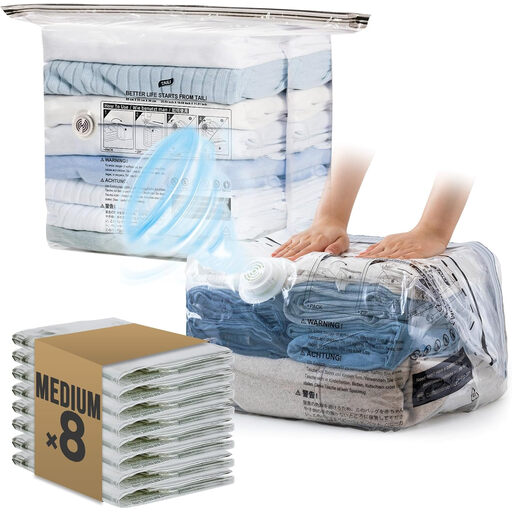
Why This Fits Their Persona: Ideal for those who want to pack efficiently without relying on a vacuum cleaner. The medium cube size fits well in a suitcase or backpack and is perfect for compactly storing clothes for a trip or in a student dorm.
The patented valve requires no pump or vacuum; you simply press the air out by hand. This bypasses the pitfall of an impractical or missing valve. The PA+PE material is tear-resistant and prevents quick damage.
Compression without a pump or vacuum. The cube shape creates a stable, stackable bundle in your luggage.
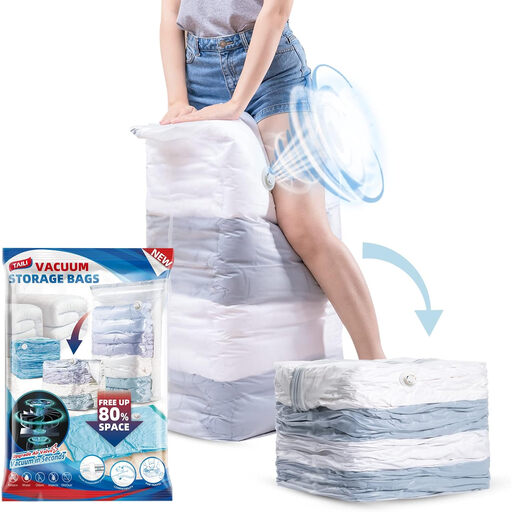
Why This Fits Their Persona: Perfect for storing seasonal items like winter duvets, ski jackets, and large blankets. The Jumbo Cube size is designed to offer maximum storage space and, according to the manufacturer, can hold 3 to 5 duvets per bag.
The capless valve is compatible with any standard vacuum cleaner, solving the problem of a non-fitting valve. The sturdy PA+PE construction and double zip prevent leaks and tears, even with heavy contents.
Extremely large volume thanks to the cube design. The self-standing structure makes it easier for one person to fill.
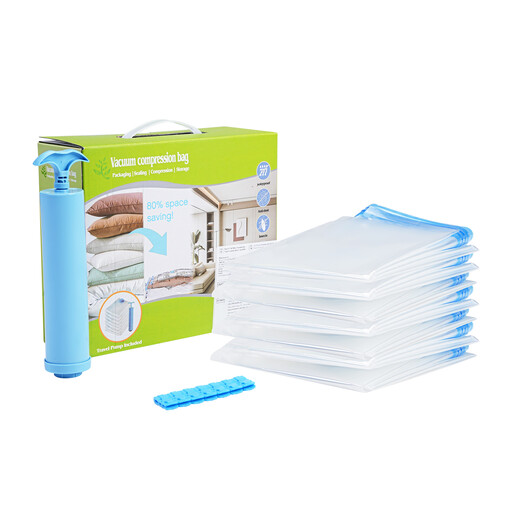
Why This Fits Their Persona: A complete starter kit for anyone trying vacuum bags for the first time. The set includes multiple bags in a versatile size and a hand pump, so you can get started right away without needing a vacuum cleaner.
The included hand pump guarantees compatibility and prevents frustration with a non-fitting valve. The manufacturer states that the bags have a double zip and a triple-sealed valve to minimise air leaks.
Complete set including a hand pump. The 7-layer material, as described by the manufacturer, offers extra durability.
We have compiled a complete, up-to-date list of products that meet these selection criteria and comply with current regulations.
A high-quality bag made of PA+PE with a double zip should remain vacuum-sealed for months. If a bag reinflates quickly, check that the zip is completely closed and that there are no small punctures in the material. Store the bags in a place where they won't come into contact with sharp objects.
Most vacuum bags are designed with a universal valve that fits standard round vacuum cleaner nozzles. However, it's always wise to check the product description. For travel or situations without a vacuum cleaner, there are special compression bags that you can manually roll or press to remove the air.
For most textiles like cotton, synthetic fabrics, and bedding, using vacuum bags is safe. In fact, they provide protection against moisture, dust, and pests. However, be cautious with delicate materials such as down, feathers, or wool. Compressing them too tightly for a very long period can diminish the natural resilience of the fibres. It's a good idea to take such items out of the bag to air them out once per season.
