
Vandaag of morgen in huis

Kwaliteit gegarandeerd

Welkomstaanbiedingen ontgrendelen: GRATIS bezorging | Tot 80% korting | Gratis 30 dagen JoyPlus-proefperiode
Download de app
Whether you live in an apartment where every square foot counts, or your closet is overflowing with winter duvets and seasonal clothing, you've probably considered vacuum storage bags. These space-saving bags seem like the perfect solution for storing textiles compactly and safely.
However, not every vacuum bag is a smart purchase. Many people experience frustration with bags that reinflate after a few weeks or tear immediately. Before you invest, it's wise to understand the common pitfalls.
The 3 most common pitfalls of vacuum storage bags:
Fortunately, these problems can be avoided by paying attention to a few key specifications.
A good vacuum storage bag is more than just a plastic bag with a hole in it. Its effectiveness depends on the material, the seal, and the size.
The durability of a vacuum bag is determined by its material. Look for bags made from a combination of Polyamide (PA) and Polyethylene (PE).
Bags made only of PE are often cheaper but also significantly more fragile. A multi-layer PA+PE construction offers the best protection for your belongings.
An airtight seal is crucial. Look for a double-zip closure. Most reliable bags come with a small plastic clip (a 'slider') to press the zipper completely and evenly shut. Always use it.
The valve determines how you remove the air. There are roughly three types:
Flat bags are suitable for under the bed or behind a closet. For storing larger items like vacuum bags for duvets or multiple articles of clothing, cube-shaped bags are often more practical. These have a three-dimensional shape with a flat bottom, making them easier to stack in a closet or attic after filling and vacuuming.
To help you make your choice, we have selected a few products that suit different user profiles.
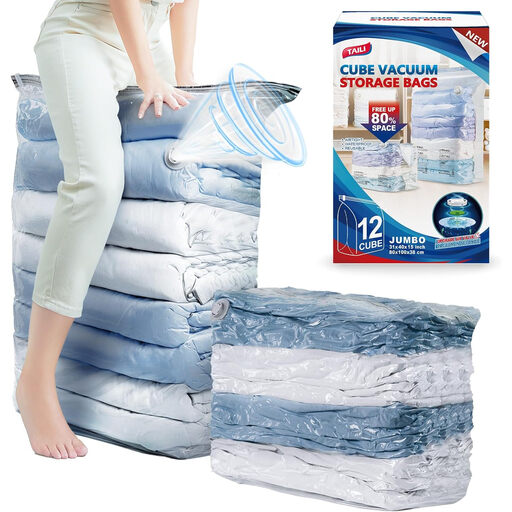
Why it's a match: Perfect for those who want to efficiently store large volumes of textiles like duvets, pillows, and winter coats. The cube-shaped bags stand upright on their own, making them easy for one person to fill. The set of 12 is ideal for a complete seasonal changeover.
Made from a durable PA+PE blend that prevents tears. The double zipper and valve are designed for a long-lasting airtight seal, counteracting the 'false vacuum' problem.
The cube shape maximizes storage capacity in closets. According to the manufacturer TAILI, one cube bag is equivalent to the storage of four regular flat bags.
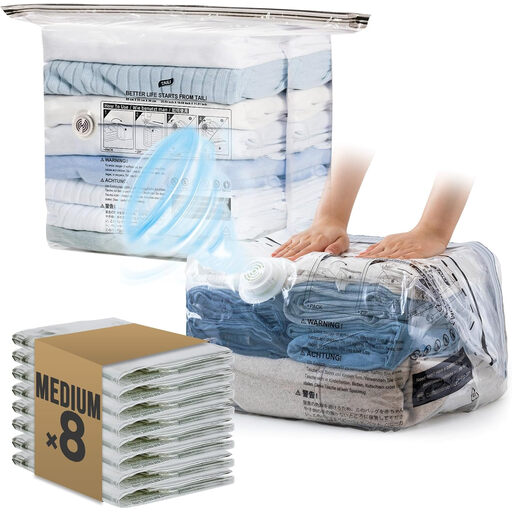
Why it's a match: For those who want to maximize luggage space without relying on a vacuum cleaner. The compact size is designed to fit in most carry-on suitcases. No pump or vacuum needed, making it ideal for travel or a dorm room.
The valve is specially designed for manual compression, avoiding the problem of an impractical or incompatible valve. The PA+PE laminate is tear-resistant, which is essential for use in a packed suitcase.
Compression by simply pressing down. According to the manufacturer TAILI, the volume can be reduced by up to 3x, allowing you to pack significantly more clothing.
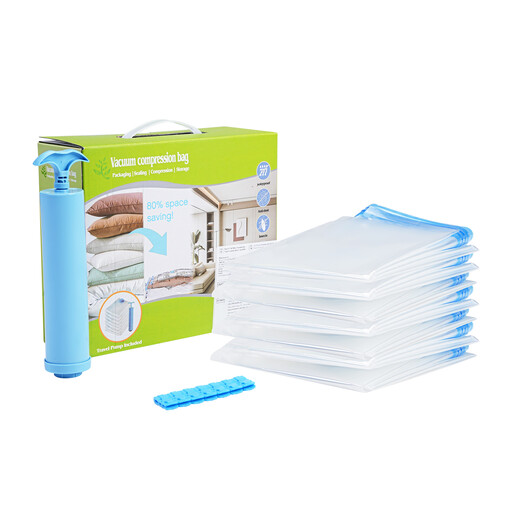
Why it's a match: A versatile and complete set for anyone looking for an affordable solution to start saving space. The bags are a standard size, and the included hand pump means you don't need to make any additional purchases.
This set solves the 'impractical valve' problem by including a compatible hand pump. According to the manufacturer, the bags feature a double zipper and a turbo valve for a reliable seal.
A complete starter kit that's ready to use out of the box. Suitable for those who don't own a vacuum cleaner or prefer to use a separate pump for the bags.
We've compiled a complete, up-to-date list of products that meet these selection criteria.
A high-quality bag, made from a PA+PE blend and with a good seal, should remain vacuum-sealed for months. If a bag reinflates within a few days or weeks, the zipper is likely not fully closed, or there is a small leak. Always double-check the seal using the included slider.
Most textiles like cotton, synthetic fabrics, and wool are fine to store in vacuum bags. However, be cautious with delicate materials such as leather or silk. For down duvets and pillows, the same rule applies: do not compress them to their absolute maximum. This can damage the structure of the feathers or down, reducing their insulating properties in the long run. A compression to about 50% of the original volume is often a good guideline to preserve the lifespan of the down.
No, it's not always necessary. There are special travel vacuum bags that you can roll up or press down by hand to remove the air. Other sets come with a hand pump. Always check the product description to see which method is recommended for the specific bag you are considering.
