
Cooking for one
You buy more meat than you use in one go and want to freeze and defrost individual meals. The Netherlands Nutrition Centre advises freezing food in small portions.


First, divide the meat into portions for one meal. A vacuum sealer is a good choice for flat, individual freezer portions; choose a vacuum container if you prefer reusable containers. For moist meat, it’s useful to be able to control the sealing process and clean the collection tray easily. However, vacuum sealing doesn’t replace safe freezing and defrosting.
You buy more meat than you use in one go and want to freeze and defrost individual meals. The Netherlands Nutrition Centre advises freezing food in small portions.
You want to account for meat juices when vacuum sealing and cleaning. Solis lists a moist-food setting and a removable drip tray for the Vac Prestige.
You only freeze meat occasionally and want to weigh up whether an appliance, suitable packaging and storage space are worth it compared with simply using well-sealed freezer packaging.
| What to consider | What should you check? | Who is this important to? |
|---|---|---|
| Small portions | Check that the bag width, roll of film or container capacity suits the portions you freeze. | When I cook for myself, I want to freeze meat one meal at a time, without having to defrost a large pack later. Around 36% of consumers say separating food into small portions is their top priority. |
| Moist meat | Check whether you can control or interrupt the vacuum-sealing process, and how to clean the collection tray. Solis lists a seal-only function and removable drip tray for the Vac Quick Type 576. | When there are meat juices, I want to be able to seal the packaging carefully and clean the appliance afterwards. Around 29% of consumers put managing moist foods at the top of their list. |
| Running costs | Check which packaging is compatible and which refill bags or rolls you’ll need. Weigh this against how often you use the appliance. | If I only freeze portions occasionally, I want to know whether an appliance and its packaging make sense for me. Around 21% of consumers prioritise the overall cost when they only use an appliance occasionally. |
| Storage space | Allow space for the appliance as well as for bags, rolls or containers. | In a small kitchen, I want to be able to put away both the appliance and its packaging after portioning the meat. Around 14% of consumers say available storage space is their biggest consideration. |
Raw meat can contain pathogens. Vacuum sealing doesn’t replace safe chilling, freezing and defrosting.
Portion and freeze meat promptly. Follow the storage advice for the type of meat, and use or freeze it on or before its use-by date.
A bag sealer seals bags, while a hand pump with vacuum containers uses containers. These formats differ in how you portion and store food.
First, choose between flat portions in bags and containers with a set capacity. Then compare appliances.
A bag sealer requires compatible packaging. If you only use it occasionally, ordinary, well-sealed freezer packaging may be enough.
Check what packaging is included, which refills are compatible and how many portions you’ll actually make.
The features listed below apply to the specific models and product ranges mentioned, not to every product from each brand.
The Vac Quick Type 576 is a bag sealer; the Vac Prestige has different settings for various types of food.
The DO331L combines a roll of film with a storage container; according to DOMO, the DO336L has adjustable pressure and sealing time.
The 492985 is a hand pump with glass containers; the 492967 is a machine that seals bags.
According to CASO, the VC 10 is a compact bag sealer with a vacuum stop and a separate seal-only function.
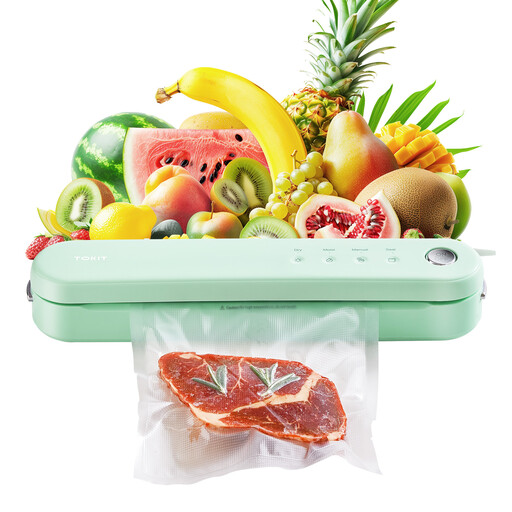
Joybuy product picks for freezing meat in portions, using a bag vacuum sealer.
 No image available
A bag sealer for anyone who wants to pack individual portions of meat in bags. Before buying, check which bag sizes are compatible with the appliance.
No. Vacuum sealing doesn’t replace safe storage. The Netherlands Nutrition Centre advises setting your freezer to at least −18 °C and freezing food in small portions.
Use or freeze meat on or before its use-by date. Repackaging it in a new vacuum-sealed bag won’t make it suitable for freezing after that date.
The Netherlands Nutrition Centre advises defrosting meat in the fridge. Small pieces can also be defrosted in the microwave.
Wash your hands with soap after handling raw meat, and keep raw meat away from ready-to-eat food. Follow the instructions for your chosen model when cleaning the collection tray and seals.
Check that the packaging is intended for food contact and is suitable for the type of freezing you plan to do. According to the Netherlands Food and Consumer Product Safety Authority, items intended to come into contact with food in the Netherlands must comply with the Commodities Act Decree on Packaging and Consumer Products.