
Batch cooks working with moist fish
You prepare several portions for the freezer and want to stop fish juices from affecting the seal. Rommelsbacher and Solis describe features for packing moist food and controlling the vacuum process.


For mostly drained fish portions, a bar vacuum sealer with a moisture setting or manual stop, and a collection area that’s easy to clean, is a sensible choice. If you regularly pack portions with a lot of free liquid or dishes that contain liquid, compare chamber models too; they take up more space. Keep the sealing area dry, and follow guidance for storing the fish rather than relying on a claim about the machine.
You prepare several portions for the freezer and want to stop fish juices from affecting the seal. Rommelsbacher and Solis describe features for packing moist food and controlling the vacuum process.
You want to be able to control or stop the vacuum process, so you’re in charge when packing a delicate fillet. Solis describes pulse vacuum for pressure-sensitive contents; CASO lists a vacuum stop for the VC 10.
You occasionally pack well-drained fish and want a straightforward appliance. Check which bags or rolls are included and whether suitable refills are available, as listed for models from Princess and DOMO.
First, consider how much moisture your portions contain and how often you’ll pack them. Then choose the controls and bag size that suit your portions.
Suitable for: mostly drained fish fillets when you want to control the vacuum process yourself.
Consider: a moisture setting won’t stop free liquid from being drawn in, so the sealing area still needs to stay dry.
Suitable for: occasionally packing dry or well-drained portions, with few settings to worry about.
Consider: check how you can intervene if moisture moves towards the opening, and which bags or rolls are compatible.
Suitable for: regularly packing very moist portions or dishes containing liquid, if you have room for a larger machine.
Consider: check the chamber’s internal dimensions against your portions; the CASO VacuChef 700 weighs 11,95 kg and has a chamber of around 8 l.
| What to consider | What should you check? | Who is this important for? |
|---|---|---|
| Sealing moist fish | Check for moisture control or a manual stop, an accessible collection area, and enough spare bag length to keep the sealing area dry. | If I’m packing drained fish in portions, I want to stop moisture reaching the seal. Around 36% of consumers say a reliable seal with moist fish is their main concern when buying. |
| Multiple portions and bag size | Measure your largest portion and compare it with the roll width or chamber dimensions; also check which bags and rolls are compatible. | If I batch cook, I want to pack portions to the right size without having to use an unsuitable bag each time. Around 29% of consumers prioritise packing multiple portions efficiently. |
| Delicate fillets | Check whether the exact model has pulse vacuum, a vacuum stop or a separate sealing function. | With a delicate fillet, I want to be able to control or stop the vacuum process myself. Around 21% of consumers choose mainly based on control when packing delicate fish fillets. |
| Ease of use and refills | Check the bags or roll included, the refill sizes available, and the instructions for food contact and freezer use. | If I only freeze portions occasionally, I want simple controls and suitable refill bags. Around 14% of consumers value a straightforward purchase most for occasional use. |
Rommelsbacher warns that liquid can still be drawn in when using the moisture function. Moisture around the sealing area can affect the seal.
Let the fish drain, keep the edge of the bag clean and clear, and follow the appliance instructions. If you regularly pack contents that contain liquid, check whether a suitable container or chamber model better suits the way you work.
A failed seal may mean you have to repack the food and throw away a bag.
Storage time depends on the type of fish and its packaging. A claim that food stays fresh for longer isn’t general guidance on how long to store it.
Make a note of what you freeze and when, check the advice for that type of fish, and ideally defrost it in the fridge, as recommended by the Netherlands Nutrition Centre.
The roll or bags included, and the sizes listed, vary by model. An unsuitable bag size makes it harder to pack portions properly.
Measure your portions and check the roll width, compatible bags or rolls, and available refill sizes before you buy.
The VAC 385 is described as suitable for packing moist portions and repeatedly cutting bags to size.
Solis describes the Vac Premium Type 575 as suitable for dry, moist and pressure-sensitive contents.
CASO describes both a bar model with a vacuum stop and a separate chamber model for moist or liquid contents.
The automatic 492960 is a bar model that Princess also lists for fish.
DOMO lists fish as a suitable use for the DO327L and describes bags and rolls as accessories.
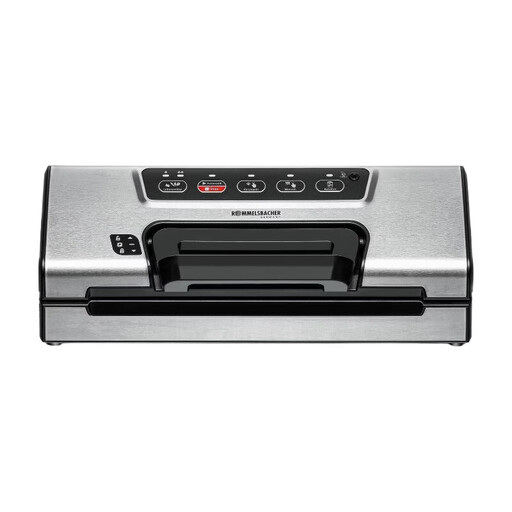
This selection focuses on a bar vacuum sealer for repeatedly packing mostly drained fish portions.
 No image available
Suitable if you regularly pack drained fish portions and want to control the vacuum process manually.
Suitable for film up to 30 cm wide; has automatic and manual vacuum settings, a roll compartment with cutter and a removable chamber insert.
Keep the sealing area dry: liquid can still be drawn in when using the moisture function.
No, but keep the inside of the bag dry around the sealing area and leave enough spare bag length. A moisture setting won’t stop free liquid from being drawn in; follow your appliance instructions.
Ideally, defrost frozen fish in the fridge, as recommended by the Netherlands Nutrition Centre. Cover the fish to stop liquid dripping onto other food; vacuum sealing isn’t a substitute for keeping it chilled.
Check the advice for the type of fish and its packaging rather than relying on a general claim from the machine. For opened, raw oily fish containing more than 10 g of fat, the Netherlands Nutrition Centre recommends 3 months in the freezer for quality; for unopened packaging, it advises checking the label.
Check that the bag is intended for food contact and freezer use. The European Commission lists Regulation (EC) 1935/2004 as the general EU framework for materials that come into contact with food; the NVWA explains that suppliers of plastic food packaging must provide their customers with information about its suitability. The machine description alone says nothing about whether a particular bag is suitable.
Check which bags or rolls and model-specific parts are compatible with your machine. DOMO lists refill sizes for the DO327L, and CASO publishes spare parts; check whether the material or part is suitable for your specific model.